Alberta's Gigawatt Play: Why Building Data Centers Means Building an Industry
Key Highlights
-
Alberta's transition from data center planning to execution is testing whether its workforce, infrastructure and supply chains can scale alongside gigawatt-class projects.
-
Industry self-awareness and voluntary commitments on water, emissions and community benefits are becoming more prominent, even as public opposition intensifies.
-
Unrealistic development proposals can undermine legitimate projects, making credible power, appropriate siting and early-stage development discipline increasingly important.
-
Alberta's experience raises broader questions about regulatory fairness, community trust and the growing association between AI and the physical infrastructure supporting it.
For Alberta's emerging data center industry, the difference between a roadmap and an excavator has become increasingly consequential.
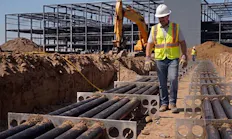
A few years ago, Western Canada's data center conversation revolved around the possibilities: abundant energy resources, available land, a favorable climate and the prospect of attracting hyperscale investment to a region better known for oil, gas and other industrial development. Today, earthmoving equipment is preparing the ground for what is expected to become Canada's largest data center, and the questions facing the province have changed accordingly.
The shift was on display at Data Centre West 2026, held in Calgary in September, where some 500 industry and government leaders gathered to examine the infrastructure and policy requirements of Alberta's rapidly expanding digital economy. But for conference founder Vlad Oujegov, the most revealing development wasn't simply the appearance of projects measured in gigawatts. It was the growing recognition that building those projects will require Alberta to develop an entire supporting industry, while confronting the environmental, political and community questions that increasingly accompany large-scale AI infrastructure.
"The theme last year was the data center roadmap," Oujegov told Data Center Frontier Editor in Chief Matt Vincent during a new episode of the Data Center Frontier Show podcast. "This year's theme really to me was about execution and actually getting things done, actually seeing projects materialize and construction beginning."
Oujegov is president and founder of the Western Canada Data Centre Alliance, which organizes Data Centre West, and serves as National Data Center Power Systems Lead at Schneider Electric. His perspective draws on both Alberta's emerging development pipeline and the wider industrial ecosystem now being assembled around it.
In DCF's earlier reporting from Data Centre West 2026, the central question was how quickly Alberta could convert growing hyperscale demand into deliverable capacity. The latest podcast conversation takes that question further, examining what happens when a relatively small digital infrastructure market begins preparing for growth on a scale that can transform its regional economy.
The resulting challenges extend beyond power availability and construction schedules. They encompass skilled labor, service networks, development credibility, public accountability and the increasingly complicated relationship between the data center industry and the communities being asked to accommodate it.
From Roadmap to Earthworks
The clearest example of Alberta's transition is Meta's newly announced data center campus in Sturgeon County, northeast of Edmonton.
Announced in July 2026, the planned 1-gigawatt, AI-optimized campus represents an investment of more than CAD $13 billion and will become Meta's first data center in Canada. The company anticipates approximately 3,000 construction workers at peak activity and more than 300 permanent operational jobs, along with approximately CAD $60 million in local road and water infrastructure improvements.
The campus is located in Alberta's Industrial Heartland, an established industrial region supporting energy production, petrochemicals and related infrastructure. The provincial government's major projects registry identifies the development as under construction, with site grading having begun under a permit issued earlier in 2026.
Its supporting energy infrastructure represents another substantial undertaking. The development is paired with the planned 932-MW Greenlight Electricity Centre, a dedicated natural gas generation project intended to help supply the campus. While construction activity has begun at the data center site, full delivery of its associated power infrastructure remains a longer-term proposition.
That distinction matters. Breaking ground is an important step toward execution, but it is not the same as delivering a fully commissioned gigawatt of computing capacity.
Nevertheless, the physical progress is striking for a market that Oujegov estimates had less than 100 MW of total data center load only a few years ago. A single development now under construction is larger than the province's earlier installed base by an order of magnitude, illustrating both the scale of the opportunity and the challenge of accommodating it.
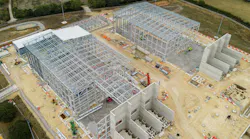
For Oujegov, satellite images showing the site's developing earthworks provide a tangible illustration of how far Alberta has moved from theoretical discussions.
"It's really cool for me to see," he said, pointing to visible construction activity following years of preparation.
The project also illustrates a broader change in the province's industrial positioning. Alberta is no longer simply attempting to persuade global operators that it belongs on the data center map. It must now demonstrate that its utilities, suppliers, construction industry and local institutions can support developments of a size and complexity previously uncommon in the region.
The Challenge of Growing an Industry Tenfold
For all the attention paid to headline investment figures, Oujegov argues that the secondary industrial requirements of hyperscale development are often underestimated.
"10x-ing any industry is a massive endeavor," he observed.
His comparison was deliberately straightforward: Imagine an established manufacturing community with one major industrial facility suddenly preparing to support ten comparable operations within several years. Even with appropriate land, favorable policy and strong investor interest, the resulting requirements would be extraordinary.
Data centers are no exception.
A hyperscale campus requires far more than its principal construction contractor and equipment suppliers. It depends on a network of electrical and mechanical specialists, equipment installers, commissioning teams, field service technicians, maintenance providers, logistics operations and regional distributors capable of supporting the facility throughout its operating life.
In established markets such as Northern Virginia, many of those resources are already present. Equipment suppliers maintain regional offices, contractors are familiar with data center specifications, and specialized service providers operate within an industrial environment shaped by decades of development.
In Alberta, portions of that supporting infrastructure must be established alongside the projects themselves.
"When you're building in new jurisdictions, kind of like the ones that we're talking about now, near Edmonton, Alberta, some of those service networks don't exist," Oujegov said. "Some of those warehouses don't even exist."
He expects many vendors serving new campuses to establish local offices, service teams and warehousing operations. The resulting investment could provide regional economic benefits extending well beyond the direct employment numbers associated with individual data centers.
It could also introduce considerable short-term pressure. Demand for qualified electrical and mechanical trades is likely to intensify during major construction phases, potentially contributing to wage inflation and competition for skilled workers already supporting Alberta's established industries.
There is a difference, moreover, between building a facility and supporting it for decades. Construction employment can rise sharply and then decline as individual projects are completed. Long-term economic development requires a durable operational ecosystem, with trained personnel and suppliers positioned to service an expanding regional portfolio of infrastructure.
That makes workforce preparation, technical education, local business development and institutional partnerships more than incidental community benefits. They become elements of the delivery strategy itself.
Oujegov's point is that Alberta must build not only the data centers, but also the industry required to keep those data centers operating.
An Industry Becoming More Self-Aware
Perhaps the most unexpected theme emerging from Data Centre West, according to Oujegov, was not directly related to construction or power infrastructure.
It was the degree to which the industry appeared increasingly conscious of its own environmental and societal responsibilities.
"One thing that kept coming up that I really liked," he said, "is that this industry is very self-aware."
Across conference discussions involving power, policy, cooling, technology and community relations, Oujegov heard repeated references to reducing water consumption, lowering emissions, improving efficiency and expanding local economic participation.
Many of those initiatives were being advanced as voluntary industry commitments, rather than simply responses to new regulatory requirements.
For Oujegov, the change was notable even against the previous year's conference. Hyperscale operators have become more public about their environmental commitments and their efforts to address community impacts, while suppliers and technology developers continue to pursue incremental improvements in energy and water performance.
The same pattern is appearing locally, he said, through discussions of employment opportunities, workforce training and collaboration with universities.
That observation introduces an interesting paradox.
The data center industry has spent decades pursuing energy efficiency, improved thermal management, operational reliability and more sophisticated environmental practices. Yet as its infrastructure becomes larger and more visible, the industry is experiencing one of its most difficult periods of public scrutiny.
In part, that scrutiny reflects the transformation of the underlying facilities. Data centers that once operated largely beyond public attention are now being proposed as industrial campuses requiring hundreds of megawatts or even gigawatts of power, with associated generation, transmission and construction requirements.
The industry's historical preference for a relatively low public profile is increasingly incompatible with the scale of its development ambitions.
Oujegov acknowledges that the transition remains incomplete. The industry is improving, he believes, but still has considerable ground to cover in adapting to its heightened public visibility.
And voluntary commitments, while potentially important, are not substitutes for demonstrated environmental or operational performance. A promised reduction in water use is different from a measured result, just as an announced infrastructure investment remains distinct from a completed facility.
The greater significance of the trend may be that operators and suppliers are beginning to address these concerns earlier in project planning, rather than treating them primarily as public communications challenges after development decisions have been made.
Meta's Industrial-Siting Example
Meta's Sturgeon County development provides an example of how these considerations are becoming part of the initial infrastructure proposition.
In discussing the project, Oujegov highlighted its location within an established industrial district, where large-scale power production and other industrial activities are already part of the surrounding land-use environment.
He also pointed to Meta's proposed cooling design and infrastructure investments as evidence that the company is attempting to incorporate environmental and community considerations into the project from the outset.
According to Meta's project announcement, the campus will use closed-loop liquid cooling with dry cooling equipment, eliminating operational water use for the cooling system. Water would still be required for domestic purposes, fire protection and equipment maintenance.
The distinction is important, particularly given the public attention surrounding water consumption by AI data centers. Closed-loop cooling can substantially reduce onsite water demand, but it does not eliminate all water requirements or the need to assess water use associated with supporting infrastructure.
Similarly, the planned natural gas generating facility introduces environmental questions beyond those presented by the data center buildings themselves. The design and siting of a computing campus cannot be evaluated entirely separately from the energy infrastructure required to operate it.
These considerations illustrate why industrial siting has become central to the development conversation. Locating very large data centers alongside existing industrial operations may offer advantages in land compatibility and infrastructure planning, but those advantages must still be considered against cumulative environmental impacts, community interests and the specific characteristics of each site.
For Oujegov, Meta's project represents a significant early demonstration of Alberta's approach. It also reinforces the importance of matching projects with appropriate locations rather than assuming that every available tract of land is suitable for hyperscale development.
Why Real Megawatts Matter More Than Announced Megawatts
The distinction between credible projects and speculative announcements emerged repeatedly during the Calgary conference.
Oujegov described an industry increasingly conscious of the damage that poorly conceived development proposals can cause, particularly when they attract public controversy before their technical or commercial feasibility has been established.
There is an important nuance here. Early-stage data center developers serve an essential function in the industry's expansion.
They acquire land, pursue rezoning and entitlements, investigate utility service, begin permitting and undertake other forms of development preparation before a hyperscale customer or colocation operator has necessarily committed to the site.
These activities involve substantial risk. Without developers willing to make such early investments, the industry's pipeline of available and potentially buildable sites would be considerably smaller.
But not every proposed campus has a credible path to execution.
Some announcements involve unrealistic power requirements, inadequate infrastructure planning or locations poorly suited to the scale of development being proposed. As scrutiny increases, those deficiencies can have consequences extending beyond the projects themselves.
Oujegov said unrealistic proposals have sometimes galvanized public opposition, damaging confidence in other developments that may be more technically viable and appropriately located.
The problem becomes especially pronounced when announced capacity is treated as though it represents future operating infrastructure, rather than an early-stage expression of developer interest.
DCF has examined similar dynamics in other markets. In Texas, ERCOT's efforts to distinguish credible projects from speculative large-load requests reflect a growing recognition that enormous interconnection queues cannot be treated as reliable forecasts of actual data center construction.
The same issue informed DCF's recent poll on real versus "ghost" data center demand, which examined what evidence utilities should require before reserving power or planning infrastructure around major load requests.
Oujegov sees the resulting market discipline as necessary, though not without complications.
An industry that discourages all speculative development could inadvertently weaken the pipeline of projects it needs for future growth. But an industry that gives every proposed gigawatt equal credibility risks undermining its relationship with policymakers, utilities and communities.
The challenge is to preserve legitimate early-stage development while becoming more selective about which sites, proposals and partners deserve confidence.
"Not every place is a great place for a data center," Oujegov said.
That recognition may be one of the most important signs of a maturing market.
The Question of Regulatory Fairness
The industry's increased visibility is also reshaping its relationship with regulators.
Oujegov believes data center developers should be expected to address environmental impacts, infrastructure requirements and community concerns. But he also questions whether exceptional public attention should automatically translate into regulatory burdens beyond those applied to comparable industrial facilities.
He raised the example of a fertilizer or chemical plant being permitted on appropriately zoned industrial land while a data center in a similar setting might encounter additional political and regulatory obstacles.
For Oujegov, the concern is not that data centers should avoid scrutiny. It is that regulatory expectations should reflect the actual characteristics and impacts of a proposed development, rather than the intensity of media attention surrounding the industry.
Yet the comparison is not straightforward.
A gigawatt-scale AI campus can have an unusually concentrated electrical demand, require substantial new power generation or grid infrastructure, and generate economic and environmental impacts that differ significantly from those of other industrial facilities.
Such differences may justify distinct technical requirements or more extensive review. The relevant question is whether those requirements are grounded in measurable impacts and consistent policy objectives.
Alberta's government has sought to frame its approach around that distinction. Its published environmental framework emphasizes that data centers and the power plants serving them are subject to established industrial environmental laws, including applicable approvals, emissions limits, water licensing and noise requirements.
At the same time, the province has made the protection of existing electricity customers, water resources and communities a prominent part of its data center policy.
That is the tension the industry must navigate: greater transparency and accountability without substituting political visibility for objective regulation.
Oujegov does not claim that the proper balance has been found. In fact, he openly acknowledges uncertainty about where that line should be drawn.
What he advocates is a more objective discussion of which facilities belong in which locations, what their impacts will be, and how their benefits and costs should be considered by the communities hosting them.
When AI Anxiety Becomes Data Center Opposition
The need for that discussion has become increasingly evident in Alberta itself.
The provincial government held a series of public engagement sessions during August and September 2026, including meetings in Lacombe, Sturgeon County and Grande Prairie, along with a virtual town hall.
According to Alberta's published account of those sessions, participants raised concerns about the desirability of AI infrastructure and the government's ability to regulate it effectively. Provincial officials responded with assurances regarding appropriate siting, developer responsibility for infrastructure costs, and protection of existing power and water users.
Premier Danielle Smith has also taken the unusual step of addressing data center development directly through a public video explaining the government's approach, including questions about electricity, water, land use and local impacts.
Oujegov sees that willingness to engage directly as an important development, particularly because public opposition is not necessarily confined to the physical characteristics of data center facilities.
Some concerns, he suggested, arise from artificial intelligence itself.
As AI becomes more prominent in public debate, data centers have increasingly become its visible physical manifestation. Questions about employment disruption, privacy, technological change and the broader social consequences of AI can become entangled with local questions about electricity infrastructure, land use, water and noise.
"Not all data centers are AI data centers," Oujegov observed.
The distinction is basic but increasingly important. Data centers support cloud services, enterprise computing, financial transactions, communications and countless other digital applications, in addition to AI training and inference.
The current investment cycle is being driven heavily by AI, but the facilities supporting the digital economy are not interchangeable, nor do they all have the same operating characteristics or community impacts.
The industry may also have contributed to the confusion through its own messaging, often emphasizing AI as the dominant rationale for new infrastructure without clearly explaining the wider services those facilities provide.
Separating those conversations is not an argument for dismissing concerns about AI. Rather, it allows communities to evaluate proposed physical infrastructure on its specific merits while maintaining a distinct discussion about the broader social and economic effects of the technologies it supports.
The distinction could become increasingly important as data center development expands into regions without the long institutional experience of established hyperscale markets.
What Alberta Can Learn From Data Center Alley
One of the most valuable perspectives at Data Centre West came from Buddy Rizer, executive director of Loudoun County Economic Development in Northern Virginia, whose jurisdiction has spent decades managing the growth of one of the world's largest concentrations of data centers.
Rizer's message, as Oujegov recalled it, was that successful development frameworks must ultimately reflect local conditions.
There is no single model that can be transferred wholesale from Northern Virginia to Alberta, Texas or another emerging data center market. Each region brings different electricity infrastructure, land-use considerations, economic priorities, political institutions and community expectations.
DCF explored the changing nature of this relationship in an earlier podcast feature, The Next Data Center Constraint: Trust, in which Rizer argued that economic development success and community confidence represent separate challenges requiring sustained attention.
For Alberta, the implication is that the province cannot simply reproduce the scale of an established hyperscale market without developing the institutional practices that help make that scale sustainable.
That includes clear permitting expectations, meaningful public engagement, credible developer commitments and a willingness to acknowledge that some proposed locations are inappropriate.
It also requires stronger coordination among the many participants involved in bringing projects to market.
Oujegov emphasized that this was one reason Data Centre West was deliberately designed to bring hyperscalers, operators, utilities, developers, power producers, technology suppliers, policymakers and regional economic development leaders into the same room.
These are not independent interests that can make decisions entirely in isolation. Their work must increasingly be coordinated if projects are to move from concept to construction and ultimately into operation.
For Alberta, that coordination will help determine whether its initial wave of investment develops into a lasting regional digital infrastructure industry.
The Real Test Is Still Ahead
The experience of Data Centre West 2026 suggests that Alberta has crossed an important threshold. The province has attracted meaningful hyperscale investment, established a clearer development framework and begun translating years of discussion into physical construction.
But the next phase may prove more demanding than the first.
The industry must deliver new generation and electrical infrastructure, develop a larger regional workforce, establish local supply networks and maintain confidence among communities increasingly conscious of the scale and consequences of AI development.
It must also learn to distinguish credible projects from speculative ambition, while demonstrating that voluntary environmental and community commitments can translate into measurable results.
In that sense, Alberta's challenge is not fundamentally different from the one confronting the broader North American data center industry. It is simply arriving in a particularly concentrated form.
The old development proposition was largely about securing power, land, capital and customers. The emerging proposition is more complicated: assembling a functioning industrial ecosystem that can deliver infrastructure reliably while remaining accountable to the communities and institutions supporting it.
Alberta is beginning to prove that it can attract gigawatt-scale investment. The more consequential question is whether it can build the industrial capacity, public confidence and long-term operating framework necessary to sustain it.
That is the difference between building data centers and building a data center industry.
At Data Center Frontier, we talk the industry talk and walk the industry walk. In that spirit, DCF Staff members may occasionally use AI tools to assist with content.
Keep pace with the fast-moving world of data centers and cloud computing by connecting with Data Center Frontier on LinkedIn, following us on X/Twitter and Facebook, as well as on BlueSky, and signing up for our weekly newsletters using the form below.
About the Author
 Matt Vincent
Matt Vincent is Editor in Chief of Data Center Frontier, where he leads editorial strategy and coverage focused on the infrastructure powering cloud computing, artificial intelligence, and the digital economy. A veteran B2B technology journalist with more than two decades of experience, Vincent specializes in the intersection of data centers, power, cooling, and emerging AI-era infrastructure. Since assuming the EIC role in 2023, he has helped guide Data Center Frontier’s coverage of the industry’s transition into the gigawatt-scale AI era, with a focus on hyperscale development, behind-the-meter power strategies, liquid cooling architectures, and the evolving energy demands of high-density compute, while working closely with the Digital Infrastructure Group at Endeavor Business Media to expand the brand’s analytical and multimedia footprint. Vincent also hosts The Data Center Frontier Show podcast, where he interviews industry leaders across hyperscale, colocation, utilities, and the data center supply chain to examine the technologies and business models reshaping digital infrastructure. Since its inception he serves as Head of Content for the Data Center Frontier Trends Summit. Before becoming Editor in Chief, he served in multiple senior editorial roles across Endeavor Business Media’s digital infrastructure portfolio, with coverage spanning data centers and hyperscale infrastructure, structured cabling and networking, telecom and datacom, IP physical security, and wireless and Pro AV markets. He began his career in 2005 within PennWell’s Advanced Technology Division and later held senior editorial positions supporting brands such as Cabling Installation & Maintenance, Lightwave Online, Broadband Technology Report, and Smart Buildings Technology. Vincent is a frequent moderator, interviewer, and keynote speaker at industry events including the HPC Forum, where he delivers forward-looking analysis on how AI and high-performance computing are reshaping digital infrastructure. He graduated with honors from Indiana University Bloomington with a B.A. in English Literature and Creative Writing and lives in southern New Hampshire with his family, remaining an active musician in his spare time.
Related
 dcwesttitle
 Darlington, Ontario SMR Construction Site

Voices of the Industry
 Source: TomUK/Shutterstock.com
 Source: 3DAnimals/Shutterstock.com