Sustainable Data Centers in the Age of AI: Page Haun, Chief Marketing and ESG Strategy Officer, Cologix
Key Highlights
- AI growth is pushing data centers to integrate sustainability into core design, not just as an add-on.
- Flexible power and cooling architectures are crucial to adapt to rapid hardware and workload changes.
- Community trust and transparent ESG reporting are vital for securing permits and maintaining social license to operate.
- LEED certification fosters holistic thinking about energy, water, and materials, leading to cost savings and environmental benefits.
- Partnerships with utilities and innovative cooling methods help mitigate grid constraints and reduce environmental impact.




Artificial intelligence has turned the data center industry into a front-page story, often for the wrong reasons. The narrative usually starts with megawatts, ends with headlines about grid strain, and rarely pauses to explain what operators are actually doing about it.
On the latest episode of The Data Center Frontier Show, Page Haun, Chief Marketing and ESG Strategy Officer at Cologix, laid out a more grounded reality: the AI era is forcing sustainability from a side initiative into a core design principle.
Not because it sounds good, but because it has to work.
From fuel cells in Ohio to closed-loop water systems that dramatically outperform industry norms, Cologix’s approach offers a case study in what “responsible growth” looks like when rack densities climb, power timelines stretch, and communities demand more than promises.
The AI-Era Sustainability Baseline
AI is changing the math.
Power demand is rising faster than grid infrastructure can move. Communities are paying closer attention. Regulators are asking sharper questions. And the industry is discovering that speed without credibility creates friction.
Haun described the current moment as a “perfect storm” where grid constraints, community concerns, and regulatory scrutiny all converge around AI-driven growth.
But she also pushed back on the idea that the industry is ignoring the problem.
Data center operators, utilities, and governments are already working together in ways that didn’t exist a decade ago by sharing load forecasts, coordinating long-lead infrastructure investments, and aligning power planning with customer roadmaps.
One of the industry’s biggest gaps, she argued, isn’t engineering; it’s communication.
Data centers still struggle to explain their role in the digital economy: education platforms, healthcare systems, streaming media, gaming, and now AI tools that enterprises are rapidly embedding into daily operations. Without that context, power usage becomes the whole story, yet it’s only part of the picture.
What LEED Gold Signals About Modern Design
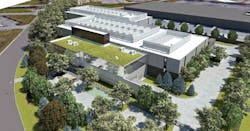
Cologix’s Montreal 8 (MTL8) facility recently achieved LEED Gold certification to become the company’s first LEED-certified data center. For Haun, the certification isn’t a trophy. It’s a design discipline.
LEED forced teams to think holistically: energy, water, materials, construction waste, recycling, and long-term operational efficiency. The result wasn’t just lower environmental impact; it was a facility that costs less to operate and is more attractive to customers and employees alike.
Just as important, MTL8 became a template. What worked there now feeds into Cologix’s broader design basis for future builds.
In an AI era where sites can become obsolete in a single hardware cycle, learning fast (and reusing those lessons) matters.
Engineering for High-Density AI
High-density AI isn’t just about more power. It’s about how that power is turned into compute without wasting it as heat.
And liquid cooling is no longer exotic. It’s becoming standard for dense AI deployments because it delivers tighter thermal control with better energy efficiency.
But Haun emphasized that no single cooling method fits every site or workload. The real priority is flexibility: designing facilities that can support multiple approaches—liquid to chip, liquid to air, liquid to liquid—depending on what customers bring in.
That flexibility is what keeps facilities relevant when AI hardware changes faster than building lifecycles.
Water use is another major lever. Cologix prioritizes closed-loop systems that recirculate water or coolant instead of constantly pulling fresh supply. The result: an average Water Usage Effectiveness (WUE) of 0.203, far below the industry average of 1.8.
That’s not branding. That’s engineering.
Power, Carbon, and Grid Reality
Sustainability isn’t just about what happens inside the building. It starts with where you put it.
Cologix’s siting strategy looks for locations that naturally support efficient power and cooling. In Canada, that means hydropower in Montreal (where data centers run on 99% renewable energy) and deep lake water cooling in Toronto. In Silicon Valley, natural air cooling reduces mechanical load.
When geography doesn’t offer those advantages, partnerships fill the gap.
In central Ohio, Cologix has a long-standing partnership with AEP Ohio that includes plans for onsite fuel cells at a future Columbus data center. The fuel cells allow the facility to begin operating while AEP completes multi-year transmission upgrades. Cologix covers the full cost under a 15-year contract, ensuring other utility customers don’t subsidize the project.
It’s a model of shared responsibility and one that recognizes that no single solution solves the power problem.
At the same time, improvements in liquid cooling, server architecture, and AI-aware workload management are steadily reducing watts per unit of compute. The efficiency gains aren’t theoretical—they’re happening.
The Community Compact
If power is the new bottleneck, community trust is the new permit.
Haun described healthy community relationships as long-term partnerships, not transactions. Each location has its own concerns whether environmental, economic, cultural; and operators have to understand them before promising solutions.
Montreal 8 sits in Techno Park, an eco-campus near wetlands and a bird sanctuary. Building LEED Gold there was essential as a signal that the project would protect biodiversity and add green features. Cologix engaged through town meetings and worked closely with the borough mayor of Saint-Laurent, who even attended the groundbreaking.
Elsewhere, community alignment looks different. In Florida markets, Cologix supports ESG programs like food and clothing drives, adopt-a-highway efforts, blood drives, and emergency relief during hurricanes.
Beyond taxes, data centers can support STEM education, internships, and workforce development, investments that make growth visible and tangible.
Transparency as Strategy
As AI drives scale, sustainability claims are under a microscope.
Cologix publishes annual ESG reports and reports to organizations like CDP and EcoVadis. Its 2024 ESG report showed:
- 65% of energy from carbon-free sources, even after 40% footprint growth
- PUE of 1.486, beating the global average of 1.56
- WUE of 0.203, dramatically lower than the industry norm
- ISO 14001 certification process launched across facilities
- Energy Star expanded to all eligible U.S. sites
Transparency, Haun said, is becoming a competitive advantage. Customers, communities, investors, and employees all want proof...not promises.
The 3 Non-Negotiables for AI-Era Sites
When asked to distill sustainability down to three must-haves for new AI facilities, Haun didn’t hesitate:
- Flexible power and cooling architecture: Hard-wiring today’s densities or cooling methods guarantees tomorrow’s obsolescence.
- Holistic resource management: Energy, water, materials, and waste must be managed together, not in silos.
- A real plan for renewable energy: Sustainability doesn’t stop at the building. It includes where power comes from.
And threading through all three: community engagement. Without it, none of the rest matters.
The New Baseline
The AI era is rewriting what “normal” looks like in data center development.
Speed still matters. Scale still matters. But now, so does credibility: with grids, with communities, and with customers who are building their own ESG commitments into their technology strategies.
Sustainability is no longer a differentiator. It’s the baseline.
As Haun put it, the industry doesn’t need one silver bullet. It needs coordination, transparency, and design choices that assume change as opposed to resisting.
In the age of AI, building fast is easy. Building right is the real work.
At Data Center Frontier, we talk the industry talk and walk the industry walk. In that spirit, DCF Staff members may occasionally use AI tools to assist with content. Elements of this article were created with help from OpenAI's GPT5.
Keep pace with the fast-moving world of data centers and cloud computing by connecting with Data Center Frontier on LinkedIn, following us on X/Twitter and Facebook, as well as on BlueSky, and signing up for our weekly newsletters using the form below.
About the Author
 Matt Vincent
Matt Vincent
Matt Vincent is Editor in Chief of Data Center Frontier, where he leads editorial strategy and coverage focused on the infrastructure powering cloud computing, artificial intelligence, and the digital economy. A veteran B2B technology journalist with more than two decades of experience, Vincent specializes in the intersection of data centers, power, cooling, and emerging AI-era infrastructure. Since assuming the EIC role in 2023, he has helped guide Data Center Frontier’s coverage of the industry’s transition into the gigawatt-scale AI era, with a focus on hyperscale development, behind-the-meter power strategies, liquid cooling architectures, and the evolving energy demands of high-density compute, while working closely with the Digital Infrastructure Group at Endeavor Business Media to expand the brand’s analytical and multimedia footprint. Vincent also hosts The Data Center Frontier Show podcast, where he interviews industry leaders across hyperscale, colocation, utilities, and the data center supply chain to examine the technologies and business models reshaping digital infrastructure. Since its inception he serves as Head of Content for the Data Center Frontier Trends Summit. Before becoming Editor in Chief, he served in multiple senior editorial roles across Endeavor Business Media’s digital infrastructure portfolio, with coverage spanning data centers and hyperscale infrastructure, structured cabling and networking, telecom and datacom, IP physical security, and wireless and Pro AV markets. He began his career in 2005 within PennWell’s Advanced Technology Division and later held senior editorial positions supporting brands such as Cabling Installation & Maintenance, Lightwave Online, Broadband Technology Report, and Smart Buildings Technology. Vincent is a frequent moderator, interviewer, and keynote speaker at industry events including the HPC Forum, where he delivers forward-looking analysis on how AI and high-performance computing are reshaping digital infrastructure. He graduated with honors from Indiana University Bloomington with a B.A. in English Literature and Creative Writing and lives in southern New Hampshire with his family, remaining an active musician in his spare time.
Voices of the Industry
 Image courtesy of Bell & Gossett
 Source: Adobe Stock, courtesy of ebm-papst