DCF Trends Summit 2026: Execution Took the Stage in Reston
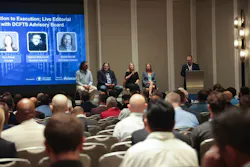
A conference ends when the rooms clear. A useful conference keeps moving in the language people carry back into the market.
In the hours surrounding the 2026 Data Center Frontier Trends Summit, LinkedIn became a distributed field notebook. Operators, developers, engineers, moderators, speakers and first-time attendees returned to specific ideas: announced megawatts versus energized megawatts, power as architecture rather than procurement, density as a spectrum, behind-the-meter systems as permanent infrastructure, and the AI factory as one integrated problem spanning land, power, storage, cooling and compute.
That public trail offers a useful heatmap of DCFTS 2026. The subjects generating the most discussion were also the ones carrying the greatest consequences for the industry.
The Theme Survived Contact With the Room
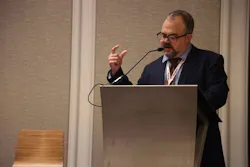
We built this year’s summit around a straightforward premise: the industry is moving from projection to execution.
Over three days in Reston, the program tested that premise from nearly every direction.
The opening editorial roll call established the distinction that ran through the event. AI demand remains enormous, but demand alone does not produce an operating data center. Power, entitled land, transmission, equipment, labor, capital, permitting and community acceptance determine how much of the announced pipeline can become energized capacity.
One first-time attendee captured the time-scale mismatch beneath the discussion: GPU generations turn over in roughly two years, while the electrical infrastructure serving them must operate for decades.
The question is no longer whether AI infrastructure will be built.
It is what can be delivered, where and on what schedule.
The Map Now Follows Deliverability
That distinction came into sharper focus during “The New Geography of AI,” the opening keynote conversation between Data Center Frontier founder Rich Miller and EdgeCore Digital Infrastructure CEO Lee Kestler.
Miller brought the long view of how data center markets form. Kestler brought the current realities of developing hyperscale infrastructure under severe power, construction and community constraints.
Their central point was that the next important data center location will not be determined by available land alone.
A viable market now requires real power, network reach, supply-chain access, skilled labor and a community prepared to host the project. It also requires a developer capable of assembling those elements on a credible schedule.
The phrase “the site has power” received particular scrutiny.
In the current market, that must mean more than nearby transmission or an encouraging utility conversation. Credible power requires completed studies, a defined substation plan, equipment moving through procurement, realistic load ramps and a utility relationship capable of surviving the years between site selection and full operation.
That separates a promising parcel from a project with a defensible route to energized capacity.
The conversation also complicated the assumption that the AI buildout will simply produce a new list of winning secondary markets. The map is becoming more distributed, but every location still brings its own mix of power conditions, entitlement risk, workforce capacity, logistics and public expectations.
As Kestler emphasized after the event, deliberate execution, practical timelines and transparency must travel together. Developers cannot promise certainty where it does not exist. They can establish clear milestones, communicate constraints early and give customers, utilities and communities a credible account of how the project will move forward.
Miller and Kestler also connected the new geography of AI to the work of entering a market: showing up early, investing locally and building relationships before opposition hardens around an incomplete understanding of the project.
Power may be redrawing the data center map. Execution will decide which marks on that map become real.
Power Became a Systems Discussion
Power was the hottest part of the DCFTS LinkedIn heatmap, but the discussion moved beyond the familiar observation that electricity is difficult to secure.
The larger question was how data centers should participate in the energy system once conventional utility service can no longer satisfy every project’s schedule or scale.
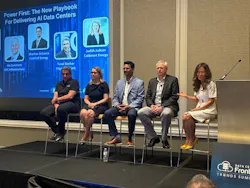
During “Power First,” Calibrant Energy’s Judith Judson offered one of the event’s most repeated concepts: do not build energy islands; build peninsulas.
A behind-the-meter system does not necessarily have to represent a permanent retreat from the grid. It can begin with onsite generation, storage or another source of firm capacity while preserving a future utility relationship.
GPC Infrastructure’s Jim Summers argued that data center developers must stop behaving like ordinary retail utility customers. Securing large volumes of natural gas, generation equipment and supporting infrastructure requires deeper partnerships than a conventional service application.
EdgeCloudLink’s Yuval Bachar emphasized the operational risk of connecting enormous, rapidly changing AI loads directly to a strained grid. Moderator Fengrong Li then posed a question that followed the panel onto LinkedIn: Can a data center become a healing agent for the grid rather than simply another load upon it?
There was no tidy consensus.
Utility power, onsite generation, batteries, fuel cells, rack-level load management and grid-forming systems are beginning to converge into a new data center power stack.
The discussion also exposed the difference between obtaining power and operating it. A project may have generation available and still lack the controls, redundancy, fuel strategy, interconnection structure or operational coordination required to serve a large AI load reliably.
Component availability is not the same as system availability.
Density Became a Spectrum
The density conversation became more credible when it stopped searching for a single winning number.
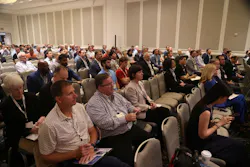
During “One Density Doesn’t Fit All,” three speakers offered three estimates for what production rack density could look like four years from now.
AWS’s Jasmeet Singh suggested 200 to 300 kW. Apolo’s Bill Kleyman offered 100 to 200 kW. Physical Superintelligence’s Scott Charter placed the figure closer to 75 kW.
The range was the point.
Training, inference, cloud, enterprise and legacy environments are not converging on a universal rack. The installed base will continue operating alongside purpose-built AI capacity, retrofitted halls, modular systems and specialized deployments with very different thermal and electrical requirements.
As QTS Data Centers’ David McCall wrote in his recap, AI infrastructure is no longer one design problem. It is a spectrum.
The session also helped move 800 VDC beyond the category of distant technical possibility. Speakers connected higher-voltage direct-current distribution to reduced conversion losses, smaller conductor requirements and broader changes in facility energy architecture.
The LinkedIn discussion continued around what “normal” density should mean, whether it referred to averages or best-available designs, and how extreme AI racks should be considered alongside decades of installed infrastructure.
Sustained production environments above 50 or 60 kW per rack remain limited compared with the full installed base. At the same time, systems engineered for 100 kW, 200 kW and substantially more are arriving.
Both realities are true.
Kleyman Kept the Lens on Execution
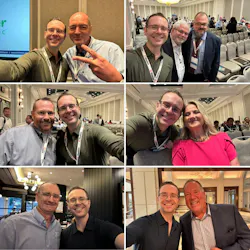
Bill Kleyman, Data Center Frontier contributing editor and CEO and co-founder of Apolo, served as one of the Summit’s connective voices—helping frame the event before Reston, moderating one of its central technical discussions, and then using his LinkedIn feed to carry the conversation beyond the room.
In the DCF Show preview with Matt Vincent, Kleyman supplied one of the phrases that became shorthand for the 2026 theme: “announced megawatts are not the same as energized megawatts.” His point was the distinction between infrastructure discussed, financed or announced and capacity that has actually been powered, commissioned and put into operation.
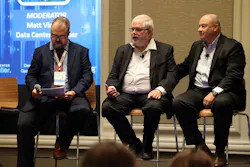
Onsite, Kleyman moderated “One Density Doesn’t Fit All: Designing AI Infrastructure Across the Spectrum,” alongside Jasmeet Singh of Amazon Web Services, Scott Charter of Physical Superintelligence, Jason Agee of Delta Electronics and Ken Patchett of Lambda. The session ranged from training versus inference and retrofit versus purpose-built facilities to liquid cooling, 800 VDC, digital twins and day-two operations.
The numbers made the point. Asked where production rack density could land four years from now, Singh put the range at 200–300 kW, Kleyman at 100–200 kW and Charter at about 75 kW. Rather than forcing a consensus, the spread reinforced the session premise: AI infrastructure is developing across multiple workload and density profiles.
Kleyman’s own takeaway was more useful than another headline rack number: “density is going up, but great infrastructure design still starts with the workload, not the headline.”
His Day 1 recap also reached across the wider program, picking up the opening editorial roll call, Rich Miller and Lee Kestler’s discussion of executable sites and power, and the recurring connections among design, supply chain, workforce and community acceptance. In that sense, Kleyman’s role at DCFTS extended beyond his panel: he helped translate the Summit’s execution theme into a running technical readout of what was actually being said in Reston.
The AI Factory Extended Beyond the Fence
NVIDIA’s Sean James carried the same execution theme into the Day 2 keynote with Meta’s Sanjay Gupta and the Open Compute Project Foundation’s Rob Coyle.
“Designing an AI factory is the easy part,” James wrote afterward. “Deploying one? That’s much harder.”
Digital twins can model compute, networking, power and cooling with extraordinary sophistication. The physical project remains subject to grid schedules, generation availability, equipment coordination and local operating conditions that cannot be solved inside a simulation.
James argued that land, power, storage and compute have become one problem. Teams that continue managing them as separate workstreams are creating the conditions for their own schedules to slip.
The AI factory therefore extends well beyond the data hall.
Grid capacity and time-to-power increasingly determine how much compute can be deployed at a site. In constrained markets, available infrastructure is beginning to define the compute envelope rather than simply support it.
Inference further complicates the picture. Training may support enormous campuses in a limited number of power-rich locations. Inference will also require regional and metropolitan capacity, each deployment encountering a different utility, land market, permitting structure and community environment.
The site-selection discussion made the same point from another angle. Power, fiber, water, transmission, entitlement, legal risk and public opposition are no longer separate items on a checklist.
Weakness in any one of them can stop an otherwise credible project.
Supply Chains Became an Orchestration Problem
The summit’s supply-chain discussions carried the same systems-level logic.
The constraint is no longer simply whether an individual generator, transformer, switchgear lineup, cooling unit or modular component can be obtained. The problem is coordinating those components so they arrive in the correct sequence and work together at deployment.
A delayed component can strand equipment already delivered to the site. A design change intended to solve one procurement problem can create new certification, integration or commissioning work elsewhere.
Developers, manufacturers, logistics providers, contractors and financiers increasingly need a shared view of lead times, substitutions, shipping conditions, installation sequences and the consequences of delay.
The industry has spent years optimizing individual links. The next requirement is orchestration across the full chain.
Construction Faced Its Own Reality Test
Construction discussions repeatedly returned to the gap between theoretical schedules and field conditions.
Accelerated delivery does not eliminate sequencing. Modularization does not remove the need for integration. More capital does not instantly create experienced trades, utility equipment or permitting capacity.
The pressure to deliver faster is real, but speed achieved through unresolved scope, late design changes or disconnected procurement decisions often returns later as rework.
The more durable path remains disciplined front-end coordination: clear design responsibility, earlier supplier involvement, better modeling, realistic commissioning plans and a direct understanding of where standardization is possible and where site conditions will resist it.
The industry needs speed. It also needs projects that work when they are turned on.
Permission Joined the Critical Path
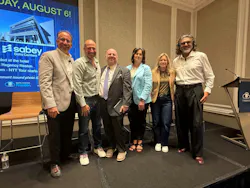
The closing panel, “Earning the Social License,” brought the summit’s execution theme back to the communities in which all this infrastructure must be built.
Buddy Rizer was the right moderator for that assignment. As executive director of Loudoun County Economic Development, he has worked from inside one of the industry’s most important host communities through extraordinary growth, changing expectations and a more complicated political environment.
Rizer was joined by Cologix Chief Business Officer Tara Risser, Nomad Futurist leaders Nabeel Mahmood and Phillip Koblence, Dominion Energy’s Stan Blackwell and Vantage Data Centers Vice President of Public Policy Misty Allen.
Together, they represented the operator, utility, policy, workforce and community-facing sides of the development equation.
The premise was not that data centers need better public relations.
It was that public acceptance has become an operating requirement.
The industry has often treated community engagement as something that follows the major project decisions. Developers select the land, define the power strategy, establish the design and begin moving through entitlement. The public conversation starts once much of the project has already taken shape.
By then, the decisions most likely to determine community reaction may already have been made.
A large campus brings questions about transmission, generation, water, construction traffic, noise, tax policy, land use and the cost of supporting infrastructure. Those concerns cannot be resolved by describing the economic benefits more forcefully. They must be addressed in the structure of the development.
That was the deeper meaning of the session’s title.
Social license is earned through what a company does before, during and after construction: how early it appears in the community, how clearly it explains the project, whether it acknowledges tradeoffs and whether the promised benefits remain visible after the groundbreaking.
For years, data centers could enter many markets with a relatively simple economic-development case. They brought major capital investment, a dependable tax base and comparatively limited demands on schools and other public services.
Those advantages remain substantial. They no longer settle the question by themselves.
AI campuses are larger. Their power requirements are more visible. Their supporting infrastructure can extend well beyond the property line. The public is therefore evaluating more than the data center. It is evaluating the system required to support it.
Rizer’s presence gave that issue particular weight. Loudoun County helped demonstrate how digital infrastructure can become an economic engine. Its experience also shows why success creates a higher standard for the next project.
Some objections will be ideological. Others will arise from incomplete information. But many reflect concrete concerns about energy costs, land, infrastructure and whether residents were treated as participants in the process or as an audience assembled after the important decisions had been made.
The companies best positioned to keep building will engage before a project reaches a public hearing. They will explain the load, the timeline and the supporting infrastructure in terms a community can evaluate. They will avoid promising certainty where power delivery, transmission or permitting remains unresolved.
They will also make workforce and economic-development commitments specific enough to be measured later.
The session’s core formulation connected the panel to everything that preceded it: social license is an outcome of execution rather than messaging.
A poorly selected site becomes a community problem. An unrealistic power claim becomes a credibility problem. A project that appears only when it needs approval begins the relationship from behind.
Demand may explain why the industry wants to build.
It does not confer permission.
The Conversation Continued Outside the Sessions
One of the most encouraging aspects of the LinkedIn response was its specificity.
Attendees did not merely report that they had heard a good panel. They carried arguments and questions into public view.
They debated whether behind-the-meter power should remain connected to the grid. They questioned how rack-density averages should be defined. They discussed transient AI loads, backup strategies, utility relationships, 800 VDC, waste heat and the difference between component availability and whole-system availability.
The structured roundtables reinforced that purpose.
Discussions around colocation economics, liquid cooling, onsite power, construction pressure and high-density deployment gave attendees space to examine the issues without reducing the exchange to stage-managed answers.
One attendee described the Power First panel as the rare session where the ideas were still competing when the hour ended.
The public posts also revealed which concepts proved portable: energy peninsulas, the density spectrum, announced power versus deliverable power, the AI factory extending beyond the fence, and social license as an operating result.
Those phrases moved because they gave people useful language for conditions they were already encountering.
What the Heatmap Says
Some LinkedIn activity surrounding any conference will always be promotional. Companies announce appearances. Sponsors photograph booths. Speakers post their session times.
The stronger DCFTS posts were different.
They contained numbers, technical distinctions, operating questions and arguments that remained unsettled after the sessions ended.
Taken together, they show that the program’s central theme held.
The market is no longer asking only whether AI infrastructure demand is real. It is asking which projects can secure power, survive permitting, integrate cooling, manage new electrical architectures, obtain equipment, reach commissioning, operate reliably and retain public support.
The conference did not resolve those issues. It did establish a clearer picture of the work in front of the industry—and gave the people doing that work room to challenge one another directly.
The Frontier Moves West
DCFTS will now take that conversation into a different operating environment.
The Data Center Frontier Trends Summit is scheduled to move west to Glendale, Arizona, in May 2027, alongside the Microgrid Knowledge Conference.
The West brings another set of execution tests: power availability, water, heat, long-distance transmission, fast-growing load, emerging markets and the relationship between major infrastructure projects and the communities asked to host them.
The opportunity is not simply to reproduce Reston in a new location.
It is to preserve what worked—editorial discipline, technically serious rooms, direct audience exchange and a willingness to let competing ideas remain in competition—while building a program grounded in Arizona and the wider Western market.
For now, the clearest review of DCFTS 2026 may also be the simplest.
The theme was execution.
The room took it seriously.
And the conversation followed people home.
To everyone who spoke candidly, asked a difficult question, shared experience and helped make the room useful: thank you.
At Data Center Frontier, we talk the industry talk and walk the industry walk. In that spirit, DCF Staff members may occasionally use AI tools to assist with content. Elements of this article were created with help from OpenAI's GPT5.
Keep pace with the fast-moving world of data centers and cloud computing by connecting with Data Center Frontier on LinkedIn, following us on X/Twitter and Facebook, as well as on BlueSky, and signing up for our weekly newsletters using the form below.
About the Author
 Matt Vincent
Matt Vincent
Matt Vincent is Editor in Chief of Data Center Frontier, where he leads editorial strategy and coverage focused on the infrastructure powering cloud computing, artificial intelligence, and the digital economy. A veteran B2B technology journalist with more than two decades of experience, Vincent specializes in the intersection of data centers, power, cooling, and emerging AI-era infrastructure. Since assuming the EIC role in 2023, he has helped guide Data Center Frontier’s coverage of the industry’s transition into the gigawatt-scale AI era, with a focus on hyperscale development, behind-the-meter power strategies, liquid cooling architectures, and the evolving energy demands of high-density compute, while working closely with the Digital Infrastructure Group at Endeavor Business Media to expand the brand’s analytical and multimedia footprint. Vincent also hosts The Data Center Frontier Show podcast, where he interviews industry leaders across hyperscale, colocation, utilities, and the data center supply chain to examine the technologies and business models reshaping digital infrastructure. Since its inception he serves as Head of Content for the Data Center Frontier Trends Summit. Before becoming Editor in Chief, he served in multiple senior editorial roles across Endeavor Business Media’s digital infrastructure portfolio, with coverage spanning data centers and hyperscale infrastructure, structured cabling and networking, telecom and datacom, IP physical security, and wireless and Pro AV markets. He began his career in 2005 within PennWell’s Advanced Technology Division and later held senior editorial positions supporting brands such as Cabling Installation & Maintenance, Lightwave Online, Broadband Technology Report, and Smart Buildings Technology. Vincent is a frequent moderator, interviewer, and keynote speaker at industry events including the HPC Forum, where he delivers forward-looking analysis on how AI and high-performance computing are reshaping digital infrastructure. He graduated with honors from Indiana University Bloomington with a B.A. in English Literature and Creative Writing and lives in southern New Hampshire with his family, remaining an active musician in his spare time.
Related
Voices of the Industry
 Source: Adobe Stock, courtesy of ebm-papst
 Source: Champion Fiberglass