Land and Expand: Early 2026 Megaprojects Reflect a Power-First Ethos
Key Highlights
- Developers are focusing on fully packaged infrastructure solutions, pairing land, power, and water with upfront community and regulatory commitments.
- Major projects like Applied Digital's Delta Forge and Vantage's Lighthouse exemplify power-first, scalable campuses designed to meet AI demand curves.
- The land-and-expand strategy involves long-term land banking, securing substantial power positions, and phased capacity delivery to stay ahead of hyperscale requirements.
- Global markets, including Europe and the Nordics, are adopting similar pre-positioning models, with large sites and power banks being secured years in advance.
- The emerging playbook emphasizes infrastructure co-investment, community engagement, and strategic site selection as key to future data center success.
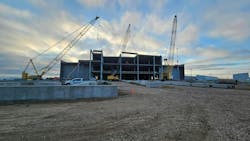
In the latest installment of Data Center Frontier’s Land and Expand series, early 2026 project activity shows developers adapting quickly to a more contested approval environment. Despite the rising opposition to large-scale data center development documented in our previous coverage, several major hyperscale and wholesale campuses have moved forward in the year’s opening months. The common thread is increasingly clear. Developers are leaning heavily on transmission access, new generation strategies, and sophisticated rate and regulatory structures to maintain project momentum.
Rather than racing to secure approvals ahead of potential policy shifts, many builders appear to be recalibrating their community engagement strategy. The emerging playbook centers on fully packaged infrastructure solutions where land, power, water, and construction planning are tightly integrated and paired with upfront commitments around transparency and local investment. As AI-driven demand accelerates globally (a trend highlighted in our recent coverage of major hyperscale expansions in both the U.S. and Europe) this holistic, power-first positioning is rapidly becoming the price of admission for gigawatt-scale campus development.
Power-Ready Campuses Gain Momentum in Early 2026
Applied Digital — Delta Forge 1 Breaks Ground
Applied Digital announced it has broken ground on Delta Forge 1, positioning the project explicitly as an AI Factory campus in a “Southern U.S. state.” The development is sized for approximately 430 MW of utility power and is aimed squarely at large-scale AI workloads, underscoring the company’s push to align site selection, power availability, and cooling architecture from the outset.
Wes Cummins, Chairman and Chief Executive Officer of Applied Digital, has emphasized that AI factories ultimately succeed or fail based on how effectively power, cooling, and operations are integrated; a philosophy that closely mirrors broader strategies now taking hold across both hyperscale and wholesale development pipelines:
“We believe this campus will be built to scale alongside hyperscale demand while delivering operational certainty for customers and lasting value for the communities where we operate.”
The company said the initial phase will include two 150 MW facilities on a site spanning more than 500 acres, with first operations targeted for 2027. While Applied Digital has not publicly disclosed the exact location beyond identifying it as a Southern U.S. state, the scale of the land position and phased build plan reflects a classic land-and-expand posture, i.e. securing sufficient acreage and power headroom upfront to accommodate the multi-stage growth curves associated with large AI deployments.
Vantage — Lighthouse (Port Washington, Wisconsin)
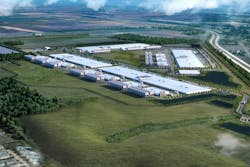
Although the on-site ceremonial groundbreaking occurred in 2025, Vantage Data Centers’ Lighthouse campus in Port Washington, Wisconsin, remained one of the most closely watched AI infrastructure developments entering 2026, with updated local materials posted February 19 reinforcing the project’s scale and timeline.
Announced in October 2025 in partnership with OpenAI and Oracle, Lighthouse is positioned as the Midwest anchor site within the companies’ broader Stargate expansion, which targets up to 4.5 gigawatts of additional AI capacity globally. Current plans call for four hyperscale data centers delivering nearly 902 MW of IT load on a site encompassing roughly 672 acres, with construction expected to run through 2028.
From a Land and Expand perspective, the project exemplifies the new generation of AI campuses involving large-scale land banking paired with phased delivery designed to stay ahead of hyperscale demand curves.
Just as notable is the project’s power and community framework. Vantage is working with WEC Energy Group’s We Energies on a dedicated rate structure under which the developer will underwrite 100% of the power infrastructure investment, a model explicitly designed to shield existing customers from rate increases. The utility partnership also includes plans to enable nearly 2 gigawatts of new zero-emission energy capacity, with approximately 70% allocated to the Lighthouse campus and the remainder supporting broader grid needs.
Water and environmental positioning are also central to the project narrative. Lighthouse is designed around a closed-loop liquid cooling system intended to minimize water consumption, alongside local restoration investments aimed at achieving water positivity. Vantage has also committed to preserving significant portions of the site’s natural landscape while pursuing LEED certification for the campus.
Economically, the development is expected to generate more than 4,000 primarily union construction jobs and over 1,000 long-term operational roles, while Vantage has pledged at least $175 million in regional infrastructure upgrades, including water, wastewater, and power improvements.
Taken as a case study, Lighthouse exemplifies how next-generation hyperscale campuses are increasingly structured as fully integrated infrastructure plays combining gigawatt-scale power planning, environmental positioning, and community investment well before tenant ramps fully materialize.
AVAIO Digital — Little Rock, Arkansas AI and Power Campus
Arkansas officials have positioned AVAIO Digital’s planned Little Rock development as a multi-phase AI-ready campus anchored by an initial $6 billion investment, with long-term buildout potential that could scale significantly higher. The project currently holds a 150 MW power commitment from Entergy Arkansas, but the company has indicated the campus could ultimately expand toward 1 gigawatt of demand as capacity is added over time.
That power trajectory underscores how closely the project is tied to grid planning and regional economic development strategy. With initial operations targeted for 2027, AVAIO’s approach reflects a classic land-and-expand posture in securing an early utility foothold, while signaling a much larger AI growth runway designed to align with hyperscale demand curves. Moves like this are increasingly common as emerging developers seek to lock in power positions ahead of confirmed AI tenant ramps.
Arkansas Governor Sarah Sanders said:
“AVAIO Digital’s $6 billion data center hub represents the largest economic investment in Arkansas’ history and sets the Natural State up to become a technology powerhouse that can compete with any state in the nation. Just last year, Arkansas led the way and passed legislation that reduced the regulatory timeline for new energy projects by more than half and offered new incentives to data center investments. This announcement confirms that cutting red tape and cultivating a pro-business, pro-growth environment is not only appealing to companies; it is what makes Arkansas one of the best states to live and work.”
Crow Holdings and CleanArc — Central Dallas Infill Campus
Crow Holdings has unveiled plans for a 245 MW multi-building data center campus in central Dallas, activating an urban infill site the firm has controlled for decades. The approximately 40-acre Stemmons Corridor location sits near two of the region’s most important interconnection hubs, the Infomart at 1950 Stemmons Freeway and 2323 Bryan Street, giving the project unusual network density for a large-scale campus.
Development will begin with an initial 70 MW building targeted for late 2027, to be delivered in partnership with CleanArc Data Centers. The full site is planned to scale to 245 MW supported by a dedicated on-site substation, positioning the campus to serve hyperscale, AI, and network-dense workloads.
Unlike many greenfield AI campus announcements, the Dallas project highlights a complementary land-and-expand pathway: long-term urban land banking paired with phased capacity delivery in one of the nation’s most connectivity-rich corridors. The move also reflects a broader push by established real estate platforms to reposition legacy holdings for the current wave of high-density digital infrastructure demand. Crow has indicated its wider digital infrastructure pipeline under evaluation exceeds 3 gigawatts across multiple U.S. markets.
Kevin McMeans, Managing Director at Crow Holdings, described the project as a milestone for the firm’s digital infrastructure strategy, saying:
“The combination of location, power scale, and development flexibility allows us to serve hyperscale, AI, and interconnection-driven users from a single, highly differentiated campus.”
Rowan Digital Infrastructure — Project Temple (Texas)
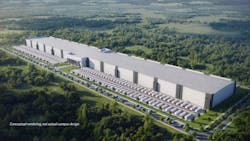
Rowan Digital Infrastructure in January began construction on its 300 MW Project Temple campus in Central Texas, marking the company’s largest development to date. The roughly 700-acre site is designed to support a long-term hyperscale customer and is targeting initial operations in 2027.
Power for the campus has been secured through a partnership with Oncor, reinforcing Texas’ continued role as a priority market for large-scale AI and cloud infrastructure. The project represents at least a $700 million investment in the Temple area and is expected to generate approximately 600 construction jobs and more than 40 permanent roles once operational.
Notably, Project Temple received unanimous approval from both the Temple City Council and Bell County Commissioners Court following what local officials described as extensive engagement with community stakeholders, an increasingly important success factor as large campuses face heightened scrutiny nationwide.
From a land-and-expand perspective, the development fits Rowan’s broader strategy of assembling large, power-secured campuses capable of scaling alongside hyperscale demand. The company reports nearly 2 gigawatts in active development nationally, with additional multi-hundred-megawatt sites in its pipeline.
Rowan CEO Charley Daitch said of the project:
“This campus will help unlock the real-world benefits that AI and digital infrastructure can have on people’s lives. We’re honored to build infrastructure here that enables breakthroughs in modern medicine, helps address climate challenges, and improves the everyday lives of people around the world.”
Amazon — Northwest Louisiana Multi-Campus Buildout
Amazon’s planned $12 billion data center expansion in northwest Louisiana, announced February 23–24, stands as one of the clearest early-2026 examples of hyperscale developers embedding infrastructure co-investment directly into site strategy. The initiative spans multiple campuses across Caddo and Bossier parishes and pairs large-scale capacity deployment with significant local infrastructure commitments.
Most notably, Amazon has pledged up to $400 million toward regional water system improvements while coordinating closely with Southwestern Electric Power Company (SWEPCO) on power delivery. Under the proposed structure, Amazon will fund 100% of the costs associated with the new electric infrastructure required to serve the campuses, exercising a model increasingly designed to address regulator and community concerns about ratepayer exposure.
Viewed through a land-and-expand lens, the Louisiana announcement reads like a template for the emerging megaproject playbook:
-
Multi-site deployment, enabling risk distribution across parcels
-
Upfront water infrastructure investment, directly addressing community resource concerns
-
Power coordination as a first-order siting priority
Together, these elements illustrate how community acceptance and infrastructure co-investment are becoming embedded in hyperscale construction planning rather than treated as downstream considerations.
Louisiana Governor Jeff Landry described the project’s siting in the state:
“Amazon is making a long-term commitment to Louisiana because our state delivers—prime sites, strong infrastructure and a skilled, hard-working workforce ready to support the next generation of technological innovation. Investments of this magnitude put Louisiana at the center of operations relied on across the country and connect our communities to jobs that power how Americans live, work and do business.”
Wholesale Developers Scale for AI Demand
While hyperscalers continue to anchor the largest headline announcements, major wholesale developers are increasingly pursuing similar land-and-expand strategies by banking large sites, securing substantial power positions, and delivering AI-ready capacity ahead of confirmed tenant ramps.
QTS — Fayetteville, Georgia Expansion Activity
QTS continues to deepen its presence south of Atlanta with new expansion activity at its Fayetteville, Georgia campus, reinforcing the region’s status as one of the nation’s most competitive hyperscale corridors. Recent regional filings indicate the company is advancing plans that could add significant new data center capacity on a site measured in the hundreds of acres.
The Fayetteville development forms part of QTS’s broader Georgia platform, where large-scale land control, transmission access, and proximity to major fiber routes remain central to the siting strategy. The move illustrates how wholesale providers are increasingly operating on the same forward-capacity assumptions that have traditionally defined hyperscale self-build programs.
Aligned Data Centers — Phoenix/Glendale Expansion
Aligned Data Centers continues to scale its Arizona footprint, including development activity at its Glendale-area campus, where the company has been advancing a multi-building hyperscale site designed for AI and cloud workloads. The first facility at the location, PHX-13, is planned to deliver 72 MW and is supported by new high-voltage transmission infrastructure to meet the campus’s substantial power requirements.
The broader Phoenix strategy reflects Aligned’s long-standing “Expand on Demand” model, which emphasizes adaptive infrastructure capable of scaling density within an existing footprint. The approach illustrates how wholesale providers are pre-positioning flexible, high-density capacity to capture fast-moving AI deployments without waiting for fully committed tenant ramps.
EdgeCore Digital Infrastructure — Mesa, Arizona Campus Expansion
EdgeCore Digital Infrastructure is likewise expanding aggressively in the Phoenix metro, adding roughly 43.9 acres to its Mesa campus and pushing planned capacity beyond 450 MW to meet what the company describes as urgent hyperscale AI and cloud demand.
The Mesa buildout highlights the classic wholesale land-and-expand pattern: incremental land assembly, staged capacity delivery, and early power coordination with Salt River Project (SRP) to support multiple buildings coming online through the mid-decade window. The campus ultimately is expected to span roughly 3.1 million square feet, underscoring the scale at which wholesale platforms are now operating in top-tier AI markets.
Global Land Banking Signals Broader Shift
The land-and-expand dynamic is not confined to North America. Across Europe and the Nordics, developers and investors are similarly assembling large sites, securing power pathways, and positioning for AI-driven demand that is increasingly global in scope.
Vantage Data Centers — France AI Expansion
Vantage Data Centers has continued extending its hyperscale campus model into continental Europe, including new AI-focused capacity initiatives in France. The move reflects a broader strategy among global platforms to replicate the large-acreage, phased-delivery approach now common in the U.S., pairing early land control with forward power planning to capture anticipated AI growth across the region.
atNorth — Nordic Capacity and Strategic Acquisition
Nordic operator atNorth has likewise advanced large-scale capacity plans in Sweden, reinforcing the continued gravitational pull of power-advantaged geographies for AI infrastructure. The company’s trajectory gained additional momentum in February 2026, when Equinix and CPP Investments agreed to acquire atNorth in an approximately $4 billion transaction aimed at accelerating the platform’s Nordic expansion.
The deal highlights growing investor conviction in energy-rich northern markets. atNorth reports roughly 1 gigawatt of secured power and an active development pipeline approaching 800 MW, positioning the platform to capture rising European AI demand. In land-and-expand terms, the transaction underscores how global operators are pairing substantial power banks with fresh capital to scale ahead of hyperscale requirements.
The Pre-Positioning Playbook Takes Shape
Taken together, the early-2026 project wave points to a market that is rapidly standardizing around a new development model. From Amazon’s infrastructure-forward Louisiana campuses and Vantage’s gigawatt-class Lighthouse project to wholesale expansions by QTS, Aligned, and EdgeCore, and now Equinix-backed capital flowing into Nordic platforms, the throughline is fairly evident.
Large-scale digital infrastructure is no longer being sited opportunistically. It is being pre-positioned: land banked years in advance, power secured ahead of tenant ramps, and community concessions embedded early in the approval process. For developers and investors alike, the message is becoming clearer each month. In the AI era, the winners will not simply build capacity. They will control the conditions that allow it to scale.
Level1Techs tours Applied Digital’s AI-focused data center environment, showcasing NVIDIA SuperCluster infrastructure and the high-density power profile driving next-generation AI deployments.
At Data Center Frontier, we talk the industry talk and walk the industry walk. In that spirit, DCF Staff members may occasionally use AI tools to assist with content. Elements of this article were created with help from OpenAI's GPT5.
Keep pace with the fast-moving world of data centers and cloud computing by connecting with Data Center Frontier on LinkedIn, following us on X/Twitter and Facebook, as well as on BlueSky, and signing up for our weekly newsletters using the form below.
About the Author
 David Chernicoff
David Chernicoff
 Matt Vincent
Matt Vincent
Matt Vincent is Editor in Chief of Data Center Frontier, where he leads editorial strategy and coverage focused on the infrastructure powering cloud computing, artificial intelligence, and the digital economy. A veteran B2B technology journalist with more than two decades of experience, Vincent specializes in the intersection of data centers, power, cooling, and emerging AI-era infrastructure. Since assuming the EIC role in 2023, he has helped guide Data Center Frontier’s coverage of the industry’s transition into the gigawatt-scale AI era, with a focus on hyperscale development, behind-the-meter power strategies, liquid cooling architectures, and the evolving energy demands of high-density compute, while working closely with the Digital Infrastructure Group at Endeavor Business Media to expand the brand’s analytical and multimedia footprint. Vincent also hosts The Data Center Frontier Show podcast, where he interviews industry leaders across hyperscale, colocation, utilities, and the data center supply chain to examine the technologies and business models reshaping digital infrastructure. Since its inception he serves as Head of Content for the Data Center Frontier Trends Summit. Before becoming Editor in Chief, he served in multiple senior editorial roles across Endeavor Business Media’s digital infrastructure portfolio, with coverage spanning data centers and hyperscale infrastructure, structured cabling and networking, telecom and datacom, IP physical security, and wireless and Pro AV markets. He began his career in 2005 within PennWell’s Advanced Technology Division and later held senior editorial positions supporting brands such as Cabling Installation & Maintenance, Lightwave Online, Broadband Technology Report, and Smart Buildings Technology. Vincent is a frequent moderator, interviewer, and keynote speaker at industry events including the HPC Forum, where he delivers forward-looking analysis on how AI and high-performance computing are reshaping digital infrastructure. He graduated with honors from Indiana University Bloomington with a B.A. in English Literature and Creative Writing and lives in southern New Hampshire with his family, remaining an active musician in his spare time.
Voices of the Industry
 Image courtesy of Midea Building Technologies
 Adobe Stock image courtesy of Hitachi Energy