Innovations in Offshore Data Centers: Chinese Undersea Deployments, US Floating Platforms, and Future Prospects
Key Highlights
- China leads the way with full-scale, offshore wind-powered underwater data centers, such as the 24 MW Shanghai project, integrating green energy with subsea infrastructure.
- Panthalassa proposes autonomous, wave-powered floating AI nodes that process data offshore, aiming to reduce land use and interconnection delays for AI inference workloads.
- Microsoft's Project Natick demonstrated technical feasibility and reliability of subsea data centers but highlighted challenges in maintenance, sealing, and integration into mainstream cloud operations.
- Environmental concerns, especially heat discharge into sensitive ocean ecosystems, require credible impact assessments as underwater data centers scale up.
- Emerging players like Aikido Technologies and Japanese ship-conversion projects are exploring floating offshore data centers, blending renewable energy, maritime expertise, and innovative design.
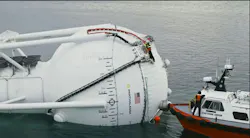
For nearly a decade, underwater data centers sat in an odd place in the conversation about data center infrastructure advancement: technologically plausible, environmentally intriguing, but commercially unproven. Microsoft’s Project Natick showed that servers could survive sealed inside pressure vessels on the seabed, cooled by the ocean and left alone for years. But Microsoft ultimately walked away from active subsea deployment, leaving the idea looking more like a research footnote than a market. That is changing.
The renewed push is coming from multiple directions. China is now treating underwater data centers as part of its green computing and marine economy strategy, with commercial systems off Hainan and Shanghai. At the same time, Peter Thiel has led a major financing round for Panthalassa, a U.S. startup that wants to put AI inference on autonomous floating platforms powered by wave energy. These are very different technologies: China is putting sealed modules under the sea; Panthalassa is proposing floating, self-powered compute nodes at sea. But together they show that the ocean has become part of the data center land-and-power debate.
The key question is no longer whether a server can run underwater. It can. The question is can these technologies scale economically, safely, and reliably, in the face of AI’s power demand.
The China Breakthrough: Commercial UDCs, Not Just Experiments
China has moved furthest from demonstration toward deployment. The most recent headline is Shanghai’s offshore wind-powered underwater data center in the Lingang Special Area. Multiple sources reported in May 2026 that HiCloud’s offshore wind-powered underwater data center had reached full commercial operations, with a stated capacity of 24 MW and a location off Shanghai’s coast. The project was launched in June 2025, completed in October, tested in February, and entered full operations in May 2026.
The Shanghai system is more similar to the original Microsoft research: put pressure-resistant server modules in the ocean, use seawater as a passive heat sink, and connect the facility directly to offshore wind. Reports place the modules roughly 35 meters below the surface, with Chinese media claiming PUE below 1.15. That figure matters because a large share of land-based data center overhead comes from cooling, air movement, chillers, pumps, and heat rejection. A subsea vessel surrounded by cold, thermally stable water can shed heat without the same air-side infrastructure.
Offshore Wind reported that the Lingang project was developed in phases: an initial 2.3 MW demonstration facility, scaling to 24 MW in the second phase. It cited developer claims that the facility reduces electricity consumption by 22.8%, eliminates water use, cuts land use by more than 90%, and maintains PUE around 1.15. GPU servers inside the underwater modules are reportedly being used for big data annotation, domestic large language model development, and coordination between offshore and onshore computing resources.
China is positioning the technology as AI infrastructure, tied to green power, coastal industrial zones, and domestic compute capacity. China Telecom and LinkWise are among the reported users or participants in the Shanghai deployment.
The Shanghai project builds on earlier Chinese underwater data center activity in Hainan. Multiple sources reported in 2025 that the Hainan underwater data center cluster uses seabed deployment to minimize land use and relies on modular construction that can be deployed within 90 days after factory installation and testing and had been launched in 2023.
HiCloud’s own development story also matters. Lingang’s official English site said in 2025 that Shanghai HiCloud Technology had completed 50 million yuan in Series A financing, bringing total financing above 100 million yuan. It described an underwater data center as a sealed pressure vessel on the seabed, supplied by submarine composite cables and connected back to the internet. The same source said HiCloud was established in 2020 by Beijing Highlander Digital Technology, relocated its main entity to Shanghai’s Lingang Special Area, and had more than 100 patents spanning navigation, ocean observation, and UDC businesses.
It is still early, but China is currently the country most clearly attempting to commercialize submerged data centers at meaningful scale. A US-based project dumping huge amounts of heat into an ocean ecosystem would be sure to get a lot of environmental scrutiny. It will be interesting to see if these Chinese projects get the same evaluations.
Peter Thiel and Panthalassa: Compute That Rides the Ocean
Peter Thiel’s involvement is in a different category. Panthalassa is not proposing a conventional underwater data center sitting on the seabed. It is developing autonomous ocean-powered computing systems that use wave energy to run AI workloads onboard.
In May 2026, Panthalassa announced a $140 million Series B round led by Peter Thiel, with participation from John Doerr, Marc Benioff’s TIME Ventures, Max Levchin’s SciFi Ventures, Super Micro Computer, Fortescue Ventures, and others. The company said the funding would complete a pilot manufacturing facility near Portland, Oregon, and accelerate deployment of its Ocean-3 series of nodes for AI inference computing at sea using power generated from ocean waves. Thiel said:
The future demands more compute than we can imagine. Extra-terrestrial solutions are no longer science fiction. Panthalassa has opened the ocean frontier.
The architecture is conceptually radical. Panthalassa describes its nodes as self-propelled systems that capture wave energy, generate clean electricity, run AI computing onboard, and transmit data via low-Earth-orbit satellites. The company is not trying to export power back to shore. Instead, it wants to bring compute to the power source, process inference workloads offshore, and send the results back.
Massive AI training clusters require extremely tight networking, high-bandwidth east-west traffic, and highly synchronized accelerator fleets. A floating node farm connected by satellite is unlikely to be the first choice for frontier model training. But inference is a different workload. If the task is to receive a prompt, run a model, and return an answer, the network architecture can tolerate more distance and looser coupling, especially for batchable or non-latency-critical workloads.
Panthalassa’s pitch is a direct response to three pain points in terrestrial AI infrastructure: power interconnection delays, land-use conflict, and cooling constraints.Much like just about every non-traditional data center location proposal, the company wants to manufacture ocean-based power-and-compute nodes and deploy them where wave energy is strongest. Instead of waiting years for a utility interconnect, substation, gas plant, transmission upgrade, or water permit, Its public language frames the ocean as a “planetary-scale energy resource,” not merely a cooling reservoir.
Panthalassa concepts are at the high-risk end of the market. China’s subsea modules look like marine-hardened versions of conventional data center infrastructure. Panthalassa’s model combines wave energy conversion, autonomous marine operations, satellite communications, and onboard AI computing in one system. Each piece has precedent. Combining them into reliable commercial infrastructure is the hard part.
Microsoft’s Natick: The Proof That Also Became a Warning
Any serious discussion of underwater data centers has to pass through Microsoft’s Project Natick. The project remains the most studied Western demonstration of the concept. Microsoft described Natick as a research project to determine the feasibility of subsea data centers powered by offshore renewable energy. Its Phase 2 deployment placed a full-scale module in the North Sea, powered by renewable energy.
The results were impressive. Microsoft reported that the servers in the Natick Northern Isles module had a failure rate one-eighth that of a land-based control group. The company attributed that performance in part to the stable subsea environment and the sealed, oxygen-free atmosphere inside the vessel.
Natick also shows why feasibility is not the same as adoption. In 2024, Microsoft confirmed that Project Natick was no longer active. Microsoft also has no data centers in the water but planned to continue using Natick as a research platform for concepts around reliability and sustainability, including liquid immersion.
That should temper the hype. Microsoft proved that underwater data centers can work technically. It did not prove that hyperscalers should deploy them as a mainstream cloud architecture. The hyperscale model is built around repeatability, maintainability, supply-chain velocity, massive campuses, and constant hardware refresh. A sealed module on the ocean floor may be reliable, but it is also harder to service, harder to upgrade, and harder to integrate into standard data center operations.
The Engineering Case: Elegant in Theory, Difficult in Practice
The technical case for underwater data centers is strong in theory. Seawater provides constant cooling. Sealed modules reduce dust, humidity swings, oxygen exposure, and human handling. Factory-built pressure vessels could be standardized and deployed quickly. Cable landing and coastal proximity could reduce latency for coastal populations. But each of these advantages has a matching disadvantage.
Maintenance is the obvious issue. A land-based data hall can be entered by technicians. A subsea module may need to be raised, swapped, or serviced by marine crews. That encourages a design philosophy closer to satellites or subsea telecom repeaters: build it, seal it, monitor it, and assume you will not touch it often. That could work for carefully selected hardware and workloads, but it clashes with the rapid accelerator refresh cycle of AI.
Corrosion and sealing are equally serious. Saltwater is unforgiving. Pressure vessels, connectors, composite cables, heat exchangers, and cable penetrations must survive years of exposure. Even if the servers are sealed inside, the external systems are marine infrastructure.
Networking is another constraint. Underwater data centers still need fiber connectivity. Panthalassa’s satellite model avoids seabed cabling but introduces bandwidth, latency, and availability questions. For inference, that may be acceptable in some cases. For high-performance distributed training, it is much harder.
Thermal discharge is a long-term environmental question. The ocean is a huge heat sink, but local ecosystems are sensitive. A few modules may have limited impact; hundreds of megawatts of subsea heat rejection could attract more scrutiny. Developers will need credible environmental impact assessments, not just PUE claims.
What Is Real, What Is Speculative
The most real activity today is in China. Hainan and Shanghai have moved from pilot projects into commercial deployments, with state-aligned partners, telecom participation, and explicit links to AI workloads. The Shanghai 24 MW project is the most important current benchmark because it ties underwater compute to offshore wind and claims commercial operation.
Panthalassa is currently drawing investor interest, but it should be treated as a frontier infrastructure startup rather than a proven data center operator. The $140 million Thiel-led round is significant, and the participation of Supermicro Computer is notable because it suggests hardware ecosystem interest. But the Ocean-3 model still has to prove deployment, uptime, unit economics, marine survivability, customer demand, and regulatory acceptance.
The most important historical proof point remains Microsoft Natick. It demonstrated reliability advantages and validated the basic subsea concept, but Microsoft’s decision not to continue active underwater deployment is a major caution signal.
Subsea Cloud and other smaller players remain part of the broader ecosystem, but there is less public evidence that they have matched China’s operational scale or Panthalassa’s recent financing momentum. Subsea Cloud markets modular underwater data center units built and deployed in 12 weeks with long service lives, but given the amount of interest in alternative cooling and location options, there has been little mention of this technology.
China is currently proving the submerged commercial model. Panthalassa is testing the floating ocean-powered model. Microsoft proved the concept and then stepped back. The next phase will determine whether the ocean becomes a true data center frontier, or remains a compelling niche for places where land, water, and power have become too difficult onshore.
Other Recent Innovators
There are additional entrants in the offshore data center technology space. One of the more interesting new entrants is Aikido Technologies, a San Francisco offshore infrastructure startup. In March 2026, it unveiled AO60DC, a floating offshore wind platform that would integrate a 15–18 MW wind turbine, battery storage, and roughly 10–12 MW of AI-grade compute inside prefabricated data halls built into the platform’s steel structure. Data Center Dynamics reported that each unit would include three 3–4 MW data halls, with batteries intended to extend operating hours.
This is not a seabed data center like Microsoft Natick or HiCloud. It is closer to a floating offshore AI factory module: power generation, energy storage, compute, and seawater cooling colocated at sea. Aikido is also reportedly developing a 100 kW proof-of-concept unit in Norway, with a launch scheduled later in 2026 and a commercial deployment off the U.K. coast targeted for 2028.
In Yokohama, Japan, a floating renewable-powered data center demonstration began March 25, 2026, moving from concept to live demonstration. On March 25, 2026, Yokohama City, NYK Line, NTT Facilities, Eurus Energy Holdings, and MUFG Bank began a demonstration of an offshore floating green data center at Yokohama Port’s Osanbashi Pier. The project places a containerized data center, solar power, and battery storage on a floating mini-platform and is intended to run on 100% renewable energy.
NYK’s release says the demonstration will test salt-damage resistance, vibration-related operational stability, and renewable-energy management through around the end of Japan’s fiscal 2026.
A second Japanese track appeared in March 2026. Mitsui O.S.K. Lines, Hitachi, and Hitachi Systems signed an MOU to develop and commercialize floating data centers converted from second-hand vessels. The companies said they will conduct demand verification, review specifications and operating procedures, and study commercialization with operations possible in 2027 or later.
This is a ship-conversion model rather than a purpose-built offshore wind or subsea system. Hitachi’s role is notable because it brings IT systems and customer engagement capability, while MOL brings maritime operations and vessel conversion expertise. This seems like an extension of the Karpowership model that we covered in detail in mid 2025.
About the Author
 David Chernicoff
David Chernicoff
Voices of the Industry
 Image courtesy of Midea Building Technologies
 Adobe Stock image courtesy of Hitachi Energy