Data Center Construction in 2026: Strategies Owners Must Know to Stay Ahead

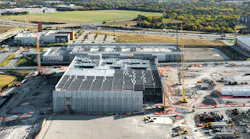
Many industry sectors face uncertainties heading into 2026. Here in the data center world, especially in data center construction, we have little doubt about the year ahead. We know it’s going to be another year of growth and building, delivering capacity and uptime at record speeds.
The boom in data center building feels like the early 2010s boom in the commercial market that literally changed the skylines of American cities. Back then, materials like glass and some interior finishes had lead times of more than a year. A similar squeeze has come for data centers but related to electrical equipment like switchgear and other critical building elements.
In DPR Construction’s recent Market Conditions Report, we examined key pressures the data center market will face in the year ahead that owners, designers and contractors must work together on to ensure that projects starting in 2026 and beyond can move forward more predictably. Data center owners should consider 1) how to get ahead of equipment lead times, 2) how virtual design & construction can unlock more efficiency and 3) how a self-performing general contractor can provide more labor predictability. Taking action on these, especially in the preconstruction stages, could mean the difference between uptime and costly delays.
Tackle long equipment lead times
The ways leading hyperscalers are building are setting speed records, to the point that other industry sectors are considering how to adopt data center construction best practices. You cannot move fast, however, if equipment and materials are delayed. Manufacturers are working feverishly to keep pace with demand. Switchgear, generators and other electrical equipment can take nearly a year to source.
Tackling this – and other challenges – requires collaboration from the very beginning of project planning. Key players like designers and contractors need to be at the table from the jump. Contractors are often able to leverage their relationships with suppliers to get a price advantages and advise on the right time to make factory orders.
Getting into the manufacturing queue is often more important than customizing equipment. In fact, it may be best to adapt design concepts and space planning to align with available equipment rather than ordering equipment only once design is complete. Confident, early decision-making with key project partners ensures that critical electrical equipment is ready for installation when needed.
Start building before you start building
If you start construction at groundbreaking, you’re already working from behind. With partners at the table early, preconstruction technology can help make sure big decisions can be made confidently and quickly.
For example, virtual design & construction tools allow for 4-D modeling that identifies issues before they happen in the field while also increasing cost accuracy, building alignment with trade partners and increasing safety. Additionally, these tools help put Lean construction approaches into place from the start.
Moreover, a robust VDC program unlocks the full potential of prefabrication. With designs settled early for some elements, work can begin offsite on things like exterior panels, server racks, some MEP racks and more. This has the added advantage of spreading out the labor on a project, which is another key pressure in the year ahead.
Lock in labor
The skilled labor workforce was already strained before the current building boom. With megaprojects – often in remote locations – sprouting up from coast to coast, owners cannot take labor availability for granted.
Early discussions can help contracting partners ensure they have the team to execute a project. As work ramps up, starting early is crucial to ensure local trade partners are equipped to meet demand, especially in remote areas.
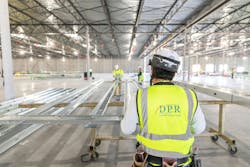
One key consideration is partnering with a self-performing general contractor that can construct key scopes and critical path project elements with their in-house team of skilled tradespeople. Self-perform teams can leverage their experience from past data center work throughout the project lifecycle, adding a new layer of problem solving expertise from the planning table to the front lines.
Speed through planning
Bringing data centers from drawings to server ready doesn’t just happen once construction crews mobilize on site. By collaborating early to align on procurement, building things on screens (and offsite) first and securing a reliable skilled workforce, data center owners can position themselves for the more predictable and efficient delivery of their new facilities.
Demand has always existed across different market sectors. Consulting with experienced contractors can help data center owners move forward with generations of knowledge on how to meet project goals when it seems like pressures are coming from many sides.
About the Author

Chris Gorthy
Chris Gorthy is advanced technology core market preconstruction leader at DPR Construction. DPR Construction is a forward-thinking, self-performing general contractor and construction manager specializing in technically complex and sustainable projects. Read its full 2026 outlook for the data center sector here.
Voices of the Industry