The Lift Plan Is Not a Formality
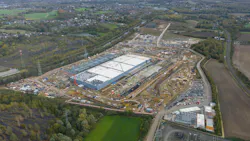

Hyperscale data center projects are built around coordination. Crane availability, equipment deliveries, and installation activities are carefully sequenced long before a lift takes place. When a lift plan is built on assumptions rather than verified conditions, scheduled crane time is lost, equipment is double- or triple-handled, and schedules begin to slip.
Most project teams working on hyperscale data centers have seen a generic lift plan.
Fewer have seen one that was genuinely engineered for the conditions on the ground.
Both documents have the same title. Both satisfy the same compliance requirements. But one is engineered to account for real site conditions on lift day. The other is based on assumptions made weeks earlier.
The difference shows up in execution. And it shows up in cost.
The Compliance Trap
Lift plans are developed for a range of reasons: the complexity of the lifts and moves involved, site-specific requirements, insurance standards, regulatory obligations, and more. Feasibility and development of these plans happen long before a crane or any other lifting and moving equipment is mobilized to the site.
Heavy lifts in active data center construction environments carry real risk. That risk deserves more than a check-the-box approach.
The problem is that the requirement to have a lift plan and the discipline to engineer one are not the same thing.
A plan written to satisfy a submittal date is not a plan written to support execution. It may check the right boxes. But if it was built on assumed weights, early-stage drawings, or site conditions that have since changed, it is not doing the work a lift plan is supposed to do.
In heavy rigging, the plan is not “the deliverable.” Safe, efficient execution is the deliverable. The plan is the tool that makes that possible.
Engineered for Execution
A lift plan engineered for execution is built on verified information, not assumptions.
That means confirming actual equipment weights and center-of-gravity locations, not relying on manufacturer estimates that may not reflect final configurations. It means selecting cranes based on confirmed rigging geometry and actual site layout, not preliminary weight data and unverified site layout assumptions.
It also means treating the haul path as an engineering challenge rather than a logistics assumption.
On an active hyperscale job site, the path a piece of equipment must take from the delivery point to its final set location changes continuously. Structural steel, ductwork, and cable tray tighten clearances as the build advances.
A haul path confirmed six weeks before delivery is not necessarily the haul path that exists on delivery day. Thorough lift planning means walking that path repeatedly as construction progresses.
Below-the-hook rigging configuration requires the same discipline.
The rigging assembly that connects a crane or other lifting equipment to a load is engineered for specific lifting points on a specific unit. When those points are poorly positioned or inadequately reinforced, the solution can become more complex, heavier, and more expensive.
Transition planning is the piece that gets overlooked most often. Getting large equipment from the delivery trailer to the final set location involves a sequence of moves, each potentially with its own rigging and moving challenges.
Take a prefabricated electrical or mechanical skid, for example. From the fabrication shop where it was assembled to its final anchor bolts inside the data hall, it may be lifted and moved multiple times, each requiring its own rigging configuration. The headroom at the fabrication shop and the headroom at the final set location inside the data hall are rarely the same. What worked at the shop may not be feasible on site.
Planning that sequence before the truck arrives is what separates a controlled operation from an improvised one.
How One Bad Assumption Compounds
Lift planning failures rarely stay contained to the lift itself.
If a crane is undersized for the actual rigging configuration, it must be replaced. Depending on the required capacity and configuration, sourcing the right equipment may take days or weeks. The lift window may be lost. Adjacent trades shift or go idle.
If a haul path is blocked on delivery day, the unit gets staged in the wrong location. Staging in the wrong location can lead to double or triple handling. Every additional lift carries additional risk. It also means more pre-lift meetings and submittals, more crane time, more coordination with other on-site contractors, and additional labor and equipment costs.
If the below-the-hook configuration has to be redesigned in the field, the crew is solving an engineering problem under schedule pressure, with every other trade watching the clock.
Each scenario has a direct cost. The harder cost to recover is the schedule impact that spreads across the project.
Where Rigging Engineering Belongs in the Project Timeline
The answer to most of these challenges is not more review at mobilization. It is earlier involvement.
On data center projects, rigging engineering belongs in pre-construction, not just pre-lift.
When a rigging contractor is brought in while fabrication decisions are still being made, the conversation is different.
Lifting point placement can be evaluated before it is confirmed. Center-of-gravity conditions can be analyzed when there is still time to adjust them. Crane positioning can be planned against site conditions that have not yet been complicated by active construction.
That timing matters because the cost of change drops sharply before fabrication is finalized.
A relatively small adjustment to a lifting lug orientation, made during design, can eliminate the need for a heavier rigging assembly on lift day. That single change can reduce crane sizing, lower rigging weight, and turn a complex operation into a straightforward one.
Adjusting that same detail after the unit is built requires field engineering, custom fabrication, or a more expensive lift. The schedule pressure that comes with it makes everything harder.
What to Ask Before a Crane Mobilizes
The lift plan is a useful diagnostic for anyone evaluating a rigging partner. Not the document itself. The conversation and upfront discovery behind it.
A rigging contractor who has genuinely engineered the lift can answer specific questions without hesitation.
- What are the confirmed weights and center-of-gravity locations for each unit?
- How was the crane selected, and what rigging configuration drove that selection?
- When was the haul path last walked, and what changed?
- What does the transition from transport to final set look like, step by step?
If those questions produce vague answers or references to standard procedures, that is information. In heavy rigging, detailed planning is a baseline requirement.
Clarity Produces Both Safety and Speed
There is a persistent assumption in data center construction that rigorous planning and fast execution pull in opposite directions.
In heavy rigging, the opposite is true.
A well-engineered lift moves efficiently because every variable has been resolved before the crew mobilizes.
There is no hesitation on lift day because there is nothing left to figure out.
Poorly planned operations create the hesitation. The mid-lift adjustments. The field engineering under pressure. Rushing through lift planning does not accelerate a data center project. It defers the problems to a moment when solving them is more expensive. By then, there is far less flexibility in the commissioning schedule.
The best lift plans do not just satisfy a requirement. They make execution predictable.
About the Author
 Bill Tierney
Bill Tierney
Bill Tierney is Chief Strategy Officer (CSO) | Project Development | Branch Leadership for The ProLift Rigging Company. Bill is a rigging and heavy transport leader with experience in the industry since 1999, including project development and branch management roles since 2010. He has deep background delivering engineered rigging, crane, and heavy transport solutions for complex work at U.S. refineries, nuclear facilities, and large-scale data center new-builds. Bill is known for developing alternative rigging approaches that overcome severe site constraints and improve safety, feasibility, and execution.
Voices of the Industry

 Image courtesy of Midea Building Technologies