How Data Center Power Went from Utility to Strategy
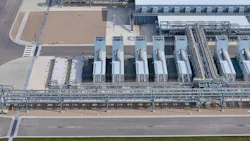
Not so long ago, a data center's power strategy was relatively straightforward. Secure a high-capacity utility grid connection, install uninterruptible power supply (UPS) systems, and deploy backup generators to handle rare grid outages.
Today, the global demand for computational infrastructure, driven by AI workloads, hyperscale cloud facilities, and digital connectivity, has pushed traditional power paradigms to their limits. Grid constraints and long interconnection timelines that can stretch far beyond the schedules on which AI infrastructure is being developed are forcing data center operators to look for more control over long-term energy needs.
What we're seeing at Rehlko is that backup generation is increasingly considered part of a broader onsite power strategy. As grid bottlenecks persist and AI-driven load dynamics challenge conventional electrical designs, emergency generators can no longer be treated as isolated safety nets. By embedding backup assets into a broader onsite power framework, operators are taking control of their development timelines, ensuring continuous resilience, and future-proofing their digital infrastructure.
Conversations once focused on what happens if the grid goes down are now turning into much deeper discussions about ensuring the facility has enough reliable power in the first place, and that there's a capability to control that power as requirements change.
Because the availability of grid power affects site selection, construction schedules, phasing and capital investment, data center developers need to understand their potential power architecture much earlier: what the grid can provide; when it can provide it; what onsite generation might contribute; how much storage is appropriate; and how the system could evolve as the facility expands.
Ability to Evolve With Modular Development
Generators remain critical for backup, but they also become a piece in an onsite power jigsaw that is all about resilience. Operators are starting to look more closely at how generation, battery storage, and grid power can work together.
The emerging model is one in which onsite generation can help bridge the gap between when a data center needs power and when the grid can provide it. Instead of waiting years for a connection or network upgrade, capacity can be brought online through onsite generation with a system that evolves as the grid becomes available.
This is particularly important for large AI facilities, where power requirements can increase in phases rather than arriving all at once. A modular onsite system can therefore provide an additional route to capacity, allowing a facility to grow while the grid connection catches up.
Clarke Energy, a Rehlko company and part of our end-to-end energy ecosystem, recognizes this paradigm shift. It describes how a future-ready data center runs a combination of gas engines, diesel generators, battery energy storage system (BESS), and onsite renewables with microgrid controls, designed to scale as demand grows and energy priorities evolve.
Single-System Control of Multiple Resources
The emerging architecture is not necessarily about replacing the grid – which will remain fundamental to most data centers – it's about creating layers of resilience and flexibility around it.
Fast-responding diesel or continuous gas-fueled engines deliver bulk energy during utility outages or bridge grid constraints. Advanced batteries and grid-forming inverters smooth out sudden spikes in power demand, keep voltage steady, and respond instantly to frequency changes. Renewable generation provides the option of lower-carbon electricity when available. Intelligent controls sit on top, coordinating the different resources to make them operate as a single system.
For an AI data center, this kind of flexibility is particularly important. GPU-driven workloads can create demanding and rapidly changing electrical loads. Batteries can respond almost instantaneously to short-duration changes, while engines can provide longer-duration support. Meanwhile, the grid remains part of the equation rather than being treated as an all-or-nothing proposition.
Such a strategy also addresses one of the biggest challenges around the environmental impact of modern data centers, how to square-off the demand for more energy with sustainability goals.
Pathway Towards Lower-Carbon Operation
A carefully executed energy strategy should also aim to put the data center on a path towards lower-carbon operation. Hybrid energy systems combining generation and battery storage with fuel flexibility – including hydrogen-ready engines and renewable fuels – can help facilitate a longer-term transition.
This is a shift towards designing energy infrastructure that meets the here-and-now demand for power-hungry capacity and resilience, while retaining the flexibility to support a lower-carbon energy system in the future.
The sometimes-ad hoc investment in individual assets, whether they are generators or batteries, is giving way to integrated systems where the different assets are coordinated through a layer of advanced controls. Rather than view backup power in isolation as a passive safeguard, for example, make it part of a broader power strategy designed around resilience, speed to power, scalability and future energy requirements.
The future of resilient data-center power is unlikely to be defined by a single technology. It will be defined by how effectively grid power, generation, storage, controls and future energy technologies are brought together into a system that can respond to what the facility needs today and adapt to what it will need tomorrow.
About the Author
 Nicole Dierksheide
 Nicole Dierksheide
Nicole Dierksheide is the global category leader for Rehlko’s Data Center product line. She has broad experience over her 25+ year career that spans from engineering subsystems on locomotives to marketing test and measurement equipment.
Nicole holds a degree in electrical engineering from the University of Arizona and uses her technical expertise to work with customers on finding the optimal solution for their needs. She is a sustainability champion at Rehlko and passionate about driving greener actions both at work and in her personal life.
Related
Voices of the Industry
 Source: Getty Images, courtesy of Schneider Electric
 Source: Nimbus Advanced Process Cooling