Who Should Coordinate the Heavy Lift?
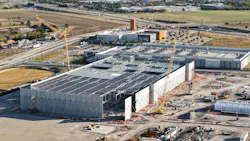

A general contractor can have a detailed master schedule, clearly defined scopes, and an experienced team of subcontractors, yet still run into problems when a major piece of equipment needs to move.
The crane is available. The rigging plan is complete. The truck is scheduled.
But the site is not ready.
The access route is blocked. Another trade is still working in the area. The equipment is arriving before the installation team is ready. The crane scheduled for one lift is now needed somewhere else, and the next available window is already tied to another activity.
The lift itself may not be the problem.
The breakdown in coordination leading up to it may be.
On a typical data center project, crane, rigging, and heavy-haul work may sit beneath an electrical or mechanical contractor:
GC → EC / MC → Crane, Rigging & Heavy Haul
That structure has a clear purpose. The trade contractor manages its scope and brings in the specialty expertise required to execute it.
But data center construction is increasingly difficult to divide into completely separate scopes.
The equipment may belong to one trade. Its transportation may involve another. The crane may be supporting several scopes, each with its own schedule and priorities. When those activities overlap, a change in one area can disrupt work happening across the site.
That raises a question worth considering: When specialty work crosses trade boundaries, who is coordinating it at the project level?
The Scope Is Not Always as Contained as the Contract
A crane may be supporting an electrical installation, but the crane does not know that it is an electrical crane.
The same equipment may be used to set mechanical equipment the next day. A heavy-haul provider may deliver equipment for both scopes. A rigging crew may be working around several different installation sequences during the same phase of construction.
The contract may define where the work sits.
The construction schedule does not always work that way.
A major lift depends on more than the equipment being ready. The haul path needs to be available. The crane needs a suitable setup location. The receiving area needs to be ready. Other trades may need to clear the work area. The installation team needs to be prepared for the equipment once it is set.
A change in one part of that sequence can affect several others.
That is where the distinction between trade coordination and project coordination becomes important.
When the Lift Becomes a Project-Level Activity
The more interconnected the project becomes, the more difficult it is to manage critical movement entirely within one trade's schedule.
Consider a major generator delivery.
The electrical contractor may own the generator installation. The heavy-haul contractor may be responsible for transportation. The crane and rigging contractor may handle the final set.
But the generator still has to arrive when the site is ready for it.
If the delivery slips, the crane schedule may have to shift. That can push another installation out of its planned window. If access changes in the meantime, the haul plan may need to be revised. And if the installation sequence changes, the original lift plan may no longer reflect the conditions in the field.
None of those decisions necessarily belong to one contractor.
They belong to the project.
That does not mean the GC needs to take over the technical work. It means there can be value in having a direct relationship with the specialty contractor responsible for it.
Direct Does Not Mean Bypassing the Trade
There is an important distinction here.
A GC contracting directly with a crane, rigging, and heavy-haul company does not have to mean removing the EC or MC from the process.
The electrical contractor still owns its electrical scope. The mechanical contractor still owns its mechanical scope. The crane and rigging contractor remains responsible for its specialized work.
What changes is the line of communication.
Rather than having issues involving crane, rigging, or transportation pass through another trade before reaching the GC, the GC has a direct relationship with the company performing that work.
That can matter when a specialty contractor identifies a constraint that affects more than one scope.
It can also give the GC direct access to the people who understand the technical and logistical implications of a proposed change.
The GC does not need to become the rigging expert. It needs direct access to one.
The Master Schedule Does Not Coordinate the Lift by Itself
A schedule can show when a generator is supposed to be set.
It cannot guarantee that the access route will still be clear that morning, especially when other trades are working against their own deadlines.
It can show when a crane is needed.
It may not account for another lift competing for the same crane, setup area, or crew when schedules shift, and previously available resources are committed elsewhere.
It can show when equipment should arrive.
It does not guarantee that the site will be ready to receive it.
This is where specialty planning has to connect back to the project schedule.
The crane selection, haul route, equipment arrival, site access, rigging configuration, and installation sequence all have to work together.
The larger the project, the more important those connections become.
More Buildings Create More Chaos
Data center campuses are increasingly being built as multiple buildings and phases rather than isolated facilities.
That creates more equipment moving across the site.
More cranes competing for access and setup areas.
More deliveries arriving on overlapping schedules.
More installation sequences dependent on one another.
More contractors working in increasingly congested areas.
And more opportunities for one delay to disrupt several activities.
A crane may finish a lift in one building and need to mobilize to another. A heavy-haul route may serve several structures. Equipment for one phase may need to move through an area being used by another.
The challenge is not necessarily that any one contractor lacks the information it needs.
The problem is that no single trade necessarily sees how all those activities collide.
That is where project-level coordination becomes more important.
Control Comes From Having the Right Conversation Early
The value of a direct GC relationship is not that it eliminates coordination.
It is that it can reduce the distance between the people identifying a problem and the people who have the authority to address it.
The GC can communicate overall schedule priorities directly to the specialty contractor. The specialty contractor can bring field constraints and technical considerations directly back to the GC.
That conversation can happen before a crane arrives on site, before a truck is dispatched, and before a planning issue turns into a missed lift window, idle equipment, or lost time in the field.
The EC and MC remain part of that conversation when their scopes are affected.
The difference is that the specialty contractor is not operating several communication steps away from the team responsible for the overall project.
The Contracting Structure Is Part of the Planning
There is no single contracting structure that applies to every data center project.
For some scopes, working through the EC or MC remains the right approach. For others, particularly work that crosses multiple trades or has significant impact on the broader construction sequence, a direct relationship with the GC can provide another level of coordination and project control.
The important question is not whether one model should replace another.
It is whether the structure reflects how the work actually happens.
Because a crane may be supporting an electrical scope.
The truck may be moving mechanical equipment.
The rigging crew may be working across both.
But the schedule belongs to the project.
The contract may define the scope. It does not define every interaction that scope will have with the rest of the project.
That is why the conversation about crane, rigging, and heavy haul should start before the equipment arrives and before the lift becomes a critical-path activity.
On a complex data center project, control starts with knowing who needs to be in the conversation.
About the Author
 Bill Tierney
Bill Tierney
Bill Tierney is Chief Strategy Officer (CSO) | Project Development | Branch Leadership for The ProLift Rigging Company. Bill is a rigging and heavy transport leader with experience in the industry since 1999, including project development and branch management roles since 2010. He has deep background delivering engineered rigging, crane, and heavy transport solutions for complex work at U.S. refineries, nuclear facilities, and large-scale data center new-builds. Bill is known for developing alternative rigging approaches that overcome severe site constraints and improve safety, feasibility, and execution.
Related
Voices of the Industry
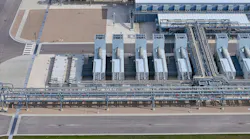 Source: Matthew G Eddy/Shutterstock.com
 Source: Getty Images, courtesy of Schneider Electric