Southeast Asia's Semiconductor Rise: AI Reshapes Industry Stratification as Singapore Anchors a Regional Innovation and Demand Hub
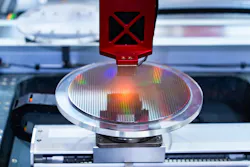

As the global semiconductor industry undergoes a structural revaluation driven by the AI computing boom, Southeast Asia is evolving from a manufacturing hinterland into a dual engine of innovation and demand.
AI Reshapes Industry Stratification, with Southeast Asia at the Core
The global semiconductor market is expanding faster than expected. According to the World Semiconductor Trade Statistics (WSTS) spring 2026 forecast, the global semiconductor market is projected to grow 90% year-on-year in 2026 to reach US$1.51 trillion, and to grow a further 27% in 2027, approaching US$1.9 trillion. The core driver of this cycle is sustained strong demand for AI infrastructure, high-bandwidth memory (HBM) and accelerated computing platforms. Memory chip sales are expected to rise about 250% year-on-year in 2026, while logic chips grow 37%, as AI redefines capacity priorities from advanced process nodes to advanced packaging.
Southeast Asia's position in this cycle is particularly critical. According to the ASEAN+3 Macroeconomic Research Office (AMRO) Quarterly Update of the ASEAN+3 Regional Economic Outlook (AREO), the region accounts for nearly half of global AI-related exports, with semiconductor sales accelerating further on the back of strong growth in 2025. As a regional hub, Singapore holds about 10% of global chip capacity and 20% of semiconductor equipment manufacturing share, making it one of the most attractive AI innovation hubs in Asia-Pacific. In 2026, the Singapore government launched the "SG Semiconductor" national brand, focusing on seven technology areas — including advanced packaging, silicon photonics, power electronics, high-frequency gallium nitride, piezoelectric MEMS, planar optics and IC design — to further strengthen its competitive edge across the semiconductor value chain.
Singapore's Semiconductor Ecosystem Is Accelerating Its Expansion
The decision to hold Asia Semiconductor Expo (ASE) in Singapore reflects the substantive expansion of the city-state's semiconductor supply chain. In September 2026, Advanced Substrate Technologies (AST), a joint venture between Broadcom and Toppan, opened its first high-end FC-BGA substrate manufacturing facility in Singapore, adding more than 330 engineering and technical positions. In the same month, VSMC, a joint venture between Vanguard International Semiconductor and NXP, opened its 12-inch wafer fab, with mass production expected in the first quarter of 2027 and capacity already booked. Dr. Tan See Leng, Minister for Trade and Industry (Energy and Industry), has emphasized on VSMC Grand Opening Ceremony that Singapore plays a trusted role in regional supply chains, and that this influence can extend beyond the semiconductor ecosystem to create opportunities for more local suppliers.
From a regional perspective, Southeast Asia's semiconductor landscape is developing across multiple poles: Malaysia accounts for about 13% of global assembly and test capacity and 40% of automotive-grade chip assembly and testing; Thailand ranks among the world's top five in PCB capacity, with its automotive electronics market expected to grow to US$4 billion by 2030; and Vietnam's semiconductor industry output is valued at about US$20 billion, with a compound annual growth rate of around 11%. These dispersed yet complementary capabilities call for a platform at the regional hub that can showcase and connect them—and that is precisely the role Asia Semiconductor Expo is built to play.
Take the Lead in the Upward Phase of the AI Chip Cycle
WSTS's forecast sends a clear signal: the semiconductor industry has moved from a post-inventory-correction recovery into a phase of structural revaluation driven by AI infrastructure. However, this revaluation is uneven — capacity and customer priorities across AI core chains such as HBM, advanced logic chips, advanced packaging and high-speed interconnects are being redefined. For companies in semiconductor equipment, materials, components and compound semiconductors, whether they can appear in front of key buyers during the 2027 regional procurement decision window will directly affect their position in this cycle.
As one of the three themed shows under Asia Photonics Expo 2027 (APE 2027), Asia Semiconductor Expo (ASE) will take place March 3–5, 2027 at the Sands Expo and Convention Centre, Singapore. Anchored in Singapore, reaching across Southeast Asia and connecting to global markets, ASE is dedicated to building an international exhibition and business-matching platform spanning the entire semiconductor value chain. Running alongside it, the newly launched Asia Electronics Expo (AEE) will also debut in Singapore, joining APE 2027 to form a three-show ecosystem spanning semiconductors, photonics, and electronics.
Whether you are looking to showcase cutting-edge technologies, innovative products and solutions, or to connect with Southeast Asia's increasingly complete design–manufacturing–packaging and testing–application ecosystem, the show offers an entry point that only a three-show co-location can provide. Secure your booth now to put your innovations in front of key decision-makers — or register to visit and efficiently assess and procure across the entire value chain, all in one place.
About the Author
 Eric Yang
Eric Yang is Secretary General of the Asia Photonics Expo. (Source: China International Optoelectronic Exposition)




Voices of the Industry
 Source: TomUK/Shutterstock.com
 Source: 3DAnimals/Shutterstock.com