DCF Global: The Nordics' AI Boom Meets the Power Test
Key Highlights
-
Finland's grid operator reports nearly 5 GW of eventual data center capacity associated with signed connection agreements, underscoring the scale of the country's AI infrastructure ambitions.
-
JLL, CBRE, Cushman & Wakefield and datacenterHawk research points to growing Nordic investment appeal, alongside significant questions about power availability, preleasing and project execution.
-
The region's experience offers an increasingly relevant comparison with North America, where power delivery, infrastructure costs and community acceptance are similarly reshaping data center development.
The Nordic countries have long occupied a distinctive position in the global data center industry. Their appeal rests on a familiar combination of cool climates, comparatively abundant low-carbon electricity, political stability, and sophisticated energy and communications infrastructure. Now, the accelerating demand for AI computing is transforming that established proposition into something considerably larger.
Across Finland, Sweden, Norway, Denmark and Iceland, hyperscalers, AI cloud providers, infrastructure developers and institutional investors are advancing a new generation of high-density data center projects. Their ambitions increasingly extend beyond conventional cloud regions and enterprise colocation into multihundred-megawatt AI campuses and integrated energy infrastructure. The scale of that transformation is particularly evident in Finland, where the country's transmission system operator, Fingrid, reported in August that data center projects with signed grid-connection agreements represented nearly 5 gigawatts of planned eventual capacity.
That figure encompasses projects connected to transmission and distribution networks. It does not represent operating data center capacity, nor does a connection agreement guarantee that a project will be completed at its proposed size. Nevertheless, it illustrates the extraordinary volume of investment now being directed toward a country that, until recently, occupied a secondary position behind Sweden and Norway in the Nordic data center market.
The acceleration comes with a paradox. The electricity resources, industrial sites and favorable environmental conditions attracting AI developers are also becoming subjects of increasingly consequential public-policy decisions. Finland has raised electricity taxes on data centers and is considering changes to grid-connection priorities. Denmark has already introduced a system that places most large data center projects in a lower-priority category for constrained grid capacity. Meanwhile, investment continues to accelerate.
For the Nordics, the central question is no longer whether the region can attract AI infrastructure development. It is how much of the announced capacity can be financed, permitted, connected and ultimately brought into production without compromising the energy-system advantages and sustainability commitments on which the market's appeal depends.
Finland Moves to the Center of Europe's AI Infrastructure Map
The strongest evidence of Finland's changing position came in September, when Google announced plans to invest €13 billion in Finnish digital infrastructure and related projects over 2027 and 2028. The investment encompasses operations and planned development in Hamina, Muhos, Vaala and Kajaani, extending Google's presence beyond its established Hamina campus.
At the same time, Google and Finnish energy company Fortum announced a 22-year nuclear power purchase agreement covering up to 50% of the generating capacity at the Loviisa nuclear power plant. The arrangement provides financial support for extending the plant's operating life through 2050, while the companies have also agreed to explore additional nuclear generation, renewable energy and grid-flexibility solutions. The agreement underscores the growing relationship between AI infrastructure development and long-term commitments to power generation, illustrating how large technology customers are becoming increasingly influential participants in regional electricity markets.
Google is far from alone. In early September, Cerebras Systems and Compute Nordic Finland announced a 165 MW AI data center development in Mikkeli, with construction already underway on an initial 50 MW phase. Unlike many early-stage development announcements, the Mikkeli project is supported by a series of seven-year contracted capacity agreements. The distinction matters: committed customer demand provides a stronger indication of potential project delivery than land acquisition or preliminary power arrangements alone.
More recently, French AI infrastructure developer Sesterce announced a proposed $10 billion, 600 MW campus in Jämsä, beginning with a planned 200 MW first phase. The project would redevelop the former Kaipola paper mill, illustrating a recurring Nordic development strategy: converting established industrial properties into locations for computational infrastructure. Sesterce says it has secured an anchor customer and plans to pair the campus with commitments concerning additional renewable generation, closed-loop cooling and recycled-water use. Those commitments remain to be demonstrated as the project advances.
Another emerging participant, Applied Digital, has secured an agreement providing access to as much as 1 GW of potential power capacity in Finland. However, the company has not announced a customer for the site and is continuing to market the development, with initial power availability anticipated in 2028. Nordic operator atNorth has also announced plans for a 75 MW initial phase at its FIN05 campus in Salo, with a potential expansion pathway to 230 MW. The company says power for the first phase has been secured, with initial operations targeted for 2028.
Taken together, these developments establish Finland as a major destination for AI infrastructure investment. But they also reveal why the industry's traditional development metrics require careful interpretation. A gigawatt of potential grid access, a multihundred-megawatt campus with contracted tenants, and a facility already under construction represent materially different degrees of commercial certainty.
That difference is likely to become increasingly important as the Nordic pipeline expands.
Sweden and Norway: Sovereign AI, Institutional Capital and Industrial Scale
Finland's emergence is occurring alongside substantial investment in neighboring markets that have longer histories of attracting large-scale data center development. In Sweden, the AI infrastructure story increasingly intersects with Europe's pursuit of greater technological autonomy.
In February, French AI company Mistral announced a €1.2 billion strategic partnership with EcoDataCenter to develop AI computing infrastructure in Borlänge. The agreement represents Mistral's first AI infrastructure investment outside France, with the initial facility scheduled to open in 2027. Its strategic significance extends beyond the size of the investment, connecting Nordic power and data center infrastructure with Europe's broader effort to build AI platforms and computing capacity under greater European control.
Sweden's combination of renewable electricity, established industrial regions and existing data center expertise positions it to participate in both American hyperscale expansion and European sovereign AI initiatives. Norway is developing a similarly ambitious pipeline, supported by its extensive hydropower resources and large industrial properties.
In Narvik, AI infrastructure provider Nscale has expanded its agreement with Microsoft for a 230 MW campus, including a planned deployment of more than 30,000 NVIDIA Rubin GPUs during 2027. The company subsequently announced $790 million in additional financing, backed by a group of European banks and export-financing institutions, to support continued development. The combination of a named hyperscale customer, specified computing deployments and institutional financing distinguishes Narvik from more speculative projects.
Elsewhere in Norway, atNorth is developing a campus in Haugaland with an initial planned capacity of 120 MW and an eventual expansion target of 350 MW. The Haugaland development requires new electrical substations, with power availability projected for 2028. Its advancement therefore depends not only on customer demand and construction capital, but also on the delivery of supporting grid infrastructure.
In another recent example, VivoPower began initial construction and conversion work in October on a 42 MW facility in Mo i Rana, northern Norway, at a former cryptocurrency mining site. The company has identified a preferred AI tenant but has not publicly named the customer. The Norwegian developments illustrate both the opportunities and the constraints of regional industrial redevelopment: existing sites can offer favorable zoning, infrastructure and power arrangements, but the transition to high-density AI computing still requires substantial investments in electrical distribution, cooling and supporting facilities.
Across the region, these characteristics are attracting increasingly sophisticated sources of capital.
Telia Helsinki Data Center: Powering Finland's AI Infrastructure Future
Kari Maikkola, Head of Data Centre Solutions at Telia, takes viewers inside the Telia Helsinki Data Center, exploring how Finland's expanding AI infrastructure market is bringing together high-performance computing, digital sovereignty, advanced cooling and waste-heat recovery. (Video: Data Centre Magazine, February 2026)
Where Global Capital Sees Opportunity
Perhaps the clearest institutional endorsement of the Nordic market came in September, when CPP Investments and Equinix completed their $4 billion acquisition of atNorth.
Under the completed transaction, CPP Investments holds approximately 51% of the company, Equinix approximately 34%, and Partners Group approximately 10%, with the balance retained by company stakeholders. atNorth operates across all five Nordic countries, combining an established portfolio of eight operational facilities with multiple projects under development. The transaction brings together long-term institutional capital, global data center expertise and a regionally established development platform, highlighting the value investors increasingly place on operators that understand local permitting, energy markets and infrastructure delivery.
Recent research from the commercial real estate sector reinforces the broader appeal. In its EMEA Data Centre Mid-Year 2026 report, JLL identifies a significant geographic shift in European AI infrastructure investment. The firm's analysis finds that hyperscale sites planned for 2026 through 2028 are located an average of 175 kilometers from major data center hubs, compared with 46 kilometers for projects delivered between 2022 and 2025.
The pattern reflects a fundamental change in site-selection priorities. Latency-sensitive applications continue to favor established metropolitan markets, where dense connectivity and enterprise ecosystems remain important. Large AI training environments, by contrast, can operate at greater distances from major cities and increasingly follow the availability of large power blocks. JLL expects more than half of Europe's AI infrastructure growth to occur across the Nordics and Tier 2 markets combined, although that forecast is not specific to the Nordic countries alone.
Cushman & Wakefield reaches a complementary conclusion in its 2026 Global Data Center Market Comparison. Among EMEA primary markets, the firm ranks Helsinki first, Oslo second and Stockholm sixth for overall market fundamentals. Reykjavik leads its secondary-market ranking, while Copenhagen places fifth. These are comparative assessments of market attractiveness, not rankings by installed capacity, but they demonstrate how prominently Nordic locations now figure in global development calculations.
In its H1 2026 EMEA market update, Cushman & Wakefield also elevated Helsinki into its group of major European data center markets, reporting more than 1.1 GW of combined capacity across the metropolitan market's operating and development pipeline.
The investment case extends beyond operating fundamentals. CBRE's 2026 Nordic Investor Intentions Survey, based on responses from 185 investors, found improving confidence associated with more favorable debt-market conditions and stabilizing real estate valuations. Data centers appeared in the survey's sector-preference discussion for the first time, indicating their growing visibility within the broader Nordic investment landscape.
Yet the market's accelerating development ambitions also invite caution. In Data Center Dynamics' July examination of Finland's emerging market, datacenterHawk regional director David Sandars observed that very little of the country's announced pipeline had been preleased. He also raised questions about whether the full volume of proposed capacity could be accommodated without substantial additions to electricity generation and transmission.
CBRE associate director Keith Breed similarly warned that speculative development could produce localized oversupply before many proposed facilities reach operation. These observations provide an important counterweight to the investment announcements. The Nordics may offer attractive conditions for building AI infrastructure, but commercial demand, access to capital, regulatory approvals and deliverable electricity capacity will ultimately determine how much of the proposed development pipeline becomes operational.
Sustainability Becomes an Infrastructure Requirement
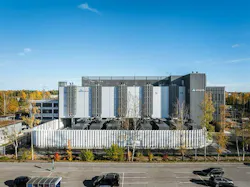
Sustainability has long been central to the Nordic data center proposition. Hydropower, nuclear generation, wind resources and relatively cool ambient temperatures provide advantages for operators pursuing lower-carbon operations and efficient facility design. However, the growing concentration of AI infrastructure investment is changing the terms of that discussion.
Rather than evaluating sustainability primarily through electricity sourcing or annualized power usage effectiveness, developers increasingly face questions about their contribution to regional energy systems, electricity supply, environmental protection and local economic development.
One area where the Nordics offer a particularly developed model is waste-heat reuse. District heating networks are widespread across northern Europe, creating opportunities to recover thermal energy from data centers and distribute it to homes, businesses and other facilities. The approach has a long history in the region, including the Danish and Swedish projects explored by Rich Miller in Data Center Frontier's earlier coverage of using server heat to warm nearby homes.
In Espoo, Finland, atNorth has begun supplying recovered heat from its FIN02 data center to a neighboring retail property operated by Kesko. The system became operational in November 2025, providing a tangible example of data center thermal energy being put to productive use.
In Helsinki, AI infrastructure developer OnZero has reached an agreement with municipal energy company Helen to connect a planned AI data center to the district heating network. The project is designed to supply as much as 525,000 MWh of recovered heat annually once operational, with service targeted for 2027.
Denmark offers another variation on the approach. atNorth and Selected Group are advancing a project in Ølgod that would use surplus heat from atNorth's DEN02 campus to support greenhouse food production. In October, Selected Group reported approval of the local development plan. The first phase involves two 10-hectare greenhouses, with the initial growing season targeted for 2028.
Such projects are not interchangeable. Some are operating and delivering recovered heat today; others remain dependent on construction, financing and infrastructure completion. Their collective significance lies in demonstrating how data center operators can become participants in broader systems of energy use, rather than functioning exclusively as electricity consumers.
Iceland provides another dimension of the Nordic sustainability story. In April, Verne and Nscale completed the first 7.5 MW phase of an AI computing deployment in Iceland, incorporating liquid-cooled NVIDIA GPU infrastructure. The deployment demonstrates how renewable-powered Nordic facilities are adapting to the thermal demands of contemporary AI systems.
But the environmental advantages of the region do not eliminate questions about development impacts. In Finland, Google's expansion plans have attracted scrutiny over reported forest removal associated with prospective data center sites. The Finnish Licensing and Supervision Agency has requested documentation concerning project permits and environmental assessments. Google has denied that its forestry activities violated applicable law.
As reported in October, the matter remains under regulatory review. The episode illustrates a wider challenge for the industry: Low-carbon electricity procurement does not, by itself, resolve concerns involving land use, biodiversity, water resources or the cumulative effects of large-scale development.
For Nordic operators, demonstrating measurable environmental and community benefits may become increasingly important to maintaining the region's historically favorable development climate.
The Grid Becomes the Deciding Factor
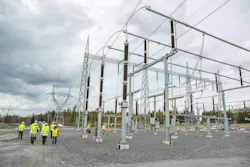
The most consequential near-term limitation on Nordic data center expansion may be the same factor now shaping development across much of the world: access to electricity at the required scale and schedule. Finland's rapid accumulation of proposed load has brought the issue into particularly sharp focus.
In a September assessment, Fingrid reported that more than 70% of Finnish electricity generation is located in the country's western and northern regions, while more than half of consumption occurs in the south. This geographic imbalance has significant implications for data center site selection.
Although Finland possesses substantial electricity resources, generation capacity is not uniformly available throughout the transmission network. Large new loads can require reinforcement of regional infrastructure, additional generating resources and measures to maintain system flexibility. Fingrid has warned that many areas are approaching the limits of available connection capacity even as the transmission system undergoes record investment.
The government is also reconsidering how grid access should be allocated. A proposal circulated in September would introduce priority procedures for electricity connections, potentially replacing the traditional first-come, first-served approach with a system that considers the nature and public importance of competing projects. Large data centers could receive lower priority than certain smaller connections or strategically preferred uses when grid capacity is constrained. The consultation period closed October 9, with implementation proposed for January 2027. As of mid-October, the proposal had not been confirmed as enacted law.
Finland has already made another important policy change. Effective July 1, 2026, the country removed data centers from its preferential industrial electricity-tax category, increasing the applicable rate from 0.05 euro cents to 2.24 euro cents per kilowatt-hour. The increase adds a material operating-cost consideration for developers evaluating long-term investments in the country, although additional targeted tax-support mechanisms have also been contemplated.
Denmark has moved further toward an explicit prioritization framework. An emergency grid agreement adopted in October reorganizes requests for constrained electricity capacity into four categories. Most conventional large data center projects fall into the fourth and lowest-priority category, although facilities supporting critical societal functions may receive preferential treatment. The framework began taking effect October 12.
Neither country's policy necessarily signals a retreat from digital infrastructure investment. Rather, the changes suggest that governments are becoming more selective about how electricity resources are allocated among competing economic and social priorities. The implications for developers are substantial.
Securing an attractive parcel of land and an indicative electricity connection may no longer be sufficient. Project sponsors increasingly need to demonstrate credible demand, financial readiness, infrastructure deliverability and, potentially, a contribution to the communities and energy systems hosting their facilities.
The Nordic market is thus becoming an early test of how a mature, relatively low-carbon electricity system accommodates a new class of industrial-scale AI demand.
The Global Perspective: What the Nordics Reveal About AI Infrastructure Development
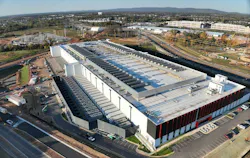
The changes unfolding across the Nordics are significant in their own right. They also offer a useful comparison with the much larger North American data center market.
According to CBRE's H1 2026 North America Data Center Trends report, the continent's eight primary markets reached approximately 10.9 GW of operating inventory, with vacancy falling to 1.4%. Another 7.48 GW was under construction, with 80.4% of that capacity already preleased. These figures represent a substantially more mature and heavily committed market than the emerging Nordic AI development pipeline.
However, the two regions are increasingly confronting similar underlying constraints. In North America, the availability of utility power, construction timelines, transmission upgrades and growing community opposition are reshaping where developers can locate major AI facilities. The consequences are visible in the continued expansion of secondary markets, greater emphasis on behind-the-meter generation and increasing scrutiny over who bears the costs of new electrical infrastructure.
The sheer volume of proposed demand is raising another common challenge. As DCF examined in its coverage of ERCOT's effort to distinguish executable AI projects from speculative megawatts, the size of a development pipeline can obscure how little capacity has actually cleared the technical, financial and grid-planning hurdles required for operation. That distinction is becoming equally relevant to the Nordic market.
The Nordic countries approach these challenges from a different starting point. Their electricity systems generally feature stronger low-carbon generation profiles, established district heating networks and industrial properties that may be well suited to redevelopment. Yet those strengths do not automatically translate into unlimited capacity. Transmission geography, winter electricity requirements, public-policy priorities and the economics of expanding generation remain decisive considerations.
Compared with Europe's traditional Frankfurt, London, Amsterdam, Paris and Dublin markets, the Nordics also illustrate how AI development is extending the geographic boundaries of the continent's data center industry. JLL's finding that AI-scale projects are moving farther from established hubs reflects the growing importance of electricity availability over proximity to traditional network and enterprise concentrations.
That geographic redistribution is unfolding elsewhere as well, including in parts of Australia, Southeast Asia and North America, where large land parcels and access to power are drawing investment beyond historic metropolitan clusters. The Nordic experience nevertheless stands apart in one respect.
Few regions combine the same established renewable and nuclear generation resources, industrial redevelopment opportunities, institutional investment interest and practical experience with waste-heat integration. Those advantages could make the Nordics an increasingly important model for the next generation of AI infrastructure development.
But the region's value to investors, operators and policymakers may ultimately depend less on the gigawatts being announced than on the proportion that can be translated into operational facilities with sustainable energy arrangements and durable local support. That is the larger question now facing data center markets around the world.
The Nordics are emerging as a major proving ground for whether the global AI infrastructure boom can reconcile unprecedented computing demand with the physical, financial and environmental realities of building at scale.
DCF Global is an ongoing Data Center Frontier series examining the international markets, investments, infrastructure strategies, and policy decisions shaping the worldwide data center economy.
At Data Center Frontier, we talk the industry talk and walk the industry walk. In that spirit, DCF Staff members may occasionally use AI tools to assist with content.
Keep pace with the fast-moving world of data centers and cloud computing by connecting with Data Center Frontier on LinkedIn, following us on X/Twitter and Facebook, as well as on BlueSky, and signing up for our weekly newsletters using the form below.
About the Author
 Matt Vincent
Matt Vincent
Matt Vincent is Editor in Chief of Data Center Frontier, where he leads editorial strategy and coverage focused on the infrastructure powering cloud computing, artificial intelligence, and the digital economy. A veteran B2B technology journalist with more than two decades of experience, Vincent specializes in the intersection of data centers, power, cooling, and emerging AI-era infrastructure. Since assuming the EIC role in 2023, he has helped guide Data Center Frontier’s coverage of the industry’s transition into the gigawatt-scale AI era, with a focus on hyperscale development, behind-the-meter power strategies, liquid cooling architectures, and the evolving energy demands of high-density compute, while working closely with the Digital Infrastructure Group at Endeavor Business Media to expand the brand’s analytical and multimedia footprint. Vincent also hosts The Data Center Frontier Show podcast, where he interviews industry leaders across hyperscale, colocation, utilities, and the data center supply chain to examine the technologies and business models reshaping digital infrastructure. Since its inception he serves as Head of Content for the Data Center Frontier Trends Summit. Before becoming Editor in Chief, he served in multiple senior editorial roles across Endeavor Business Media’s digital infrastructure portfolio, with coverage spanning data centers and hyperscale infrastructure, structured cabling and networking, telecom and datacom, IP physical security, and wireless and Pro AV markets. He began his career in 2005 within PennWell’s Advanced Technology Division and later held senior editorial positions supporting brands such as Cabling Installation & Maintenance, Lightwave Online, Broadband Technology Report, and Smart Buildings Technology. Vincent is a frequent moderator, interviewer, and keynote speaker at industry events including the HPC Forum, where he delivers forward-looking analysis on how AI and high-performance computing are reshaping digital infrastructure. He graduated with honors from Indiana University Bloomington with a B.A. in English Literature and Creative Writing and lives in southern New Hampshire with his family, remaining an active musician in his spare time.