AEP, Google Advance $4 Billion Fuel-Cell Project to Power Cheyenne Data Centers
Key Highlights
-
$4 billion power commitment: AEP plans to develop a 702 MW fuel-cell installation near Cheyenne under a 20-year power purchase agreement with Google, targeting full operations by late 2028.
-
A new generation ownership model: AEP will control approximately 92% of the project, providing long-term power to Google through an unregulated venture outside its traditional utility territory.
-
Modular power for AI infrastructure: Bloom Energy's solid oxide fuel cells offer opportunities for phased generation deployment, with potential integration into emerging 800V DC architectures.
-
Carbon capture remains unproven: The installation is being designed to incorporate carbon capture, but the equipment configuration, capture rate and carbon storage arrangements have not been disclosed.
-
A larger Cheyenne power buildout: The project joins major generation commitments involving Black Hills and Tallgrass, although potential overlap among announced capacities remains unresolved.
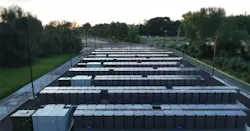
American Electric Power (AEP) plans to invest approximately $4 billion in a 702-megawatt fuel-cell generation project near Cheyenne, Wyoming, under a 20-year power purchase agreement with Google. The project represents one of the largest fuel-cell deployments announced for the data center industry.
The installation will use solid oxide fuel cells supplied by Bloom Energy, with construction expected to begin before the end of 2026 and full operations targeted for late 2028. The facility will be developed through Cheyenne Fuel Cell LLC, a venture approximately 92% owned and controlled by AEP, with the remaining interest held by funds advised by Basalt Infrastructure Partners.
For Google, the agreement represents another substantial long-term power commitment supporting its planned data center expansion near Cheyenne. For AEP, the project offers an opportunity to leverage its capital resources and power infrastructure expertise to serve a hyperscale customer beyond the geographic boundaries of its established regulated utility operations. Announcing the agreement, Bill Fehrman, AEP's chairman, president and chief executive officer, said:
As power demand continues to grow, AEP is bringing together new technologies and strong partnerships to deliver reliable, innovative energy solutions quickly and at scale.
A Power Commitment That Began Two Years Earlier
Although Google's participation was publicly identified in October 2026, the procurement strategy underlying the Cheyenne project dates to November 2024, when Bloom Energy announced an agreement with AEP covering up to 1 gigawatt of solid oxide fuel-cell equipment. As Data Center Frontier reported at the time, the agreement included an initial commitment to purchase 100 MW, with options for an additional 900 MW. The arrangement was intended to help AEP serve large commercial and industrial customers facing growing electricity requirements without waiting for the completion of conventional grid infrastructure upgrades.
The relationship advanced in January 2026, when AEP disclosed in a regulatory filing that an unregulated subsidiary had committed approximately $2.65 billion to purchase a substantial portion of the fuel-cell capacity covered by its earlier option. The company also reported a 20-year agreement to sell the planned facility's entire electricity output to an unidentified investment-grade customer, now confirmed as Google. The equipment purchase formed part of the project's development history, rather than representing a separate $2.65 billion investment in addition to the $4 billion project announced in October.
The scale of the investment is significant, but so is the transaction structure. Rather than requiring Google to own and operate the generation equipment directly, the arrangement places development and ownership responsibilities with an established energy company while providing the hyperscaler long-term access to the facility's electricity output. For AEP, it also represents an opportunity to deploy capital in support of large-load customers beyond its traditional regulated utility territory.
At approximately $4 billion for 702 MW, the project represents roughly $5.7 million per megawatt of planned generating capacity. That figure offers a measure of the investment's capital intensity, although it is not directly comparable with the construction cost of a conventional gas-fired power plant without accounting for differences in project scope, fuel infrastructure, electrical integration and operating characteristics.
The price Google will ultimately pay for electricity has not been publicly disclosed. Neither party has released the PPA's pricing structure, including any energy charges, capacity payments or other detailed commercial terms.
Why Fuel Cells Are Attracting Hyperscale Investment
Solid oxide fuel cells are an established technology, but their deployment at the scale proposed for Cheyenne represents a significant evolution in how data centers obtain electricity. Depending on their configuration, the systems can operate on natural gas, biogas or hydrogen. Unlike conventional combustion-based generators, they convert fuel into electricity through an electrochemical process. When operating on natural gas, the fuel is reformed into a hydrogen-rich mixture that reacts with oxygen ions passing through a solid ceramic electrolyte, producing electricity, heat, water vapor and carbon dioxide. The process avoids conventional combustion but does not eliminate carbon emissions when natural gas is the primary fuel.
One of the principal advantages of fuel cells for AI data center development is modularity. Standardized generating assemblies can be combined into larger installations, allowing capacity to be added incrementally rather than requiring construction of a single large generating unit. This flexibility offers a potential scheduling and investment advantage, enabling developers to coordinate additional generating capacity with successive phases of data hall construction, electrical commissioning and computing equipment deployment. As DCF's reporting on emerging behind-the-meter power strategies has documented, modular generation is becoming an increasingly important consideration in the development of large AI campuses.
Multiple independent fuel-cell modules can also reduce dependence on any single generating unit, potentially allowing individual modules to be serviced or replaced without shutting down the entire installation. That distributed architecture offers operational flexibility, although its contribution to overall reliability depends on how the generating equipment is integrated with the facility's electrical infrastructure.
Modularity alone does not guarantee the availability required by hyperscale operations. Fuel-cell installations must still be engineered as part of a complete power delivery system incorporating appropriate electrical redundancy, energy storage, backup capacity, protection and control systems. The ability to accommodate changing AI workloads, maintain stable power quality and manage equipment failures remains essential regardless of the generation technology.
Fuel cells also present an opportunity for closer integration with emerging high-voltage DC data center architectures. In September 2026, Bloom promoted an 800-volt DC-native power architecture designed to reduce conversion equipment, electrical losses and infrastructure costs. Because its solid oxide fuel cells generate direct-current electricity, Bloom contends that the technology could simplify the power delivery chain for next-generation AI systems. That approach aligns with the broader industry transition toward 800V DC distribution for high-density AI infrastructure.
AEP and Google have not disclosed whether the Wyoming installation will employ a DC-native distribution architecture or rely on conventional power conversion and interconnection equipment. The distinction will be important in determining how closely the fuel-cell installation can be integrated with the data center's electrical infrastructure and whether the potential efficiency and equipment savings of direct-current generation can be realized.
Carbon Capture Is Part of the Plan, Not Yet an Operating Result
AEP says the Cheyenne project is being designed to incorporate carbon-capture technology, with the objective of delivering near-zero-emissions electricity from a natural gas-fueled installation. Whether that objective can be achieved will depend on the design, performance and integration of a capture system that has not yet been publicly detailed.
According to Bloom Energy, its solid oxide fuel-cell technology produces a relatively concentrated carbon dioxide stream, potentially simplifying capture compared with conventional gas-fired generating equipment, where carbon dioxide is diluted in much larger volumes of combustion exhaust. The manufacturer maintains that this characteristic could reduce some of the equipment requirements, energy consumption and costs associated with carbon capture.
In February 2025, Bloom announced a partnership with Chart Industries to advance carbon-capture technology for its fuel-cell systems. The arrangement combines Bloom's electrochemical generation technology with Chart's gas-processing capabilities, with the aim of preparing captured carbon dioxide for industrial use or permanent geological storage. The companies presented the partnership as a potential pathway to lower-carbon, continuously available power for energy-intensive customers, including data centers.
The technical advantages remain distinct from demonstrated environmental performance at the Cheyenne site. AEP has not publicly disclosed a guaranteed capture rate, identified the carbon-capture equipment supplier for the facility, or detailed the transportation, utilization or permanent storage arrangements for the captured carbon dioxide. Those elements will be necessary to determine whether the project can meet its stated emissions objective, and what additional infrastructure and operating costs will be required.
The distinction is particularly relevant to Google's broader energy strategy. In its June 2026 environmental report, the company acknowledged that its AI infrastructure expansion is proceeding faster than electricity grids are decarbonizing, complicating efforts to achieve its climate objectives. Natural gas-powered fuel cells equipped with effective carbon capture could help address part of that challenge. Their ultimate environmental value, however, will depend not only on carbon-capture performance but also on upstream methane emissions, the energy required to operate the capture system and whether the captured carbon dioxide is permanently stored or eventually released.
Cheyenne's Larger Power Development
The AEP project is one component of a much broader energy development effort taking shape around Google's planned data center expansion near Cheyenne.
Eight days before AEP's announcement, Black Hills Corp. disclosed definitive agreements with Google covering an arrangement that combines grid-connected electricity, new natural gas generation and privately contracted power resources. Effective September 30, 2026, the agreements provide for a resource portfolio totaling approximately 2.7 GW, including reserve margins, to support the planned campus.
Under the arrangement, Black Hills will provide up to 590 MW of grid-connected energy service while managing approximately 2.1 GW of Wyoming-based, third-party contracted resources through a privately managed microgrid. The company plans to invest $1.8 billion between 2027 and 2029 to construct 564 MW of natural gas generation at its existing Cheyenne Prairie Generating Station site. The remaining 26 MW of grid-connected service will come through a combination of market purchases and retail utility service. Initial electricity service is expected in late 2027, with demand projected to ramp toward its peak in 2030.
An important question is how AEP's planned 702 MW fuel-cell installation fits within that larger resource portfolio. Neither AEP nor Black Hills has publicly confirmed whether the fuel-cell capacity is included in the approximately 2.1 GW of third-party generation Black Hills is contracted to manage. Consequently, the AEP announcement and Black Hills' resource figures should not be treated as additive measures of generating capacity.
Another major participant is Tallgrass, which is advancing the Cheyenne Power Hub in southeast Wyoming. In May 2026, Tallgrass and Mitsubishi Power Americas identified two M501JAC gas turbines for the project's initial phase, representing approximately 1,150 MW of planned generation. Tallgrass has described the power hub as an investment exceeding $7 billion, with natural gas supplied through its Rockies Express Pipeline system. The project is intended to provide dedicated power to a large-scale data center within the Switchgrass Industrial Park, although the precise relationship between its planned capacity and the broader Black Hills resource portfolio has not been fully established in public disclosures.
The destination for much of this infrastructure is Google's Project Tembo, previously known as Project Jade, a proposed data center campus in the Switchgrass Industrial Park south of Cheyenne. Laramie County planning records identify a development encompassing approximately 716 acres, with a revised plan calling for four major data center buildings totaling about 3.08 million square feet, along with supporting office, logistics and network facilities.
The project has undergone a significant change in development structure. Crusoe, which had been associated with the earlier Project Jade proposal, withdrew from the development in 2026. Subsequent county filings identify Google, operating through its subsidiary Jupiter Star Holdings LLC, as the party responsible for the revised campus proposal. The changes reduced the planned development from five principal data center buildings to four, while retaining the broader ambition of a major hyperscale installation supported by dedicated power infrastructure.
Beyond the generation technologies themselves, the Cheyenne agreements illustrate how utilities and independent power developers are adapting their business models to serve hyperscale customers.
AEP's established utility operations span 11 states, encompassing substantial transmission, distribution and generating assets serving regulated customers. Wyoming lies outside that traditional service territory. Through Cheyenne Fuel Cell LLC, AEP is instead participating as a generation developer and majority owner under a long-term commercial agreement with a specific hyperscale customer. The arrangement enables AEP to pursue large-load opportunities beyond its established regulated footprint without relying exclusively on conventional rate-regulated utility investment.
Black Hills represents a related but different model. Under its agreements with Google, the company will own new generation through an unregulated affiliate, provide grid-connected electricity service and receive fees for coordinating third-party generation and other resources through the private microgrid. The company will therefore combine traditional utility service with dedicated generation investment and contracted energy management responsibilities.
Black Hills says the agreements are designed to protect existing retail customers against cost shifting associated with Google's planned data center. Those protections include provisions addressing full recovery of generation investment, early termination, customer credit support and changes in project costs. Google has also provided $399 million in refundable advances for procurement of long-lead equipment, which Black Hills expects to reimburse by June 30, 2027.
The agreements reflect a broader industry shift toward assigning more of the financial responsibility for dedicated data center infrastructure to the customers creating the demand. As Data Center Frontier has reported in its examination of evolving state policies, regulators are increasingly requiring large-load customers to demonstrate credible power commitments and assume responsibility for infrastructure costs that might otherwise fall on existing utility ratepayers.
The consequences of a delayed, reduced or canceled data center development become considerably more complicated when utilities and their partners have already purchased turbines, secured transformers or begun constructing generation facilities specifically to support the project. Long-term contracts, financial guarantees and customer funding commitments do not eliminate those risks, nor do they establish that cost-shifting protections will work as intended under every circumstance. They do, however, provide a framework for allocating financial exposure among the developer, power providers and other customers.
These arrangements also raise operational and regulatory questions about how privately contracted generation interacts with the wider electricity system. As DCF's analysis of behind-the-meter power regulation has explored, dedicated generation does not necessarily eliminate dependence on transmission infrastructure, grid support or other utility services. The practical division of responsibilities among generation owners, utilities and data center operators remains central to determining both reliability and cost.
The Challenge of Delivering 702 MW by 2028
AEP's announced schedule provides just over two years from the October 2026 announcement to bring the full 702 MW fuel-cell installation into operation. Modular construction may offer advantages over conventional large-scale generating projects, but the schedule will still require substantial coordination across equipment manufacturing, site development, fuel supply and electrical infrastructure.
The installation will need natural gas supply arrangements, electrical interconnection and distribution infrastructure, construction logistics, protection and control systems, regulatory approvals and long-term operating support. Each must be developed in coordination with the generating equipment itself, and delays in one area could affect the availability of the overall system.
AEP has not disclosed the project's exact physical footprint, the number and configuration of fuel-cell modules or a detailed phased commissioning schedule. Nor has it provided public details on how the fuel-cell installation will operate alongside the other electricity resources being developed to support Google's Cheyenne expansion. The extent to which the facility will rely on conventional AC infrastructure or employ elements of Bloom's proposed DC-native architecture also remains unclear.
The timing of power availability will need to align with successive stages of data hall construction, commissioning of electrical and cooling systems, and installation of computing hardware. That coordination is particularly important for AI infrastructure, where power demand can increase sharply as large concentrations of accelerators and supporting equipment are brought online.
The challenge extends beyond the initial commissioning schedule. Once operational, the generation portfolio will need to support demanding availability requirements while accommodating equipment maintenance, variations in computing load and the operating characteristics of multiple power sources. The resulting system must deliver not simply enough generating capacity on paper, but dependable electricity under real operating conditions.
The Cheyenne buildout will test more than the ability to deploy hundreds of megawatts of fuel cells on an accelerated schedule. It will test whether multiple generation technologies, financing structures and operating arrangements can be coordinated into a reliable power system for hyperscale computing.
For AEP, Google and their partners, the central challenge is no longer simply securing generating capacity. It is turning a portfolio of ambitious power commitments into an operating infrastructure system.
At Data Center Frontier, we talk the industry talk and walk the industry walk. In that spirit, DCF Staff members may occasionally use AI tools to assist with content.
Keep pace with the fast-moving world of data centers and cloud computing by connecting with Data Center Frontier on LinkedIn, following us on X/Twitter and Facebook, as well as on BlueSky, and signing up for our weekly newsletters using the form below.
About the Author
 David Chernicoff
Related


Voices of the Industry
 Source: 3DAnimals/Shutterstock.com
 Source: Rob Byron/Shutterstock.com