Virginia’s New Data Center Bargain: Power, Permits and the Right to Build
Key Highlights
-
Virginia is reshaping data center development through new executive directives, utility policies and proposed regulatory reforms addressing infrastructure costs, environmental impacts and community concerns.
-
New utility-rate commitments, infrastructure cost-allocation rules and a statewide electricity consumption tax are increasing the financial stakes for large data center projects.
-
Prince William County has sharply reduced its by-right development district, while Loudoun County is considering further restrictions on permitting and project approvals.
-
Established development approvals and legally vested rights are becoming increasingly valuable competitive assets as zoning requirements tighten and grandfathering protections face scrutiny.
-
Data center development continues across Virginia, but projects face growing pressure to demonstrate financial readiness, infrastructure accountability and tangible community benefits.
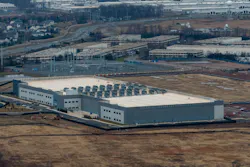
In Loudoun County, Virginia, the changing rules of data center development came into unusually sharp focus during an October 6 Board of Supervisors meeting.
County officials warned that rescinding grandfathering protections for certain previously filed data center projects could expose Loudoun to roughly $60 million in potential litigation costs. At the same meeting, officials explained why Amazon could not proceed by right with plans for more than 800,000 square feet of data centers on the former George Washington University campus in Ashburn.
The two disputes highlighted opposite sides of the same increasingly consequential question: What development rights does a data center project actually possess, and how secure are those rights as local governments reconsider the rules?
That question is taking on new urgency across Virginia, where Gov. Abigail Spanberger's September 18 Data Center Accountability Framework is signaling a broad change in the Commonwealth's relationship with the industry that made Northern Virginia the world's largest data center market.
Accompanied by Executive Order 22 and reinforced by the administration's October 1 Virginia Energy Plan, the framework seeks to shift more responsibility for energy infrastructure, environmental impacts and community costs toward the developers and operators whose projects create those demands.
Some changes are already underway. Others remain proposals for legislation or future regulation. Meanwhile, existing utility-rate reforms, a new statewide electricity consumption tax and increasingly restrictive local zoning decisions are already altering the economics of development.
The result is not a retreat from data centers in Virginia. The Commonwealth remains deeply invested in the industry's continued growth, with an established ecosystem of operators, contractors, network infrastructure and development expertise that competing markets cannot easily replicate.
But the conditions for participating in that market are changing.
For developers, the implications extend well beyond additional permitting requirements. Land entitlement, utility commitments, project financing, infrastructure cost allocation and community acceptance are becoming increasingly interconnected. A project that once might have advanced through those stages sequentially may now face pressure to resolve more of them before construction becomes financially or politically viable.
Virginia's next phase of data center growth may therefore depend less on how many prospective sites developers can assemble than on how convincingly they can demonstrate that those sites can actually be powered, permitted, financed and operated under a more demanding set of expectations.
What Took Effect—and What Still Requires Legislation
Spanberger laid out the administration's rationale in announcing the framework:
“In the years before I took office, data centers came to Virginia and the Commonwealth did not have a clear or coordinated plan to address their impacts on Virginians — on their electric bills, their water, their land, their air, or their quality of life. That changes today. I have said many times that Virginia should be leading the nation in setting the highest standards for this industry. And now, I believe we are doing just that.”
The distinction between what Virginia has already implemented and what the administration intends to pursue is consequential. Executive Order 22 establishes immediate directives for state agencies, while significant portions of the broader Data Center Accountability Framework remain proposals for the 2027 General Assembly or future regulatory action.
Among the immediate changes, executive-branch agencies are prohibited from entering into or enforcing new nondisclosure agreements that conceal material information about proposed commercial data centers, public incentives, resource demands or community impacts. Existing contractual commitments are preserved, with limited exceptions contemplated for extraordinary circumstances, including national security. The prohibition does not yet extend automatically to local governments.
The order also excludes new data center projects with anticipated peak electrical demand of 25 MW or greater from the Virginia Business Ready Sites Program and similar discretionary state site-readiness and expedited-review assistance.
A separate, potentially more consequential proposal would eliminate by-right development approval for data centers using more than 25 MW, requiring local approval even for projects with prior authorizations. That provision has not been enacted statewide and could introduce significant legal questions concerning established development rights.
The administration is also accelerating environmental oversight. Within 120 days of the order, the Office of the Chief Energy Officer must publish an initial Data Center Planning and Community Engagement Toolkit to help localities evaluate proposed facilities, assess infrastructure and environmental impacts, and negotiate community-benefit agreements.
The Department of Environmental Quality has 180 days to produce accelerated rulemaking plans addressing data center noise and cooling-water scarcity, along with findings and recommendations concerning the cumulative impacts of diesel and other backup generation. The order specifically directs designation of the Eastern Virginia Groundwater Management Area as a cooling-water-scarcity area, although the associated regulatory process remains underway.
Virginia Energy, meanwhile, must evaluate opportunities for lower-impact development, including brownfield redevelopment, adaptive reuse, smaller distributed facilities and sites where infrastructure capacity already exists. Its recommendations are due within 240 days.
The order also initiates development of Virginia Local Energy and Accountable Data Centers, or VA-LEAD, a proposed tiered designation system modeled on resource-efficiency programs such as LEED. Facilities would be evaluated on energy and infrastructure impacts, water and land use, noise, workforce development, clean-energy investments and community benefits.
Once established, VA-LEAD is intended to help state agencies prioritize incentives and administrative assistance for higher-performing projects. Proposed criteria and an implementation plan are due by the end of 2027.
Taken together, the measures establish a regulatory direction that is considerably more expansive than the requirements currently in force. For developers, the immediate changes matter. But the greater uncertainty lies in how Virginia's proposed standards will ultimately be translated into enforceable requirements governing land use, infrastructure investment and access to electricity.
The New Cost of Power and Development Risk
Virginia developers have traditionally been able to assemble some projects sequentially: secure land, establish zoning rights, pursue utility service, identify a customer and then work through the infrastructure requirements necessary to deliver power.
That model becomes considerably more difficult when developers face greater public disclosure, fewer by-right development pathways, stronger financial commitments to utilities and the prospect of paying more directly for the transmission and generation infrastructure their projects require.
But the changing economics of Virginia data center development did not begin with Spanberger's September announcement. Regulators were already moving to assign more of the financial risk associated with large electrical loads to the customers creating that demand.
In November 2025, the Virginia State Corporation Commission approved a new GS-5 rate class for large electricity customers, including data centers, with demand of at least 25 MW on a contiguous site and a measured or expected load factor of at least 75%.
As DCF previously reported, beginning January 1, 2027, new qualifying customers face minimum 14-year service commitments. Applicable minimum billing requirements include 85% of contracted transmission and distribution demand and 60% of generation demand, subject to specified exemptions. The rules are intended to prevent the costs of infrastructure built for large customers from falling disproportionately on other utility ratepayers if anticipated demand fails to materialize.
The SCC has also approved a framework for directly assigning the costs of dedicated transmission connections to new or expanding large-load customers when those facilities would not otherwise be needed. Implementation details remain subject to further proceedings.
Virginia has added another financial consideration through a statewide data center electricity consumption tax that took effect July 1, 2026. Set at 1.1 cents per kilowatt-hour, the tax applies to qualifying data center electricity consumption, including power generated onsite rather than purchased from a utility. The current budget provision runs through June 2028 and includes a mechanism to refund annual collections exceeding $600 million.
These measures add financial consequences to projects that secure large power allocations but fail to reach their projected operating capacity. They also make the credibility of future electricity demand increasingly consequential to the economics of development.
The scale of that prospective demand is extraordinary.
In its July 2026 earnings presentation, Dominion Energy Virginia reported approximately 53.8 GW of data center capacity in various stages of contracting, up roughly 11% from the end of 2025. But only about 12 GW of that total was covered by electric service agreements. The remainder consisted of projects at earlier engineering and construction-authorization stages, underscoring the difference between a utility's contracted development pipeline and demand that is firmly committed, much less already operating.
Data centers accounted for 28% of Virginia Power's electricity sales in 2025, up from 26% the previous year. A 2024 analysis by Virginia's Joint Legislative Audit and Review Commission estimated that unconstrained electricity demand could double within roughly a decade, driven primarily by data center growth. Meeting even a portion of that projected demand would require substantial additions to generation and transmission capacity.
Meanwhile, the rules governing how large new loads connect to the regional power grid remain unsettled.
On October 9, the Federal Energy Regulatory Commission rejected major portions of PJM Interconnection's proposed Interim Resource Adequacy Service framework. PJM had sought to establish special arrangements for large new electricity customers, including provisions allowing some loads without matching new generation capacity to connect subject to curtailment during system emergencies.
FERC raised concerns about federal jurisdiction over retail service and potentially discriminatory treatment of large electricity customers. The commission approved PJM's proposed large-load registry and definition but rejected the broader interim-service and bring-your-own-new-capacity provisions, leaving open the possibility of revised proposals.
The decision introduces another layer of uncertainty for Virginia developers seeking dependable paths to energization. Even when customers can demonstrate adequate financing and willingness to pay for infrastructure, the regional mechanisms governing when and under what conditions large new loads can receive service are still evolving.
Together, the changes point toward a more demanding financial equation: Securing access to megawatts is becoming inseparable from demonstrating the ability to pay for them, support the infrastructure that delivers them and manage the consequences if projected demand never fully materializes.
A Widening Divide Across the Development Pipeline
The cumulative effect of Virginia's changing policies could produce a sharper divide among three categories of data center projects: existing operations, developments with established approvals or vested rights, and early-stage speculative proposals.
For the existing operating base, the immediate consequences are relatively limited. Virginia is not seeking to dismantle facilities already serving customers, although emerging standards for water use, noise, backup generation, emissions and grid flexibility could increase operating costs or require additional investment in existing infrastructure.
The second category comprises projects that have already secured zoning approvals, permits, utility commitments or legally established development rights. These facilities may enjoy significant advantages over competitors entering the approval process today, particularly where developers have made substantial investments in reliance on earlier government decisions.
But the distinction between an approved project and one with legally vested rights is becoming increasingly important. Under Virginia law, vested rights generally require a qualifying governmental action, good-faith reliance and substantial investment or obligations undertaken in pursuit of a specific development. Owning land or possessing favorable zoning does not, by itself, guarantee protection against subsequent regulatory changes.
That distinction could become particularly consequential if the administration's proposal to require new local approvals for data centers exceeding 25 MW, regardless of prior authorizations, advances through the General Assembly.
The third category, early-stage speculative development, faces perhaps the greatest potential disruption.
Virginia's framework explicitly calls for stronger upfront financial commitments to prevent proposed campuses from reserving land, transmission capacity and other infrastructure without ultimately being built. That objective strikes at a development model in which land acquisition, zoning, utility agreements, customer commitments and financing can advance on different timelines.
Large AI campuses are often announced with multibillion-dollar investment projections even though the power, tenants or financing needed for their ultimate buildout have not yet been secured. Under a more demanding approval and cost-allocation environment, developers could face greater pressure to substantiate those commitments earlier, before acquiring additional development rights or reserving scarce infrastructure capacity.
The implications extend to Virginia's market for prospective data center land. Properties with confirmed utility access and defensible development rights could command increasing premiums, while sites dependent on uncertain power delivery, rezoning or speculative future demand may become less attractive to investors.
None of this necessarily means every element of a project must be finalized before approval. But it does suggest a shift in where risk resides, with more of the financial and regulatory uncertainty falling on developers before a facility reaches construction.
The emerging competitive advantage may belong not simply to those who control the most land, but to those who can demonstrate the clearest, most defensible path from acquisition to an operating data center.
Local Governments Tighten the Rules
Virginia's two most important Northern Virginia data center jurisdictions were already restructuring their development processes before Spanberger introduced her statewide framework.
On September 22, the Prince William County Board of Supervisors approved a major reduction in its Data Center Opportunity Zone Overlay District, restructuring an area that had covered roughly 9,700 acres into a much narrower district expected to encompass approximately 3,641 acres.
The change substantially limits where data centers can proceed by right, without obtaining a special-use permit. Properties remaining within the revised overlay must meet one of five eligibility criteria, including provisions protecting certain previously advanced developments. A final eligibility window remains open through December 21, after which the county will publish an updated boundary map.
For new projects outside the overlay, the special-use permit process becomes the principal development pathway in eligible commercial and industrial zoning districts, giving county supervisors greater discretion over whether proposed facilities can proceed and under what conditions.
Loudoun County, meanwhile, had already eliminated most by-right data center development in March 2025, requiring new projects to obtain special-exception approval. In September 2026, its supervisors went further, voting to advance a proposal that could defer final board action on data center and electrical substation applications requiring legislative approval for up to 12 months.
The proposed Loudoun policy, scheduled for consideration October 20, would allow applications to continue through preliminary review and Planning Commission proceedings while delaying final board votes. If adopted, supervisors intend the pause to apply retroactively to September 15, subject to statutory deadlines and possible exceptions for grid-reliability projects.
County officials have emphasized that Virginia law does not permit a blanket moratorium on data center development. The proposed delay is instead intended to give Loudoun time to complete an ongoing review of data center locations, design requirements and operating standards, with that work expected to conclude in summer 2027.
A separate zoning dispute illustrates how the county's increasingly restrictive approach is affecting even established hyperscale developers.
In July, Amazon submitted plans for more than 800,000 square feet of data centers on the 122-acre former George Washington University campus in Ashburn. Although the property lies within the Route 28 Tax District, where certain properties remain governed by older zoning provisions, Loudoun officials determined that the applicable 1972 ordinance does not permit data centers as a principal use.
The county's zoning administrator issued that interpretation in July, and officials reaffirmed it publicly during the October 6 Board of Supervisors meeting. As a result, Amazon would need board approval to proceed with its proposed redevelopment. Portions of the property also carry additional land-use restrictions associated with its former educational purpose.
The dispute underscores the increasing importance of how historical zoning permissions are interpreted. Even within the industry's most established market, ownership of a large, strategically located property does not necessarily establish an automatic right to develop a new data center campus.
For developers, the cumulative effect is a more complicated entitlement environment. State policymakers are seeking greater accountability for infrastructure and environmental costs, while local governments are asserting more discretion over the location, scale and conditions of future construction.
The result is not simply slower permitting. It is a shift in the balance of negotiating power, with developers increasingly required to demonstrate how individual projects fit within local land-use priorities before they can secure the approvals needed to move forward.
Growth Continues, but Under Different Terms
Henrico County offers an early example of how tighter local requirements can change the development pipeline. In June 2025, the county eliminated by-right data center development in industrial, business and office districts, requiring developers to seek provisional-use permits instead.
According to September 29 reporting by Virginia Business, Henrico has 37 data centers and approximately 17 previously approved facilities in its pipeline. Yet only one developer, Centra Logistics, had applied for a provisional-use permit under the new rules.
That limited application activity does not, by itself, establish that development demand has collapsed. The existing approved pipeline remains substantial, and developers may be adjusting to the revised process. But it illustrates how a jurisdiction can materially change the terms of future growth without disturbing projects already authorized.
The economic incentives to accommodate additional development remain considerable. Virginia's Joint Legislative Audit and Review Commission estimated in 2024 that the industry supports approximately 74,000 jobs, $5.5 billion in labor income and $9.1 billion in annual state GDP. Most of that economic impact derives from construction rather than permanent data center operations, underscoring both the importance of continued investment and the distinction between short-term development activity and long-term employment.
Outside Northern Virginia, prospective projects are also beginning to reflect the state's emphasis on geographic diversification, infrastructure accountability and community disclosure.
On September 22, the Western Virginia Regional Industrial Facility Authority publicly identified Clearview Dynamics as the company evaluating approximately 94 acres at Wood Haven Technology Park in Roanoke County for a potential data center development.
The project remains in due diligence, expected to continue through March 2027, with its ultimate power requirements still being evaluated. According to Roanoke County, Clearview has committed to paying for the water and electrical infrastructure required by the development, rather than placing those costs on the surrounding community. The proposed water source is Spring Hollow Reservoir.
Local officials explicitly connected their September disclosure to the transparency expectations established by Spanberger's executive order. But the limits of that transparency became apparent on October 6, when the regional authority announced it had been released from its nondisclosure agreement with Clearview while continuing to withhold the identity of the company's corporate parent, citing its obligation to protect confidential economic development information.
The distinction illustrates an unresolved tension in Virginia's emerging approach: Greater public disclosure may become a central expectation for development, but determining how much information must be released, and when, remains a point of contention.
Meanwhile, projects are still receiving approval in jurisdictions where developers are prepared to negotiate detailed conditions.
On October 7, Stafford County supervisors voted 4–3 to approve the rezoning and associated electrical-substation permit for Falmouth Tech LLC's Accokeek Center, a proposed two-building campus totaling approximately 590,000 square feet on 121 acres.
The approval followed debate over exceptions to the county's residential setback requirements and included approximately $6.4 million in developer contributions for community priorities, along with restrictions on water use. Further site-plan and utility approvals remain necessary.
Taken together, the Henrico, Roanoke and Stafford examples suggest that Virginia's development market is not simply moving toward a binary choice between approval and prohibition. Instead, local governments are exercising greater discretion over the conditions under which projects advance, while developers face growing pressure to demonstrate financial capacity, infrastructure responsibility and tangible community benefits.
Vested Rights Become a Strategic Asset
As Virginia tightens its development requirements, projects with established legal rights are taking on a new competitive significance.
A September 29 agreement between Amazon Web Services and King George County illustrates the stakes. The county formally recognized AWS's vested rights to redevelop the former Birchwood Power Facility, a retired coal-fired power plant, and nearby industrial-zoned properties as part of a planned $6 billion data center investment.
The agreement also reflects the continuing importance of negotiating community benefits. AWS committed $10 million toward a county career and technical education school and agreed not to construct data center buildings on land adjacent to the Rappahannock River. The development is expected to create more than 100 jobs.
The arrangement demonstrates how established development rights can provide a foundation for large-scale investment while leaving room for negotiated environmental protections and community commitments.
In Loudoun County, the potential cost of challenging previously established development protections became apparent during the October 6 Board of Supervisors meeting.
County officials warned that rescinding a 2025 grandfathering resolution, which allows certain data center applications to proceed under earlier zoning rules, could expose Loudoun to as much as $60 million in litigation costs and potential liabilities. At least 15 pending applications remained covered by the resolution, representing approximately 10.5 million square feet of proposed development.
Rather than move forward with rescinding those protections, supervisors considered an independent audit to determine whether individual projects continued to qualify. That proposal, with an estimated cost of up to $200,000, was indefinitely tabled on a 7–2 vote. The grandfathering resolution remained in place.
The distinction between grandfathered applications and legally vested development rights is important. Loudoun's resolution establishes eligibility for certain projects to continue under previous permitting rules, while Virginia's statutory vested-rights protections require specific governmental actions, good-faith reliance and substantial development commitments. Neither status should be assumed merely because a developer owns land or has proposed a project.
Together, the Loudoun and King George cases underscore a changing development calculation. Established rights can shield projects from some consequences of shifting local policy, but their scope and enforceability may themselves become subjects of negotiation or litigation. For investors and developers, the legal certainty surrounding a site is becoming nearly as consequential as its access to power.
Virginia's Next Competitive Test
The Commonwealth's broader strategy nevertheless assumes continued growth. Spanberger's October 1 Virginia Energy Plan explicitly seeks to accommodate rising electricity demand while ensuring that data centers bear the incremental infrastructure costs they create, demonstrate greater demand flexibility and support Virginia's clean-energy and community objectives.
The policy direction represents a meaningful departure from the conditions that helped establish Northern Virginia's leadership over the past two decades. Its original advantages included extraordinary fiber connectivity, proximity to Ashburn's network ecosystem, historically competitive power costs, favorable tax treatment, specialized development expertise and a comparatively predictable permitting environment.
Those advantages have not disappeared. Virginia still possesses the country's most established concentration of data center infrastructure and an extensive network of utilities, contractors, operators and technology companies supporting continued expansion.
But the requirements for translating those advantages into new capacity are becoming more demanding.
Developers increasingly face an environment in which power availability, transmission investment, land entitlement, environmental performance and community acceptance must be addressed as interconnected elements of project execution. Financially capable operators with established customers and defensible development rights may be better positioned to navigate those requirements. More speculative projects could face higher carrying costs, longer development timelines and greater uncertainty over whether their sites will ultimately be viable.
The consequences will not necessarily be uniform. Stronger financial commitments and infrastructure cost allocation could reduce speculative demand and protect existing ratepayers. At the same time, more discretionary approvals and regulatory uncertainty could delay projects that might otherwise proceed, potentially shifting investment toward competing markets.
Virginia's challenge is therefore not simply to regulate data center growth more aggressively. It is to establish rules that make future development more accountable without undermining the predictability and investment certainty that helped build the industry's largest U.S. market.
The next phase of Virginia's data center economy will test whether the Commonwealth can maintain that balance—and whether developers can still deliver new capacity at the scale and speed the AI infrastructure market demands.
At Data Center Frontier, we talk the industry talk and walk the industry walk. In that spirit, DCF Staff members may occasionally use AI tools to assist with content.
Keep pace with the fast-moving world of data centers and cloud computing by connecting with Data Center Frontier on LinkedIn, following us on X/Twitter and Facebook, as well as on BlueSky, and signing up for our weekly newsletters using the form below.
About the Author
 David Chernicoff
David Chernicoff
 Matt Vincent
Matt Vincent
Matt Vincent is Editor in Chief of Data Center Frontier, where he leads editorial strategy and coverage focused on the infrastructure powering cloud computing, artificial intelligence, and the digital economy. A veteran B2B technology journalist with more than two decades of experience, Vincent specializes in the intersection of data centers, power, cooling, and emerging AI-era infrastructure. Since assuming the EIC role in 2023, he has helped guide Data Center Frontier’s coverage of the industry’s transition into the gigawatt-scale AI era, with a focus on hyperscale development, behind-the-meter power strategies, liquid cooling architectures, and the evolving energy demands of high-density compute, while working closely with the Digital Infrastructure Group at Endeavor Business Media to expand the brand’s analytical and multimedia footprint. Vincent also hosts The Data Center Frontier Show podcast, where he interviews industry leaders across hyperscale, colocation, utilities, and the data center supply chain to examine the technologies and business models reshaping digital infrastructure. Since its inception he serves as Head of Content for the Data Center Frontier Trends Summit. Before becoming Editor in Chief, he served in multiple senior editorial roles across Endeavor Business Media’s digital infrastructure portfolio, with coverage spanning data centers and hyperscale infrastructure, structured cabling and networking, telecom and datacom, IP physical security, and wireless and Pro AV markets. He began his career in 2005 within PennWell’s Advanced Technology Division and later held senior editorial positions supporting brands such as Cabling Installation & Maintenance, Lightwave Online, Broadband Technology Report, and Smart Buildings Technology. Vincent is a frequent moderator, interviewer, and keynote speaker at industry events including the HPC Forum, where he delivers forward-looking analysis on how AI and high-performance computing are reshaping digital infrastructure. He graduated with honors from Indiana University Bloomington with a B.A. in English Literature and Creative Writing and lives in southern New Hampshire with his family, remaining an active musician in his spare time.