DCF Tours: Inside CoolIT, Where AI Liquid Cooling Goes to Scale
Key Highlights
- CoolIT operates extensive manufacturing facilities in Calgary, producing cold plates, manifolds, and coolant distribution units to support AI data center cooling needs.
- Innovations like skiving and friction stir welding improve cold plate performance and reliability, enabling higher processor power and thermal efficiency.
- The company uses a 6-megawatt thermal load test rig to simulate real-world operating conditions, validating system performance before deployment.
- System-level knowledge and holistic design are emphasized to ensure reliable operation of complex cooling loops in large-scale data centers.
- CoolIT is exploring two-phase cooling technologies as complementary solutions, aiming to address diverse thermal challenges in future AI infrastructure.
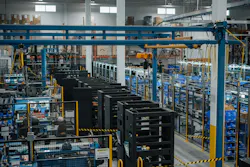
CALGARY, Alberta — On the eve of Data Centre West 2026, the production floor inside one of Ecolab’s CoolIT Systems facilities in Calgary offered a useful counterpoint to the enormous AI infrastructure projections now routinely measured in gigawatts.
Here, the scale was more immediate.
Coolant distribution units were moving through assembly and testing. Technicians were connecting newly built systems to test equipment, checking electronics and running coolant through completed units. Nearby, rack manifolds were being assembled with automated optical inspection built into the manufacturing process.
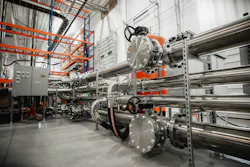
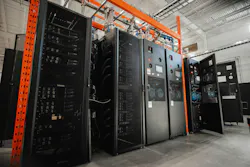
Across the parking lot, a separate building contained something closer to a synthetic data center: boilers capable of generating up to 6 megawatts of thermal load, matched by 6 megawatts of cooling capacity outside.
The combination provides a view into a part of the AI infrastructure buildout that gets considerably less attention than GPUs, substations or data center campuses themselves.
Direct liquid cooling has moved rapidly from a specialized high-performance computing technology toward a core requirement for the newest generation of AI infrastructure. Making that transition at scale requires more than a better cold plate or a larger coolant distribution unit. It requires manufacturing capacity, qualification, system integration, field service and the ability to test increasingly complex thermal systems before they arrive in an operating data center.
That was the broader story emerging from a tour led by Charles Robison, director of marketing at CoolIT, an Ecolab Company.
CoolIT operates roughly 200,000 square feet of manufacturing space across its Starfield 1 and Starfield 3 facilities in Calgary, while Starfield 2 houses its Liquid Lab Innovation Center. Robison said the company has grown from roughly 650 employees in March to around 950 today, while adding production capacity and shifts to keep pace with demand.
That growth now sits inside a larger company. Ecolab, a global water and hygiene specialist with presence in 170 countries worldwide, acquired CoolIT in July, adding direct liquid cooling to a portfolio that already includes coolant chemistry, digital monitoring and fluid management services for data centers.
What is being scaled is not simply a catalog of cooling products.
Increasingly, it is the thermal system around the compute.
From Cold Plates to Megawatts
The manufacturing tour begins close to the processor.
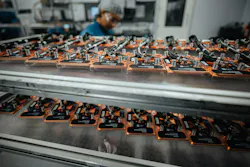
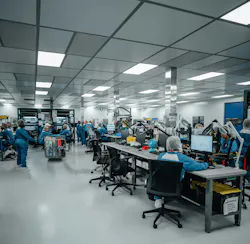
Inside a clean-room production area, CoolIT builds cold plates and cold-plate loops designed to move coolant directly across the highest-temperature areas of a processor. The company also manufactures cold plates in Asia to supply server manufacturers, while rack- and row-level manifolds and coolant distribution units are produced in Canada.
For direct liquid cooling, the basic challenge is simple to describe but increasingly difficult to execute: remove enough heat from a processor to allow it to continue operating at its intended performance level.
That does not mean simply putting more coolant through the server.
Modern chips contain localized hotspots. If those areas cannot be cooled effectively, processor clock speeds may have to be reduced through thermal throttling even if the system is technically removing a large amount of heat overall.
CoolIT has spent years refining the geometry inside its cold plates to address that problem.
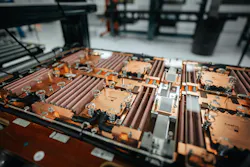
One technique is skiving, in which extremely fine channels are cut into copper to create paths for coolant. Robison compared the process to making a series of tiny sashimi slices through the metal.
CoolIT also uses what it calls split-flow technology, directing coolant toward specific areas of the processor while reducing pressure drop through the cold plate. Robison said the approach can improve performance by an estimated 30% over more conventional flow arrangements.
The company has also moved from more traditional brazed cold-plate construction toward friction stir welding in some designs. Rather than introducing brazing material between separate pieces of copper, friction stir welding mechanically joins the sections to create what CoolIT describes as a unibody structure.
The engineering objective is partly thermal performance and partly reliability.
Where a more traditional assembled cold plate may contain numerous potential leak points, CoolIT's design philosophy is to reduce those opportunities while simultaneously improving how coolant reaches processor hotspots.
That combination matters more as processor power rises.
CoolIT has publicly demonstrated a 15-kilowatt cold plate using an extension of its current single-phase architecture. Robison pointed to that result as evidence that the industry may have considerably more headroom in single-phase direct liquid cooling than is sometimes assumed.
"The technology's got a long, long runway," he said.
The implication is important for AI infrastructure planning. Increasing chip power does not necessarily mean the industry immediately runs into a physical wall requiring an entirely different cooling architecture. Cold-plate geometry, flow paths, pressure, materials and system design all continue to evolve alongside the silicon.
Building the Cooling System Around the Rack
Moving outward from the processor, however, reveals why liquid cooling becomes more complicated at data center scale.
A cold plate is connected to a cold-plate loop. Those loops connect to rack manifolds. The manifolds connect through the technology cooling system, or TCS, to coolant distribution units. Those systems in turn exchange heat with the facility-side cooling infrastructure.
The farther the coolant has to travel, and the more valves, manifolds and connections it passes through, the more consequential flow rate and pressure become.
On the Starfield 3 production floor, CoolIT was building its CHx 2000, a 2-megawatt CDU packaged into a roughly 750-millimeter-wide footprint.
Robison calls it the "501 jeans" of the CoolIT portfolio — a standard product that has become a workhorse platform.
Depending on the system configuration, CoolIT says a CHx 2000 can support approximately eight to 12 NVIDIA GB200 NVL72-class racks. But the CDU is only one element of that deployment.
Increasingly, Robison said, the relevant engineering question is not whether an individual CDU, manifold or cold plate works. It is how the entire cooling loop behaves when all those pieces are connected.
That has become central to CoolIT's competitive pitch.
"You might buy them from different vendors, but we have a system-level knowledge that informs each of the components as if they were a holistic system," Robison said.
That distinction is likely to become more important as direct liquid cooling spreads beyond a relatively small group of HPC specialists and hyperscalers.
The market is now crowded with vendors offering CDUs, cold plates and other liquid-cooling components. Robison expects some of that field eventually to consolidate as operators distinguish between suppliers capable of producing individual pieces of equipment and those able to engineer, commission and maintain a complete thermal system.
For data center operators, that distinction is not academic.
Failures in the technology cooling system can put extraordinarily expensive compute equipment at risk. At the same time, AI deployment schedules increasingly leave little room to debug cooling architectures after servers arrive on site.
Which helps explain why CoolIT has invested heavily in testing systems at something closer to deployment scale.
Six Megawatts Before the Data Center
The centerpiece of the Liquid Lab is CoolIT's Barracuda test rig.
On one side of the system are banks of electric boilers capable of generating up to 6 megawatts of heat. On the other side, large cooling towers outside the building can reject approximately the same thermal load.
Coolant distribution units sit between them.
Instead of installing a CDU in a live data center and then determining how it behaves, CoolIT can reproduce much of the thermal environment beforehand.
The boilers act as the compute load. Pumps move fluid through the system. Sensors track temperatures, flow and pressure. Cooling towers reject the heat.
The resulting environment can be used both for CoolIT's own product development and for customer factory-acceptance testing.
According to Robison, customer engineering teams may spend several days in Calgary running equipment through their own test protocols before approving it for deployment. Hyperscale and colocation customers can vary loads and other conditions to approximate the operating environments into which the systems will eventually be installed.
That becomes especially useful as cooling systems grow beyond individual CDUs.
Multiple units can be operated together, allowing engineers to evaluate how the broader system behaves when cooling infrastructure is deployed in parallel.
The value is not simply proving that a nameplate cooling capacity can be reached. It is understanding pressure, flow, controls and interactions across the cooling loop under load.
During the tour, a CoolIT engineering leader described the facility as a way to close the gap between modeling and actual system behavior.
Engineers can calculate and simulate a design extensively before manufacturing it. At some point, however, the equipment still has to move coolant through real valves, pumps, manifolds and piping while dissipating real heat.
Physical testing helps establish where the actual performance margins exist. For an AI infrastructure sector increasingly preoccupied with time to market, that validation can become part of the schedule.
The objective is to discover how the thermal system behaves in Calgary rather than during commissioning inside a multi-billion-dollar data center.
Quality Moves Up the Stack
The same philosophy runs through CoolIT's manufacturing process.
Robison described quality as a five-layer system beginning before a component reaches the production floor.
The first stage is what CoolIT calls DFX, or Design for X — incorporating considerations such as quality, manufacturability and serviceability into the initial product design.
Incoming components then undergo quality inspection based on sampling procedures and measurements against engineering specifications. On the production line, additional in-process quality controls are performed as equipment is assembled.
Some of those steps are automated.
On one manifold production line, a robotic arm picks up a quick disconnect and passes it through an optical inspection system. A component that passes inspection proceeds into assembly. One that does not is rejected.
Completed equipment then goes through functional and leak testing.
During the tour, manifold testing included nitrogen decay testing, helium leak detection and hydrostatic testing. CDU production included full operational checks after assembly, with technicians connecting systems to coolant and checking both thermal and electronic functions.
Every completed unit, Robison said, receives end-of-line testing. The final quality layer occurs after the equipment leaves Calgary.
CoolIT's professional-services organization participates in installation, commissioning and maintenance, creating a feedback loop between the factory and operating deployments.
That accumulated field experience has influenced how the company's quality systems have developed.
Robison acknowledged that CoolIT has learned from past component failures and leaks — exactly the kind of failure mode that becomes more consequential as cooling equipment sits immediately adjacent to increasingly valuable compute systems.
The response has been additional testing and qualification.
Inside the Liquid Lab, CoolIT can perform accelerated lifecycle testing that repeatedly subjects components to changing thermal conditions. Robison said some tests are intended to approximate years of operating cycles within a much shorter qualification period.
The facility also contains an in-house Underwriters Laboratories testing capability, allowing some safety-testing data generated in Calgary to be submitted directly as part of the UL certification process.
The larger point is that liquid cooling is starting to inherit the same manufacturing discipline long associated with other categories of mission-critical data center infrastructure.
The difference is how close this equipment sits to the silicon.
From Equipment Vendor to Field Operation
CoolIT is also putting considerable emphasis on what happens after equipment reaches the data center.
Its professional-services operation designs TCS loops, coordinates prefabricated piping, performs installation and commissioning, and trains data center personnel responsible for operating the liquid-cooling system.
The company also maintains a network of approved service providers that can support installations where CoolIT employees may not have direct site access.
That service layer is becoming part of the competitive equation.
Deploying direct liquid cooling at scale changes responsibilities inside the white space. Data center teams accustomed to servers cooled primarily by air now have pumps, coolant quality, pressure, flow, manifolds, quick disconnects and piping systems to manage alongside conventional IT equipment.
The handoff between mechanical infrastructure and IT infrastructure becomes less distinct.
That is one reason Robison prefers the phrase "system-level knowledge" to the increasingly common claim of offering an "end-to-end" solution.
The challenge is not simply owning every component. It is knowing what happens when they are connected.
The Ecolab relationship adds another piece to that system view through coolant chemistry, monitoring and flush-and-fill capabilities. For CoolIT, the combination creates an opportunity to optimize not only the cold plate, CDU or piping, but the fluid moving through the entire loop.
That is a different problem from selling a box.
How Long Can Single-Phase Go?
The Liquid Lab also makes clear that CoolIT is not treating today's architecture as permanent.
The company's R&D operation includes CNC machining, 3D printing, skiving equipment and friction stir welding, allowing engineers to move quickly from CAD designs to physical prototypes. Some work is aimed several processor generations ahead.
CoolIT is also experimenting with two-phase thermal technologies. That does not mean the company expects two-phase cooling to displace single-phase DLC wholesale. Robison sees the technologies as potentially complementary.
Two-phase techniques can be particularly effective for moving heat from localized areas, using approaches such as vapor chambers and heat pipes. But operating an entire data center cooling loop through repeated phase changes introduces another set of system-engineering challenges.
CoolIT's position is that single-phase cooling still has significant room to advance through better geometries, flow management and system design, while two-phase technologies may emerge where they provide a specific thermal advantage.
That is a more useful way to think about the cooling transition than searching for a single architecture that wins outright.
AI servers are becoming collections of thermal problems rather than a single thermal problem. Processors, memory, networking and storage may ultimately require different cooling approaches even within the same system.
The thermal architecture is likely to become more diverse as density rises.
Cooling Becomes Infrastructure
Walking through the CoolIT campus in Calgary, the most striking feature was not any single cold plate, manifold or CDU. It was the amount of infrastructure now required to develop and validate the cooling infrastructure itself.
A cold plate begins as a carefully engineered flow path measured in millimeters. Several steps later, that component has become part of a megawatt-scale thermal system involving pumps, controls, manifolds, piping, facility water and field technicians.
And before that system reaches a data center, CoolIT may reproduce several megawatts of server heat simply to find out how it behaves.
That is where the liquid-cooling market appears to be heading.
The first stage of the direct-liquid-cooling transition was proving that the technology could reliably remove heat from high-performance processors.
The next stage is industrializing it.
For the newest generation of AI infrastructure, the question is no longer simply whether liquid cooling works.
It is whether the industry can manufacture it, test it, install it and operate it at the same scale as the compute it is being asked to cool.
At Data Center Frontier, we talk the industry talk and walk the industry walk. In that spirit, DCF Staff members may occasionally use AI tools to assist with content.
Keep pace with the fast-moving world of data centers and cloud computing by connecting with Data Center Frontier on LinkedIn, following us on X/Twitter and Facebook, as well as on BlueSky, and signing up for our weekly newsletters using the form below.
About the Author
 Matt Vincent
Matt Vincent
Matt Vincent is Editor in Chief of Data Center Frontier, where he leads editorial strategy and coverage focused on the infrastructure powering cloud computing, artificial intelligence, and the digital economy. A veteran B2B technology journalist with more than two decades of experience, Vincent specializes in the intersection of data centers, power, cooling, and emerging AI-era infrastructure. Since assuming the EIC role in 2023, he has helped guide Data Center Frontier’s coverage of the industry’s transition into the gigawatt-scale AI era, with a focus on hyperscale development, behind-the-meter power strategies, liquid cooling architectures, and the evolving energy demands of high-density compute, while working closely with the Digital Infrastructure Group at Endeavor Business Media to expand the brand’s analytical and multimedia footprint. Vincent also hosts The Data Center Frontier Show podcast, where he interviews industry leaders across hyperscale, colocation, utilities, and the data center supply chain to examine the technologies and business models reshaping digital infrastructure. Since its inception he serves as Head of Content for the Data Center Frontier Trends Summit. Before becoming Editor in Chief, he served in multiple senior editorial roles across Endeavor Business Media’s digital infrastructure portfolio, with coverage spanning data centers and hyperscale infrastructure, structured cabling and networking, telecom and datacom, IP physical security, and wireless and Pro AV markets. He began his career in 2005 within PennWell’s Advanced Technology Division and later held senior editorial positions supporting brands such as Cabling Installation & Maintenance, Lightwave Online, Broadband Technology Report, and Smart Buildings Technology. Vincent is a frequent moderator, interviewer, and keynote speaker at industry events including the HPC Forum, where he delivers forward-looking analysis on how AI and high-performance computing are reshaping digital infrastructure. He graduated with honors from Indiana University Bloomington with a B.A. in English Literature and Creative Writing and lives in southern New Hampshire with his family, remaining an active musician in his spare time.
Voices of the Industry
 Image courtesy of Bell & Gossett
 Source: Adobe Stock, courtesy of ebm-papst