DCF Global: Five Markets Redrawing the AI Infrastructure Map
Key Highlights
-
Spain's Aragón region has attracted more than €60 billion in prospective digital infrastructure investment, but its accelerated permitting model now faces growing scrutiny over water, power, and public participation.
-
China is rapidly expanding its data center footprint around energy-rich regions such as Inner Mongolia, even as advanced semiconductor availability and computing utilization complicate its AI ambitions.
-
India has reached approximately 1.75 GW of operational data center capacity, backed by enormous investment commitments, while electricity reliability and infrastructure delivery remain critical concerns.
-
Latin America's largest data center markets grew 41.3% year over year, led by explosive expansion in Querétaro, Mexico, as Brazil moves to tie investment incentives to sustainability and domestic computing development.
-
Singapore and Southeast Asia are creating a new regional infrastructure geography, combining selective capacity expansion in Singapore with gigawatt-scale development pipelines in Malaysia, Thailand, and Indonesia.

The next phase of the artificial intelligence infrastructure boom is increasingly taking shape far beyond the established data center corridors of Northern Virginia, Dallas, Phoenix, and Silicon Valley.
Across Europe, Asia, and Latin America, governments are revising development policies, utilities are confronting enormous new electrical loads, and investors are committing unprecedented amounts of capital to the facilities that will support cloud computing and AI.
But the international expansion is not following a single blueprint.
In northeastern Spain, regional authorities have turned faster permitting into a competitive advantage, drawing tens of billions of euros in prospective hyperscale investment.
Across China's Inner Mongolia region, developers are taking advantage of inexpensive electricity and land to build computing infrastructure at extraordinary scale.
In India, a surge of capital commitments is accelerating development while exposing the difficulties of supplying dependable power to a rapidly expanding digital economy.
Latin America, meanwhile, is witnessing a major concentration of hyperscale growth around established industrial and connectivity hubs, alongside government efforts to make data center investment serve broader economic objectives.
And across Southeast Asia, Singapore's tightly managed infrastructure market is helping shape a wider development ecosystem extending into Malaysia and Indonesia, even as Thailand establishes its own large-scale growth trajectory.
These developments share a common underlying tension. To wit: the global appetite for AI computing capacity is apparently growing faster than the infrastructure systems required to support it can consistently be delivered.
Of course, a growing pipeline of announced projects does not necessarily translate into operating facilities. Installed electrical capacity does not automatically yield useful AI computing capacity. And government support for data center investment does not eliminate the constraints imposed by power generation, transmission infrastructure, water availability, network connectivity, or public opposition.
Those distinctions are becoming increasingly important as developers and investors assess where the next generation of digital infrastructure can actually be built.
For the inaugural installment of DCF Global, these five international markets illustrate how the global data center economy is being reorganized around the intersection of capital, energy, geography, and public policy.
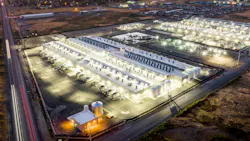
Spain: The Power of Permitting Meets the Limits of Public Acceptance
Spain's Aragón region has emerged as one of Europe's most consequential data center development markets, demonstrating how permitting policy can alter the geography of hyperscale investment. The northeastern region offers available land, substantial renewable energy resources, and access to European telecommunications networks. But its defining competitive advantage may be administrative rather than geographic.
An October 6 Reuters investigation detailed how Aragón's streamlined approval processes have helped attract more than €60 billion, approximately $68 billion, in expected data center and digital infrastructure investment over the coming decade.
At the center of that strategy is the Project of General Interest of Aragón designation, known as PIGA, which can compress permitting timelines for qualifying developments to less than a year. For hyperscale operators accustomed to lengthy and unpredictable approvals, the potential savings in time and development costs are substantial.
Amazon Web Services has outlined approximately €33.7 billion in regional investment plans, while Microsoft has identified potential investments approaching €10 billion. Spanish real estate developer Merlin Properties is also advancing major projects.
These figures represent expected or proposed investment, not completed construction or capital already deployed. Nevertheless, their scale illustrates the commercial value of regulatory certainty. But Aragón's success has brought growing scrutiny.
Al Jazeera's The Listening Post examines the rapid expansion of data center development in Spain's Aragón region, including the economic opportunities, environmental concerns, and questions of public oversight accompanying billions in hyperscale investment.
Environmental groups have challenged whether accelerated reviews adequately account for electricity demand, water consumption, and the consequences of concentrating large industrial loads in local communities. Critics also question whether shortened consultation periods provide meaningful opportunities for public participation.
The debate intensified on October 8, when Spain's national government confirmed plans to advance tighter oversight of the data center industry.
According to Reuters, Digital Transformation Minister Óscar López said the government intends to move forward with a decree addressing environmental and resource requirements, including electricity and water use.
The final provisions remain under consideration, introducing uncertainty for developers making long-term infrastructure commitments.
For Spain, the challenge is reconciling the economic benefits of hyperscale investment with the public's expectations regarding resource allocation and environmental accountability.
For North American operators, the parallels are unmistakable. U.S. states are increasingly competing for major data center projects through incentives and permitting reforms, even as utilities, regulators, and communities demand greater visibility into development costs and infrastructure requirements.
Aragón demonstrates that permitting speed can attract investment at extraordinary scale. The harder question is whether that advantage can be sustained without undermining the public confidence needed to complete the projects.

China: When Abundant Power Meets the Limits of Computing Capacity
China is pursuing a fundamentally different infrastructure strategy, directing large-scale data center development toward regions where electricity availability, land costs, and construction economics favor rapid expansion.
Inner Mongolia has become a prominent example. An October 8 Financial Times report documented extensive development around Ulanqab, where 89 data center facilities or projects have reportedly been built or planned.
The region benefits from relatively inexpensive land, substantial electricity resources, and a climate that can reduce mechanical cooling requirements during much of the year.
Its location also reflects China's broader East Data, West Computing initiative, launched in 2022 to redirect certain computing workloads toward energy-rich western regions while connecting those facilities to major eastern demand centers.
The strategy has parallels with the emerging U.S. preference for power-first site selection, in which access to large quantities of electricity can outweigh proximity to established metropolitan data center clusters.
But China's approach is also shaped by centralized industrial policy, coordinated infrastructure development, and national objectives involving technological independence.
The Financial Times estimates that China has approximately 24 GW of existing data center capacity and another 50 GW in its development pipeline. These estimates reflect the report's methodology and are not directly interchangeable with installed AI computing capacity or differently defined U.S. market figures.
A look inside China's growing data center hub in Ulanqab, Inner Mongolia, where abundant electricity, favorable cooling conditions, and new power infrastructure are supporting large-scale AI computing development. Footage includes facilities operated by ZDATA.
China's ability to assemble land, power, and construction resources at scale offers genuine advantages. Inner Mongolia's energy infrastructure, including opportunities to connect facilities directly with generating resources, can also reduce some of the uncertainties associated with conventional grid connections.
Yet abundant electricity solves only part of the AI infrastructure equation. Advanced processor availability remains a strategic challenge, particularly as U.S. export controls and domestic semiconductor manufacturing limitations shape China's access to leading-edge AI hardware.
Companies including Huawei, Alibaba, and ByteDance are helping develop a domestic AI computing ecosystem, but the performance and availability of processors, networking technologies, and software remain central to the effectiveness of that infrastructure.
There are also questions about how efficiently the new facilities are being utilized. A July 2026 bulletin from the U.S.-China Economic and Security Review Commission described Beijing's efforts to curtail smaller, speculative data center developments and concentrate additional construction within designated national computing hubs.
The commission cited reports of utilization below 30% at some AI computing facilities, suggesting that parts of the earlier expansion did not adequately align with commercial requirements.
That does not establish widespread overcapacity across China's data center industry. Indeed, the country's AI sector continues to generate substantial demand for computing resources. But the evidence points to an important difference between physical capacity and economically productive computing infrastructure.
A facility may possess ample electricity and cooling capacity without the processors, network architecture, software ecosystem, or customers needed to exploit it effectively. This is where China's experience becomes especially relevant to the broader industry.
Gigawatt-scale development is rapidly becoming a benchmark of AI infrastructure ambition. But the ultimate value of that capacity depends on the performance, availability, and utilization of the computing systems it supports.
China's buildout illustrates a fundamental distinction in the global AI infrastructure race: Securing megawatts is not the same as delivering competitive compute.
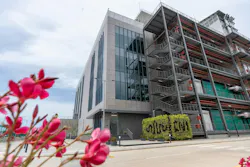
India: The Investment Boom Confronts the Infrastructure Reality
India is emerging as one of the most important growth markets in the international data center economy, supported by domestic digital demand, hyperscale investment, and increasingly ambitious national AI objectives.
According to CBRE's H1 2026 India Data Centre Market Monitor, operational capacity reached approximately 1.75 GW by the end of June, following the addition of roughly 130 MW during the first half of the year.
CBRE expects the market to approach 2 GW by year-end. The investment pipeline is considerably larger. CBRE identifies approximately $173 billion in cumulative data center investment commitments announced between 2021 and H1 2026, including approximately $38 billion during the first six months of this year.
That figure represents investment commitments, rather than capital already spent or operating facilities delivered. The distinction is central to understanding India's next stage of development.
Mumbai remains the country's dominant data center market, accounting for approximately 52% of operational inventory, with Chennai providing another major hub supported by established telecommunications and subsea cable infrastructure.
But the geography of investment is expanding. A particularly significant example is Google's planned $15 billion AI infrastructure investment in Visakhapatnam, Andhra Pradesh.
In April, Google announced the start of construction on the development, working with partners including AdaniConneX and Nxtra by Airtel.
ANI News reports on the groundbreaking of Google's planned $15 billion AI infrastructure hub in Visakhapatnam, Andhra Pradesh. The project illustrates India's accelerating hyperscale ambitions and the expanding role of international technology investment in its digital infrastructure economy.
The project encompasses a gigawatt-scale AI infrastructure ecosystem incorporating computing capacity, renewable energy development, electrical infrastructure, and a new international subsea cable gateway.
That connectivity component is particularly consequential. Large AI deployments require more than the ability to energize servers. They also depend on resilient, high-capacity networks capable of connecting cloud regions, computing clusters, enterprise users, and global data flows.
The challenge is coordinating the delivery of all those infrastructure systems. India's electricity network is already managing rising industrial consumption, regional differences in generating capacity, and the need to maintain reliable service across a rapidly developing economy.
On October 6, Reuters reported that several Indian states were seeking additional electricity supplies amid tightening nighttime availability, citing reduced hydropower output, generating plant maintenance, and limited energy storage.
The shortages were not attributed to data center demand. They nevertheless demonstrate the broader electrical environment into which increasingly concentrated computing loads must be integrated.
For AI data center developers, acquiring nominal generating capacity is only the beginning. Transmission access, grid stability, power quality, backup systems, and equipment availability are equally important determinants of project readiness.
Renewable energy procurement can support sustainability objectives and long-term costs, but it does not independently resolve the reliability requirements of high-density computing.
India has the demand, investment interest, developer ecosystem, and technological ambition to become a substantially larger force in global digital infrastructure. Its challenge is ensuring that the physical delivery of power, networks, and operating capacity can keep pace with that ambition.
India's next data center milestone will be measured less by the magnitude of its investment announcements than by the infrastructure it can successfully bring online.
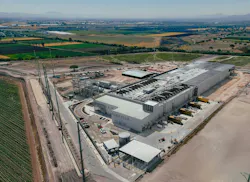
Latin America: Hyperscale Growth Meets Industrial Policy
Latin America is experiencing rapid data center expansion, although the regional numbers conceal substantial differences among individual markets. According to CBRE's Global Data Center Trends 2026, operational inventory across four major markets—São Paulo, Querétaro, Santiago, and Bogotá—increased 41.3% year over year in Q1 2026, reaching approximately 1,045 MW.
That growth exceeded the 33% recorded across CBRE's four largest North American markets during the same period. But one market accounted for a disproportionate share of the expansion.
Querétaro, Mexico, recorded a remarkable 450.2% year-over-year increase in operational inventory, reaching 298.2 MW. The market also accounted for 213 MW of the 270.7 MW in net absorption across the four Latin American markets during the quarter.
The surge reflects the arrival of large hyperscale and AI deployments rather than uniformly accelerating development throughout the region. Querétaro benefits from its location within Mexico's industrial heartland, established fiber routes connecting with North America, and proximity to manufacturing and logistics activity.
These advantages have positioned the market to benefit from both expanding digital demand and the broader development of Mexico's industrial economy.But the concentration of new capacity also exposes infrastructure challenges.
Electricity availability, transmission investment, grid reliability, and water resources remain important considerations for future growth. Delivering additional hyperscale campuses will require coordination between developers, utilities, and government authorities.
Brazil represents another significant development model. São Paulo remains Latin America's largest market in CBRE's assessment, with approximately 536.7 MW of operational inventory. But the country's latest policy initiative could have implications well beyond São Paulo.
On September 15, President Luiz Inácio Lula da Silva signed legislation establishing the Regime Especial de Tributação para Serviços de Datacenter, known as REDATA.
Ascenty CEO Chris Torto discusses Brazil's ReData initiative and its potential impact on data center development. The interview examines how government incentives could influence infrastructure investment and strengthen Brazil's position in the global digital economy.
The framework provides tax incentives for qualifying data center equipment and investment while attaching requirements intended to promote domestic technological capabilities and sustainable development.
Participating companies generally must make at least 10% of qualifying computing services available to the domestic market and commit investments equivalent to 2% of eligible equipment purchases toward designated research and innovation activities.
The law also requires renewable or low-emission electricity sourcing and establishes an annual water usage effectiveness threshold of 0.05 liters per kilowatt-hour, alongside provisions to be detailed through regulation.
Brazil's approach reflects a broader industrial strategy. Rather than viewing data centers solely as destinations for foreign capital, the government is attempting to make international digital infrastructure investment contribute to domestic computing capacity, technological development, and long-term economic competitiveness.
That introduces an increasingly important question for emerging markets: How much of the economic value created by AI infrastructure should remain within the countries supplying its land, energy, and other resources?
Mexico's hyperscale expansion and Brazil's industrial policy are different responses to the same global opportunity. Together, they demonstrate that Latin America's next stage of growth will be shaped not only by the economics of new capacity, but also by what host governments expect in return.
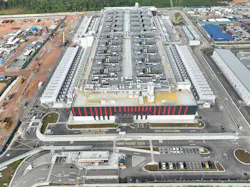
Singapore and Southeast Asia: A New Geography of Interconnected Markets
Southeast Asia offers perhaps the clearest example of how the physical requirements of AI infrastructure are redefining traditional data center markets.
Singapore has long been one of Asia's most important digital connectivity and cloud infrastructure hubs, supported by international network routes, financial services, and multinational enterprise demand.
But the city-state faces fundamental land and energy constraints. Rather than permitting unrestricted expansion, Singapore has adopted a selective development model that increasingly ties new capacity to sustainability, economic value, and infrastructure resilience.
In August, the Economic Development Board and Infocomm Media Development Authority provisionally awarded 200 MW of additional data center capacity through their second competitive application process. Digital Realty, Equinix, Keppel Data Centres, and ST Telemedia Global Data Centres each received provisional allocations of 50 MW.
The government's strategy effectively makes new electrical capacity a selective resource, awarded to developments that satisfy national priorities. Meanwhile, the neighboring markets are expanding at far greater scale.
Channel NewsAsia reports on Singapore's newly passed Digital Infrastructure Bill, which introduces additional oversight of critical digital infrastructure. The legislation reflects Singapore's increasingly selective approach to data center development as neighboring Southeast Asian markets pursue major capacity expansions.
According to Cushman & Wakefield's H1 2026 Asia-Pacific research, Johor, Malaysia, had approximately 3,088 MW in its development pipeline, including 602 MW under construction.
Operational capacity in Johor had already reached approximately 1,110 MW. Situated immediately across the border from Singapore, Johor offers larger development sites, an expanding infrastructure ecosystem, and proximity to established international network and cloud markets.
Developers including AirTrunk, Princeton Digital Group, and DayOne Data Centers have established significant interests in the broader Malaysian market. The expansion, however, extends beyond the Singapore-Johor relationship.
Cushman & Wakefield identified approximately 2,084 MW in Bangkok's development pipeline, including 859 MW under construction. Jakarta had another 1,699 MW in its pipeline. These markets have substantial domestic demand and national digital development objectives. Their growth cannot be characterized simply as overflow from Singapore.
Indonesia's Riau Islands, particularly Batam, add another geographic dimension through cross-border connectivity and industrial development opportunities near Singapore. Taken together, these locations illustrate a regional infrastructure model in which different markets contribute complementary advantages in land, power, connectivity, and commercial access.
The investment implications are becoming increasingly visible. On October 5, Singapore-based DayOne Data Centers filed for a U.S. initial public offering, seeking access to public capital markets to support its international development platform.
DayOne reported $512 million in revenue for H1 2026, compared with $151.5 million a year earlier, although its net losses also widened. Its development footprint extends across multiple Asian markets and into Europe, illustrating the growing intersection of international digital infrastructure development and global capital markets.
For operators, the emerging Southeast Asian geography raises important architectural questions. A location offering less expensive land and greater power availability may still depend on telecommunications systems, international cable routes, and network resilience associated with more established hubs. The commercial viability of regional AI infrastructure therefore depends on connectivity and workload requirements as much as development costs.
Southeast Asia suggests that tomorrow's major digital infrastructure markets may be defined not by individual cities, but by interconnected regions that combine complementary advantages across national borders.
Bloomberg Originals examines how electricity infrastructure is being rebuilt to accommodate soaring AI and industrial demand, with reporting from China, Spain, and Africa. The documentary explores the transmission challenges, emerging technologies, and grid investments shaping where the next generation of digital infrastructure can be delivered.
The Global Constraint Is Execution
These five markets demonstrate that the worldwide AI infrastructure buildout is no longer organized around a single development model.
Spain is using permitting reform to attract investment. China is concentrating construction around energy resources. India is translating enormous capital commitments into an expanding development pipeline. Latin America is combining hyperscale growth with national industrial objectives. And Southeast Asia is creating interconnected infrastructure markets whose boundaries increasingly extend beyond individual cities and countries.
Not every market is competing for the same business. Sovereign cloud services, enterprise applications, AI training clusters, and large-scale inference platforms carry different requirements involving power, connectivity, latency, data residency, and operating economics. But the infrastructure questions remain remarkably consistent.
Can a project obtain enough electricity? Can transmission and supporting networks be delivered on schedule? Will the supply chain provide the required equipment? Can the facility be constructed and commissioned efficiently? And will the development retain the regulatory certainty and community acceptance required to operate for decades?
The gap between announced development and actual capacity is becoming a defining measurement of the industry.
Cushman & Wakefield estimates that Asia-Pacific alone had approximately 26.5 GW of data center capacity in its development pipeline during H1 2026. Of that total, roughly 4.8 GW was under construction, with another 21.7 GW in planning. Those figures reveal both the extraordinary scale of the opportunity and the considerable infrastructure work still required to realize it.
What the Global Buildout Means for North America
For U.S. data center operators, developers, engineering firms, equipment suppliers, and investors, international expansion is not a separate story. It is increasingly part of the same global competition for capital, equipment, power infrastructure, and specialized expertise.
The transformers, switchgear, generators, advanced cooling systems, fiber networks, and electrical distribution equipment required by a major AI campus in Virginia may also be needed by projects in Spain, India, or Malaysia.
Global development therefore introduces additional competition across supply chains already operating under substantial pressure. It also creates opportunities for North American companies capable of delivering complex infrastructure programs in multiple jurisdictions.
And the experience of international markets offers lessons for U.S. developers facing comparable constraints.
Spain's permitting debate demonstrates the importance of balancing development speed with public acceptance. China's construction strategy illustrates the distinction between available power and productive compute. India's expansion reinforces the importance of electrical and network readiness.
Brazil's incentives reveal how host governments may increasingly seek direct economic benefits from infrastructure development. Singapore's approach shows how constrained markets can direct investment through selective capacity allocation.
There is no universal formula for successful data center expansion. What is emerging instead is a set of competing approaches to the same industrial challenge of coordinating the energy, capital, physical infrastructure, technology, and public policy required to support computing at unprecedented scale.
That competition will influence not only where AI infrastructure is developed, but which countries and regions capture its economic and technological benefits.
The global AI infrastructure race is no longer simply about where the next data center will be built. It is about which markets can reliably deliver the computing capacity they have promised—and turn that capacity into lasting competitive advantage.
DCF Global is an ongoing Data Center Frontier series examining the international markets, investments, infrastructure strategies, and policy decisions shaping the worldwide data center economy.
At Data Center Frontier, we talk the industry talk and walk the industry walk. In that spirit, DCF Staff members may occasionally use AI tools to assist with content.
Keep pace with the fast-moving world of data centers and cloud computing by connecting with Data Center Frontier on LinkedIn, following us on X/Twitter and Facebook, as well as on BlueSky, and signing up for our weekly newsletters using the form below.
About the Author
 Matt Vincent
Matt Vincent
Matt Vincent is Editor in Chief of Data Center Frontier, where he leads editorial strategy and coverage focused on the infrastructure powering cloud computing, artificial intelligence, and the digital economy. A veteran B2B technology journalist with more than two decades of experience, Vincent specializes in the intersection of data centers, power, cooling, and emerging AI-era infrastructure. Since assuming the EIC role in 2023, he has helped guide Data Center Frontier’s coverage of the industry’s transition into the gigawatt-scale AI era, with a focus on hyperscale development, behind-the-meter power strategies, liquid cooling architectures, and the evolving energy demands of high-density compute, while working closely with the Digital Infrastructure Group at Endeavor Business Media to expand the brand’s analytical and multimedia footprint. Vincent also hosts The Data Center Frontier Show podcast, where he interviews industry leaders across hyperscale, colocation, utilities, and the data center supply chain to examine the technologies and business models reshaping digital infrastructure. Since its inception he serves as Head of Content for the Data Center Frontier Trends Summit. Before becoming Editor in Chief, he served in multiple senior editorial roles across Endeavor Business Media’s digital infrastructure portfolio, with coverage spanning data centers and hyperscale infrastructure, structured cabling and networking, telecom and datacom, IP physical security, and wireless and Pro AV markets. He began his career in 2005 within PennWell’s Advanced Technology Division and later held senior editorial positions supporting brands such as Cabling Installation & Maintenance, Lightwave Online, Broadband Technology Report, and Smart Buildings Technology. Vincent is a frequent moderator, interviewer, and keynote speaker at industry events including the HPC Forum, where he delivers forward-looking analysis on how AI and high-performance computing are reshaping digital infrastructure. He graduated with honors from Indiana University Bloomington with a B.A. in English Literature and Creative Writing and lives in southern New Hampshire with his family, remaining an active musician in his spare time.
Related
Voices of the Industry
 Source: SNEHIT PHOTO/Shutterstock.com
 Source: Matthew G Eddy/Shutterstock.com