How AI Is Rewriting the Rules of Data Center Cooling
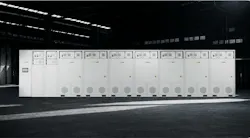
AI and high-performance workloads are forcing operators to rethink how data centers are powered, cooled, and scaled. Cooling, in particular, presents challenges as AI workload generate more heat than air cooling alone can efficiently support. As a result, hybrid architectures — that include both air and liquid cooling — are increasingly being adopted.
Why AI is Forcing a Rethink of Data Center Cooling Design, a new special report featuring Trane, examines the technologies, design strategies, and operational realities shaping AI-ready infrastructure, including Trane’s role in helping operators integrate air, chilled-water, and liquid cooling strategies in practical, scalable ways. Check out our recent article series focused on the special report:
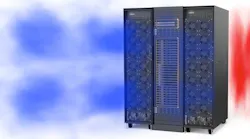
The AI Cooling Inflection Point: AI-era cooling is not just about moving more air. It is about building a balanced thermal strategy that supports density, reliability, and long-term scalability. This article explores why airflow management is becoming increasingly important in supporting higher-density AI and HPC workloads.
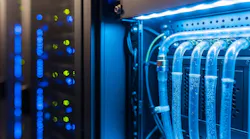
Cooling at the Edge of Capability: Liquid cooling is not a single design choice. It is a family of approaches that must be aligned to workload requirements, facility constraints, service models, and long-term growth plans. This article examines how many operators are augmenting proven air-cooling foundations with additional thermal management approaches to improve precision, efficiency, and scalability.
Designing Cooling for the AI Data Center: Designing for AI ultimately requires a shift in mindset. Cooling must be engineered as an integrated system that supports both current workloads and future growth while remaining operationally practical at scale. This article outlines key design implications when integrating liquid cooling into a broader, resilient, hybrid operating model.
Designing for Greenfield, Brownfield, and Operational Reality: As workloads intensify, cooling is evolving from a supporting utility into a more engineered, workload-aware system. This article outlines practical strategies when designing for greenfield, brownfield and operational realities.
Download the full report, Why AI is Forcing a Rethink of Data Center Cooling Design, featuring Trane, to learn more.
About the Author
 Kathy Hitchens
Kathy Hitchens has been writing professionally for more than 30 years. She focuses on the renewable energy, electric vehicle, utility, data center, and financial services sectors. Kathy has a BFA from the University of Arizona and a MBA from the University of Denver.
Voices of the Industry
 Source: FOTOGRIN/Shutterstock.com

 Source: TomUK/Shutterstock.com